
ISSP returns to Nigeria in 2026 — 17 soldiers killed and Lakurawa emerges from the shadows
 Marie Dubois
ISSP Returns to Nigeria in 2026 — 17 Soldiers Killed and Lakurawa Emerges from the Shadows
In Giro Masa, in the Shanga area of Kebbi, and then near Rumji Dan Tudu, in Illela of Sokoto, two attacks claimed in 2026 by the Sahel Province of the Islamic State change the understanding of the northwestern Nigerian border. ACLED reports that the ISSP claimed an attack on March 24 that killed 10 soldiers near Giro Masa, followed by another on May 16 that killed seven soldiers near Rumji Dan Tudu. Seventeen military personnel killed alone are not enough to redraw a map. But the fact that the ISSP officially claims operations in Nigeria for the first time since 2019 is the real signal.
The local name of Lakurawa has long served as a catch-all. It was used to refer to fighters from Niger, pastoral recruits, Islamized bandits, sometimes all of these at once. The novelty is that this attribution fog is dissipating. According to ACLED, the ISSP's claims are gradually clarifying that Lakurawa is not a separate group, but a component of the Islamic State's presence in the Niger-Nigeria borderlands.
A Border that Becomes Operational Depth
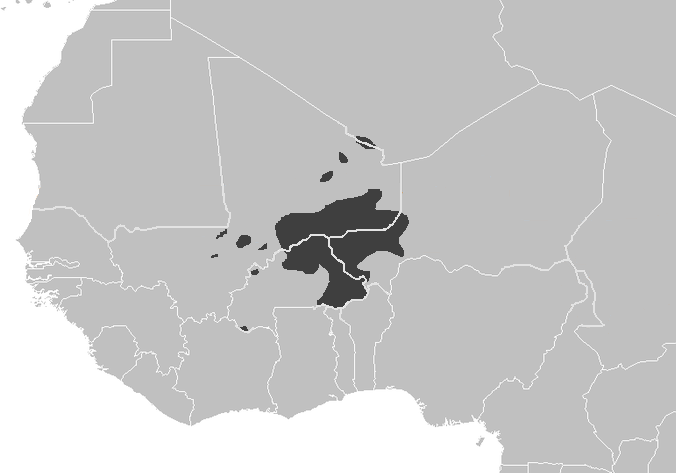
On the ground, one must look at the roads and cover, not just the administrative line. From Tillabéri and Dosso to Sokoto and Kebbi, secondary tracks, woodlands, and the hills known as dutses in Hausa provide shelters that are difficult for a conventional army to deal with. ACLED describes this strip as a support and supply corridor linking southwestern Niger to northwestern Nigeria. It is not an isolated sanctuary. It is a rear area.
This depth changes the pressure on Abuja. Nigeria was already experiencing jihadist violence from the Lake Chad basin and the central-north hotspots. But the more visible entry of the ISSP into the northwest gives the country a second Sahelian interface. It runs through Sokoto and Kebbi, not Borno. This is important because Nigerian military reflexes remain largely structured around the war against Boko Haram and ISWAP in the east.
Lakurawa Ceases to Be a Convenient Category
In an operation, misnaming the adversary produces bad maps. If Lakurawa is treated only as rural banditry, the response will seek local leaders, ransoms, police patrols, and a few sweep operations. If Lakurawa is understood as the local footprint of the ISSP, one must look at propaganda circuits, command chains, links with the areas of Ménaka, Azawagh, and Tillabéri, as well as the clandestine taxation on fuel and livestock movements.
The difference is practical. A criminal group holds a road to extract. A jihadist province holds a road to extract, recruit, punish, communicate, and open a logistics line. The ISSP does not need to control Sokoto to become dangerous. It is enough for it to make certain rural municipalities uncertain, forcing authorities to deploy too far, and then choose when to claim and when to remain silent.
JNIM and ISSP Push in Parallel
The danger is not only the ISSP. ACLED notes that the Group for Support of Islam and Muslims, JNIM or GSIM, conducted two heavy attacks last month in the same large strategic area. In Niger, the group overwhelmed a National Guard camp in Kirtachi, killing at least 12 soldiers and capturing seven prisoners. In Benin, it coordinated attacks on military positions in Koualou, a border town located in a disputed area between Benin and Burkina Faso, killing several soldiers and civilians. In both cases, the group seized weapons, ammunition, and equipment.
Therefore, it is necessary to speak of an expanded border, not just a Nigerian incident. Rival groups are competing, but their push produces a common effect: they transform the margins of Benin, Niger, and Nigeria into a continuous theater of operations. Parks, classified forests, the banks of the Niger, and smuggling networks are no longer peripheral spaces. They become the articulations of war.
Regional Cooperation Comes Too Late
The timing is bad for the states. The withdrawal of Mali, Niger, and Burkina Faso from ECOWAS has weakened already fragile political mechanisms. Armies can still cooperate sporadically, but trust is thin, especially between Sahelian military regimes and coastal states. Benin is trying to reopen dialogue with Niamey and Ouagadougou, but a presidential visit does not replace daily intelligence coordination.
From experience, border operations often fail in the last 20 kilometers. Units arrive, fighters drop out, the tracks close behind them, and then the same group reappears under another name in the neighboring village. Here, the problem is exacerbated by local economies. ACLED highlights the role of fuel trafficking, river operators, and protection arrangements. When a community depends on access organized by militants, denunciation becomes an economic risk as much as a physical risk.
What the 17 Deaths Announce
One must remain cautious: jihadist claims are not verified staff communiqués. Casualty figures may be incomplete, and local attribution often remains confusing. But the alignment between the ISSP's claims, ACLED's observations, and the dynamics already visible in Sokoto, Kebbi, Dosso, and Alibori is coherent. This is not an isolated noise.
The next weak point will likely be less a large city than a rural node: border market, isolated security post, landing point on the Niger, or supply route between Sokoto and the riverside municipalities of Niger. This is where the ISSP can win without a decisive battle. If Abuja waits for a spectacular attack to react, it will discover too late that the Sahelian war will have already crossed the border, through small columns, small payments, and very long tracks.
Main sources: ACLED Africa Overview June 2026, ACLED Q&A on the Benin-Niger-Nigeria border triangle, ACLED report on the restructured Islamic State Sahel Province.
The Islamic State Sahel Province (ISSP) claimed responsibility for two attacks in Nigeria in 2026, resulting in the deaths of 17 soldiers near Giro Masa and Rumji Dan Tudu. This marks the first official acknowledgment of ISSP operations in Nigeria since 2019, indicating a significant shift in the jihadist landscape. The report emphasizes the operational challenges posed by the ISSP's presence in the northwestern region, complicating the Nigerian military's response.
- ISSP claimed responsibility for attacks in Nigeria for the first time since 2019.
- 17 soldiers were killed in two separate attacks in Kebbi and Sokoto.
- The attacks occurred on March 24 and May 16, 2026.
- Lakurawa is identified as a component of the ISSP presence in Nigeria.
- The report highlights the operational depth and challenges faced by Nigerian military forces.