
ISWAP Joins ISSP in the Sahel — 100 Fighters and Drones Open a Niger-Nigeria Front in 2026
 Marie Dubois
ISWAP Joins ISSP in the Sahel — 100 Fighters and Drones Open a Niger-Nigeria Front in 2026
In Ménaka, in northeastern Mali, the recapture of the region by Malian forces has not closed the theater of operations. It has shifted the problem. Over 1,000 kilometers away, around Lake Chad, the West Africa Province of the Islamic State (ISWAP) is now providing personnel, expertise, and likely drone operators to the Sahel Province of the Islamic State (ISSP). The two organizations remain distinct. However, they are beginning to operate as a network.
A Distance That No Longer Protects Anyone
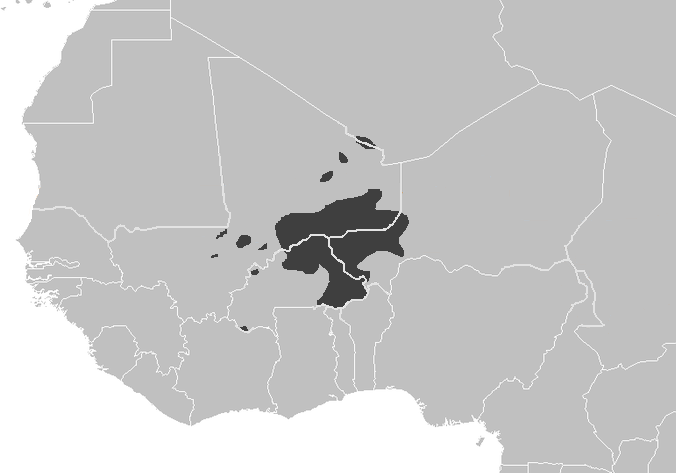
This observation was documented on September 8 by Africa Defense Forum, based on analyses from the Armed Conflict Location and Event Data Project (ACLED) and the Institute for Security Studies (ISS). According to this summary, ISWAP is reportedly planning to send around a hundred fighters to reinforce the ISSP in the Ménaka area following the Malian recapture. This figure should be treated as reported intelligence, not as a deployment confirmed by an independent authority.
On the ground, this cooperation has a simple logic. ISWAP has operational experience accumulated in the islands and corridors of Lake Chad. The ISSP knows the trails, villages, and fallback areas of Liptako-Gourma, at the junction of Mali, Niger, and Burkina Faso. National borders are long, poorly monitored, and less significant than supply routes. A fighter can change combat zones more easily than a regular unit can establish a permanent post.
The Drone as Evidence of Tactical Transfer
The January attack on Diori Hamani International Airport and Air Base 101 in Niamey provides the most interesting clue. The ISSP claimed responsibility for it, including the use of armed drones, presented as a first for this branch. However, propaganda videos show fighters speaking Kanuri, a language widely spoken in the Lake Chad basin. For Ladd Serwat, Africa analyst at ACLED, this may signal the presence of more experienced operators coming from ISWAP.
It is important to distinguish between a claim and confirmation. The video alone does not prove the chain of command for the attack. However, it does indicate a plausible transfer of skills. ACLED has recorded 16 drone-related actions by ISWAP since 2024, including 10 attacks and six preparatory surveillance missions against military targets. This is not air power in the classical sense. It is a tool for reconnaissance, harassment, and disruption that reduces the advantage of a fixed base.
In a Sahelian army, neutralizing the drone is not just a matter of jamming. It requires detecting the launch, protecting fuel depots, dispersing aircraft, and preventing the adversary from observing troop rotations. In Niamey as in Ménaka, a fence and a runway constitute coordinates, not a defense. From experience, a position that cannot conceal its movements ends up losing even before the first shot is fired.
The Political Gap Between Niger and Nigeria
The most dangerous consequence may be found to the west of Nigeria, in the states of Sokoto and Kebbi. The ISS observes a progression of actions attributed to the ISSP from southern Niger. The meeting point between Benin, Niger, and Nigeria already concentrates several armed groups. It offers forests, cross-border markets, and routes where administrative authority stops well before the flow of arms.
The Nigerien coup of 2023 has degraded security relations with Abuja. Niger's exit from the Economic Community of West African States (ECOWAS), along with Mali and Burkina Faso, has then institutionalized the rupture. In 2025, Niamey withdrew from the Multinational Joint Task Force engaged against ISWAP in the Lake Chad basin. Each decision can be defended in the name of sovereignty. Together, they have eliminated liaison mechanisms precisely at the moment when jihadist groups were learning to circumvent them.
The Sahel States Alliance announced a joint force of 6,000 men. Its funding and operational yield remain insufficient, and its headquarters itself was targeted in January. A force announced on paper does not control a road between two patrols. As long as units do not quickly share their intelligence and air assets, ISWAP can provide expertise while the ISSP provides local access.
What Abuja Risks Missing
Nigeria has intensified its operations against ISWAP and Boko Haram around Lake Chad. These operations can kill leaders and retake a camp. They are not enough to close a corridor that crosses three political systems. An exclusively military response, conducted from fixed bases, leaves armed groups the choice of timing, language, and terrain. It addresses the visible attack, not the conditions that enable recruitment, funding, and movement.
Jihadist cooperation does not necessarily mean the creation of a unified army. Rivalries between factions, logistical needs, and local ambitions can still limit it. The available information is incomplete, especially regarding the actual number of fighters transferred and the exact role of ISWAP in Niamey. But waiting for perfect proof would be a planning error.
The next indicator will be concrete: observation of drones over the garrisons of Sokoto and Kebbi, coordinated attacks on routes leading to Niger, or the emergence of cells speaking Kanuri far from Lake Chad. If these signals combine, the front will no longer be just Sahelian or Chadian. It will extend from Liptako-Gourma to the gates of central Nigeria, with national forces continuing to watch the border while the enemy looks at the corridors.
Sources: Africa Defense Forum, September 8, 2026; ACLED, analysis cited by ADF; Institute for Security Studies, works cited by ADF.
ISWAP is sending 100 fighters to support ISSP in Ménaka, Niger, in 2026, utilizing drones for military operations. This collaboration marks a significant tactical shift, with ISWAP leveraging its operational experience from Lake Chad. The deteriorating political situation between Niger and Nigeria complicates security efforts, allowing jihadist groups to exploit the region's vulnerabilities. The alliance between ISWAP and ISSP poses an increasing threat across the Sahel.
- ISWAP plans to send 100 fighters to support ISSP in Ménaka after Malian forces' recapture of the area.
- Drones are being used in operations, marking a tactical shift for ISSP.
- The political situation in Niger and Nigeria is deteriorating, affecting security cooperation.
- ISWAP has conducted 16 drone-related actions since 2024, including attacks and reconnaissance missions.
- The alliance of ISWAP and ISSP poses a growing threat across the Sahel region.