
Italy and Baykar test Kizilelma with M-346 and showcase Europe's drone gap 2026
 Dr. Klaus Weber
Italy and Baykar Test Kizilelma with M-346 and Highlight Europe's Drone Gap 2026
An Italian M-346 trainer has controlled an unmanned Kizilelma fighter jet in flight in Turkey. This sentence sounds like industry communication, but it is politically significant: Not a European major program is demonstrating the next level of manned-unmanned air combat here, but rather an Italian-Turkish industrial arrangement outside the EU's defense architecture.
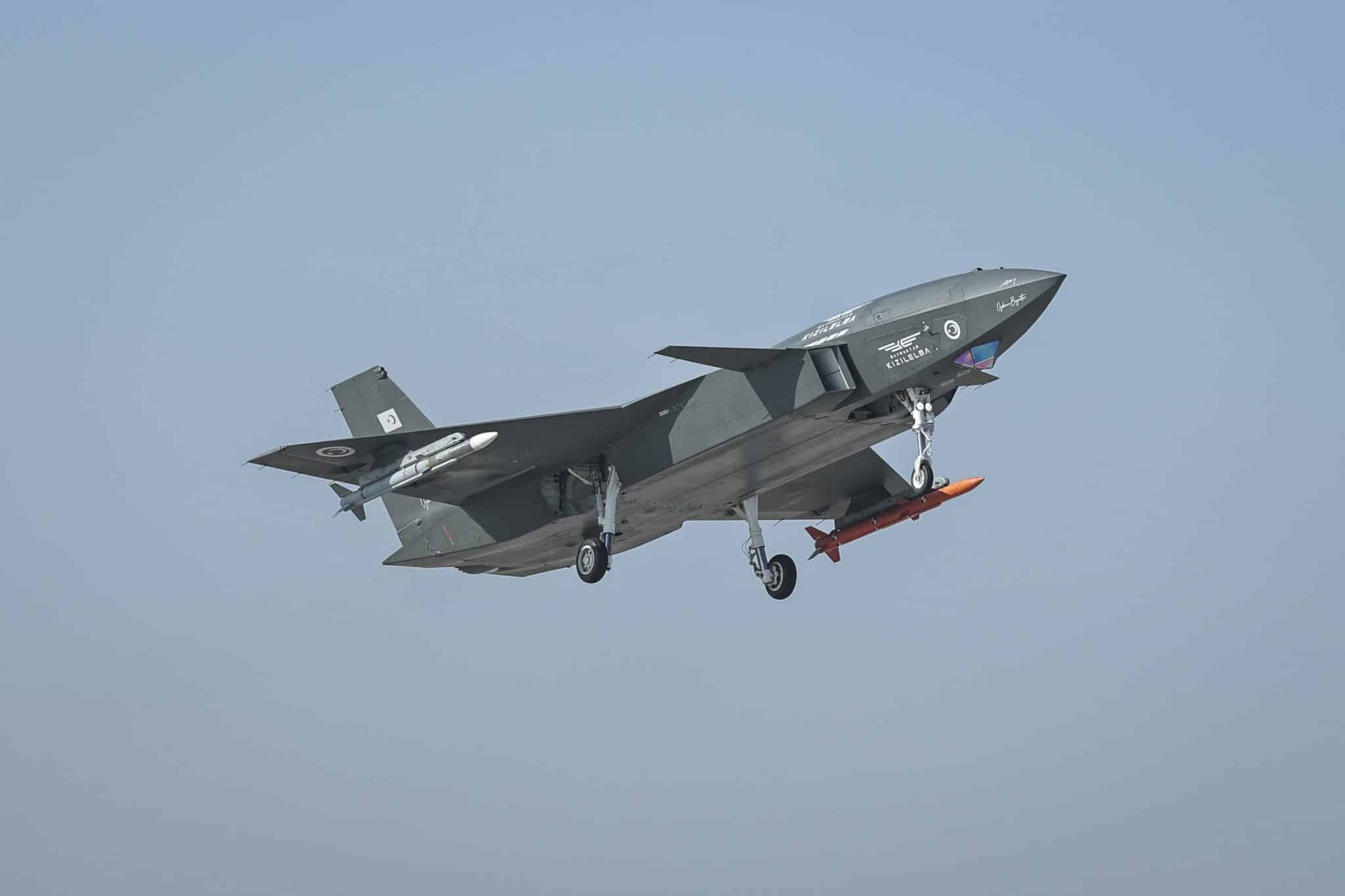
Leonardo and Baykar presented the attempt on June 23 as a milestone for Crewed-Uncrewed Teaming. Defense News reports that the campaign took place at the Baykar test center in Çorlu and involved two M-346s: an M-346 Fighter Attack from Leonardo and an M-346 from the Italian Air Force as a companion aircraft. The Kizilelma rolled and took off autonomously, then connected with the M-346 via an advanced radio data exchange system and flew a series of missions to test Italian algorithms, tactics, and procedures.
The Test Was Small, but Institutionally Significant
Militarily, one should not overstate this flight. A Loyal-Wingman system is not operationally ready just because a data link works. The crucial questions remain open: electronic resilience, tactical autonomy under disruption, Rules of Engagement, certification, maintenance costs, and integration into national command networks. But that is precisely why the attempt is relevant. Europe has been talking about Future Combat Air System, Remote Carrier, and Combat Cloud for years. Leonardo and Baykar have now demonstrated that a medium-sized industrial project can deliver visible flight results faster than some European governance structures.
The M-346 is not a frontline fighter jet, but an advanced trainer and training system. Leonardo cites a maximum speed of 1,090 kilometers per hour, a service ceiling of 13,715 meters, and two Honeywell F124 engines. This does not make it a replacement for Eurofighter, F-35, or GCAP, but a plausible flying laboratory: affordable enough for repeated test flights, complex enough for tactical procedures, already introduced in several air forces. Such platforms are often lacking in European programs when they focus too early on the final system and too late on experimental interim stages.
Kizilelma is More than a Turkish Drone
Baykar's Kizilelma is described as an unmanned combat aircraft with a reduced radar signature, air-to-air capabilities, and modular mission profiles. The development is also intended to enable operation from aircraft carriers. This is not yet a guarantee of operational maturity. However, the political significance lies in the fact that Turkey has built a drone industry with Baykar that no longer only exports cheap tactical systems but is moving towards unmanned combat aircraft, swarm tactics, and air combat integration.
This is uncomfortable for Europe. Ankara is a NATO member but not an EU member. Turkey is a security partner, competitor, and occasionally a disruptive factor at the same time. Nevertheless, a Turkish company could deliver speed in an area where European consortia have been suffering for years under national work shares, export rules, and industrial egos. Those who understand strategic autonomy solely as an EU internal market project face a problem here: The capability arises where industrial risk-taking and military testing culture come together, not where the cleanest funding logic is formulated.
The FCAS Lesson Becomes Visible in Flight
The timing is critical. The German-French-Spanish FCAS project has once again shown in 2026 how quickly a joint future program can fail over the question of who integrates, who leads, and who controls the technological core. Even if individual FCAS elements continue, the political damage remains significant. Remote Carrier and Combat Cloud have always been the more innovative parts of the program; however, the dispute ignited over the manned combat aircraft, industrial leadership, and national sovereignty.
Leonardo is also a partner in the GCAP program with the UK and Japan. That Leonardo is testing Loyal-Wingman procedures with Baykar is therefore not a minor event. Italy is preparing for an air combat environment in which manned platforms do not fight alone but lead unmanned sensors, decoys, jammers, and weapon platforms. GCAP could benefit from this. FCAS could have learned from it. The bitter point is: Europe's largest air combat discussion is being overtaken by a practical demonstration at the edge of the EU system.
Autonomy Means Control Over Procedures, Not Just Over Hardware
The most important question is not whether the Kizilelma is better than a European Remote Carrier. Such comparisons are mostly speculation today. More important is who controls the software, the data links, the mission algorithms, and the decision logic. Leonardo emphasizes that the tested algorithms, tactics, and procedures were developed in Italy; Baykar contributed Smart-Fleet Autonomy capabilities and its own hardware and software infrastructure. This sounds like a division of labor, but division of labor in air combat technology is always also a division of power.
Europe knows this lesson from Patriot, F-35, and countless export control issues. Who buys the platform does not necessarily own the operational logic. Who updates the software, defines the interfaces, and holds the data rights determines future adaptability. An Italian-Turkish project can therefore either be a smart way to build capability faster or the beginning of a new dependency. The answer does not depend on the press release but on contracts, source codes, certification rights, and export clauses.
Ukraine Accelerates, Brussels Manages
The war in Ukraine has shown that unmanned systems are not just additional capabilities. They are changing reconnaissance, artillery guidance, air defense, electronic warfare, and target assignment. European armies are now discussing drone defense, loitering munitions, and autonomous sensors almost everywhere. Nevertheless, procurement processes remain slow, national special paths numerous, and joint programs vulnerable to political blockades.
The Leonardo-Baykar experiment is a symptom in this context. When regular European major programs become too cumbersome, companies and states seek detours. Italy is using a NATO partner outside the EU to gain practical experience more quickly. This is pragmatic. However, it is also a vote of no confidence against the assumption that European defense capability automatically arises from EU funding lines, PESCO project lists, and ever-new strategy papers.
The test in Çorlu does not prove that Europe has closed its drone gap. It proves that other actors are ready to address this gap practically while Europe is still discussing institutional responsibilities.
The Political Risk Lies in the Interim Solution
Germany should read this development particularly attentively. The Bundeswehr needs not only more aircraft in the coming years but also a credible architecture for manned-unmanned formations, electronic disruption, and distributed sensors. Those who rely solely on the long line of future major programs risk a capability gap in the 2030s. Conversely, those who buy every interim solution without securing data rights and integration power exchange time gain for dependency.
Italy has chosen a path with Leonardo and Baykar that looks less cleanly European but flies faster. France will likely see this as another argument against the dilution of industrial sovereignty. Germany is likely to find itself again between both poles: politically for European integration, technically dependent on partners, industrially sensitive regarding work shares. But is that enough?
The answer is uncomfortable. Europe needs more of these flight tests, not fewer. At the same time, it needs stricter rules about which software, data, and integration rights European armed forces must retain. More money alone does not create Loyal-Wingman capability. Pure autonomy rhetoric does not create it either. The M-346 and the Kizilelma show the real choice: Europe can learn quickly if it becomes institutionally more agile. Or it can continue to plan European and fly non-European.
Italy and Baykar conducted a test of the Kizilelma unmanned combat aircraft using M-346 trainers at Baykar's test center in Çorlu, Turkey, on June 23, 2026. The Kizilelma autonomously rolled, took off, and connected with the M-346, demonstrating advanced mission capabilities. This collaboration signifies a notable development in unmanned combat technology outside the EU's defense framework.
- Italy and Baykar tested the Kizilelma unmanned combat aircraft with M-346 trainers.
- The test occurred at Baykar's test center in Çorlu, Turkey, on June 23, 2026.
- The Kizilelma demonstrated autonomous flight and mission capabilities.
- Leonardo and Baykar collaborated on this project, highlighting a shift in European defense capabilities.
- The Kizilelma is designed for carrier operations and features reduced radar signature.