
Italy orders Lynx KF41 and new battle tanks for 4.16 billion dollars
 Dr. Klaus Weber
Italy Orders Lynx KF41 and New Battle Tanks for 4.16 Billion Dollars
Italy is reported to have concluded two defense contracts worth a total of 4.16 billion dollars with the joint venture of Leonardo and Rheinmetall. This was reported by the Italian economic newspaper MF; Reuters published the news on October 23 via Defense News. However, the companies have not confirmed the formal contract conclusion. This very limitation is the most important part of the news. Rome has apparently decided to modernize its land forces. But Europe's arms procurement remains so opaque that even a billion-dollar order initially appears as a newspaper report.
An Order for Two Very Different Capabilities
The first part concerns the A2CS, Italy's future armored combat vehicle for mechanized units. The program is technically aligned with the Rheinmetall Lynx KF41. The Lynx is a modular tracked vehicle with a digital mission architecture, scalable protection, and a crew typically consisting of three soldiers plus dismounted infantry. Depending on the turret and mission module, the armament can range from a 30-millimeter autocannon to additional anti-tank and drone defense systems. The exact configuration and quantity of the Italian A2CS order have not yet been publicly confirmed.
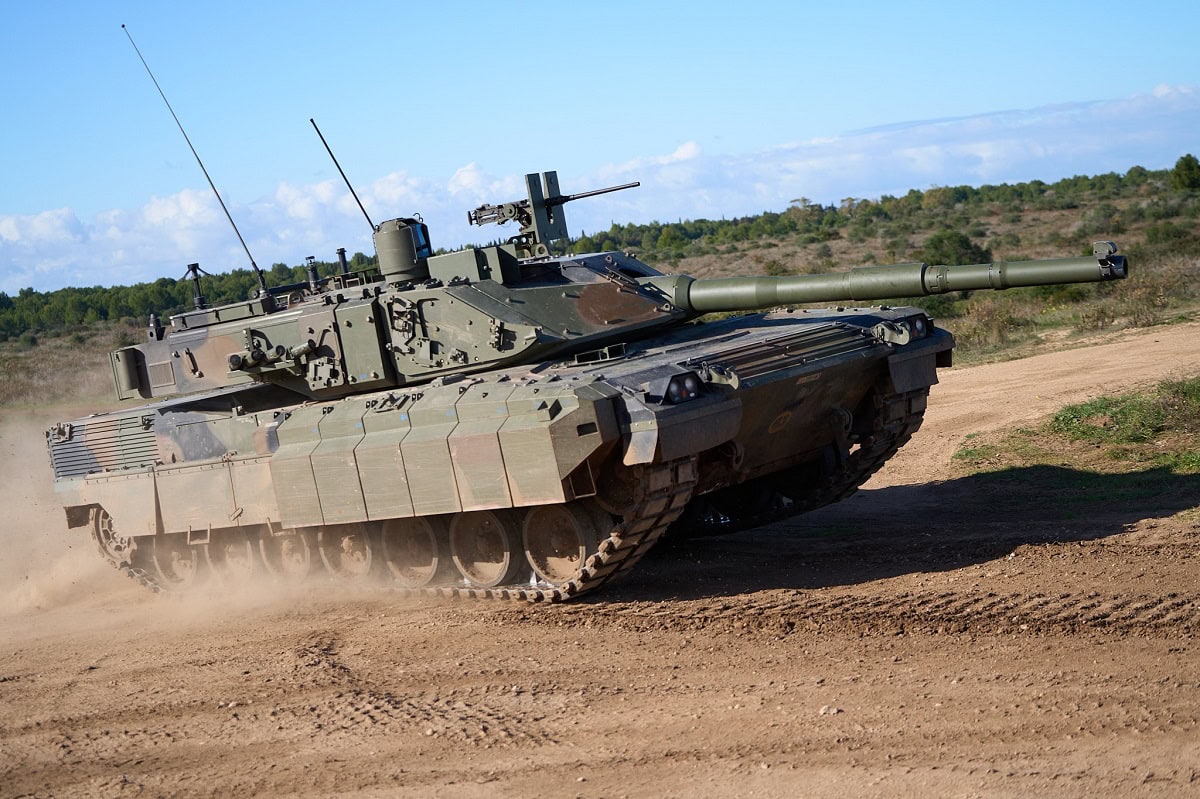
The second part concerns a new battle tank. Here too, the crucial information is missing, namely which variant and how many units were actually ordered. Italy's starting position is known: The Ariete C2 is equipped with a 120-millimeter smoothbore gun and, while it is being modernized, remains a stopgap solution. A modern battle tank must not only provide firepower and protection but also ensure sensors, data connections, active protection systems, and the supply of spare parts for decades. A new turret on an old chassis would therefore not be a true renewal but merely another extension of the problem.
The Real Significance Lies in the Industrial Consortium
Leonardo and Rheinmetall established their joint venture in 2024 on an equal basis. Leonardo brings the Italian industrial base, electronics, and system integration; Rheinmetall has experience with tracked vehicles, cannons, ammunition, and serial production. The contract would thus not only be a procurement decision but also a test for a European model that has repeatedly failed in the distribution of leadership roles and work packages in FCAS and MGCS.
This initially sounds like strategic autonomy. In fact, it is initially strategic bundling. Two national industries are forced into a common production logic because individual states can no longer bear the costs of modern land forces alone. This makes sense. But a 50-50 joint venture is not yet a common European capability. Crucial are the later export rights, the ownership rights to software and design data, the sovereignty over spare parts, and the question of who decides on priorities in the event of a deployment request.
Why 4.16 Billion Dollars Will Not Create a New Army
Italy will undoubtedly gain more protected firepower with the A2CS and the new battle tank. However, NATO does not evaluate the sum of a contract but rather available units. For this, Rome needs crews, maintainers, ammunition, recovery vehicles, simulators, and sufficient training time. A combat vehicle only becomes military capability when it can be deployed together with artillery, drones, engineers, air defense, and logistics.
The war in Ukraine has also shown that even the best tank remains vulnerable without electronic warfare, reconnaissance, and protection against drones. Therefore, the A2CS must not be understood as a mere replacement for older infantry fighting vehicles. It must be part of a connected system. Otherwise, Italy buys new platforms while the critical gaps in sensors, communications, spare parts, and training remain. More steel does not automatically mean more combat power.
For Rheinmetall and Leonardo, the order would be economically and politically attractive. The Italian army would serve as a reference customer; later exports could lower unit costs and broaden the European production base. But this is precisely where the risk begins. If each state demands its national variant, no European product will emerge, but rather a family of incompatible special solutions. The industry then wins contracts while the armed forces pay for additional interfaces.
Rome Chooses Industrial Reality
Leonardo CEO Lorenzo Mariani stated according to Reuters that the program is production-ready from the company's perspective and will be advanced closely with Rheinmetall in the tank and Future Combat System program. This is a remarkable difference from Europe's large aerospace projects. Italy seems to be trying to take advantage of an existing industrial window rather than waiting for the perfect political architecture. This decision is pragmatic. However, it is only strategic if the procurement is embedded in a multi-year capability plan.
The lesson for Germany and the EU is therefore uncomfortable. European defense integration does not arise from summit declarations but from robust production lines, common standards, and binding acceptance numbers. Italy shows a possible way with the A2CS and the new battle tank. Whether this will lead to European strength does not depend on the value of 4.16 billion dollars but on what follows afterward. A contract can fill a factory's capacity. However, it cannot train a crew, replace a doctrine, or make a political decision about joint war capability. Europe buys its platforms faster than it can agree on their use.
Italy has reportedly signed contracts worth $4.16 billion for the Lynx KF41 armored vehicle and new battle tanks, aimed at modernizing its land forces. The contracts, involving a joint venture between Leonardo and Rheinmetall, have not been officially confirmed. The modernization effort is seen as a response to the need for enhanced military capabilities, although specific details regarding the equipment and quantities remain undisclosed.
- Italy has signed contracts worth $4.16 billion for defense procurement.
- The contracts involve the Lynx KF41 armored vehicle and new battle tanks.
- The exact configurations and quantities of the orders are not publicly confirmed.
- The contracts are part of Italy's effort to modernize its land forces.
- The joint venture between Leonardo and Rheinmetall aims to enhance European defense capabilities.