
Italy's €27 Billion Defence Retreat Tests NATO's 5 Percent Promise
 Alexandra Reeves
Italy's €27 Billion Defence Retreat Tests NATO's 5 Percent Promise
Italy is not suddenly pacifist. It is doing something more dangerous for NATO: making the alliance's new spending politics look optional.
According to Defense News, Prime Minister Giorgia Meloni is considering walking away from a second EU-backed route to higher defence spending. Rome may pass on €14.9 billion in cheap Security Action for Europe loans, after already backing away from a national escape clause that could have added roughly €12 billion over three years. Together, that is about €27 billion in rearmament capacity left on the table.
That matters because Italy is not a marginal ally. It is a G7 economy, a Mediterranean naval power, and a host for major U.S. and NATO infrastructure. If Rome can look at subsidised defence money in 2026 and decide the politics are still too painful, the problem is not Italy alone. The problem is the credibility of Europe's rearmament story.
The Money Was Supposed to Make Rearmament Easier
The EU's logic was simple enough: countries that want to spend more on defence but fear deficit rules need cheaper financing and accounting space. Italy looked like the textbook case. Defense News reported in April that the National Escape Clause could have lifted Italian defence spending by about €12 billion over three years. The newer SAFE loan allocation would add €14.9 billion in concessional borrowing.
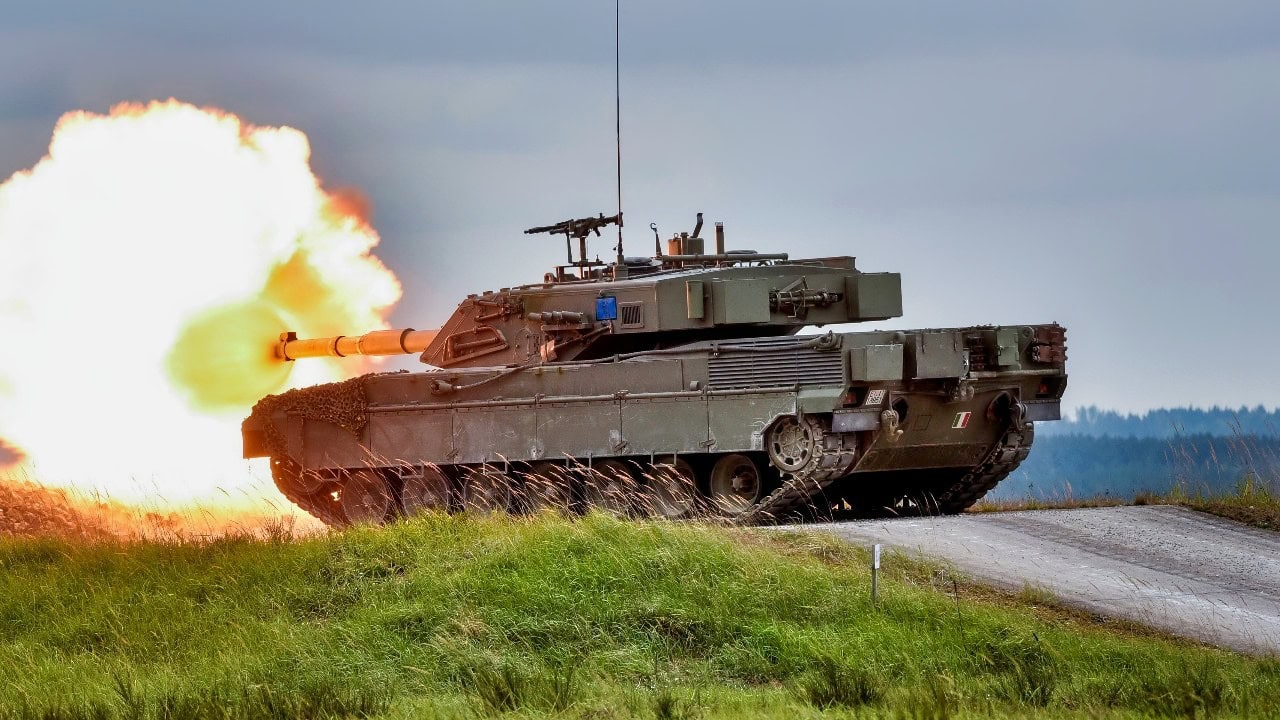
These are not abstract Brussels instruments. Defense News reported that Italy had planned to use its SAFE allocation for programmes including new armoured fighting vehicles and tanks. That points directly at the Italian Army's heavy-brigade problem. EDR Magazine reported in January that Italy had received the first four Lynx KF41 Combat vehicles for the A2CS programme, fitted with Rheinmetall's Lance turret in the Hungarian configuration. Later Italian versions are expected to use Leonardo's HITFIST 30 NG turret with a 30x173 mm X-Gun.
The money would not transform Italy's military overnight. It was supposed to buy momentum: equipment, training, spares, and production contracts instead of another clever budget line.
Energy Has Become the Competing Security Claim
Meloni's argument is not frivolous. According to the May 20 Defense News report, she told European Commission President Ursula von der Leyen that Italy wants relief for energy costs as the Strait of Hormuz blockage slows oil supplies to Italy. Her line is politically sharp: if defence is strategic enough to justify flexible deficit treatment, energy security is strategic too.
"If we rightly consider defense a strategic priority that justifies the activation of the National Escape Clause, we must have the political courage to recognize that today energy security is also a European strategic priority," Meloni wrote, according to Defense News.
That is hard to dismiss in a country heading toward elections in 2027. Voters feel energy bills before they feel artillery stockpiles. Italian opposition leader Elly Schlein has already called the 5 percent push "mistaken" and damaging to welfare, according to the earlier Defense News report.
But NATO cannot run on sympathy. Russia does not become easier to deter because European governments face high electricity prices. Defence policy is always a contest against other priorities. The whole point of the post-2022 European rearmament push was that Ukraine, Russia, the Red Sea, Iran, and the eastern Mediterranean had changed the hierarchy of risk.
NATO's 5 Percent Target Meets Democratic Reality
NATO's own public guidance defines defence expenditure broadly: spending by national governments for their armed forces, other allies, or the alliance as a whole, including equipment, operations, military assistance, R&D, and some mixed civilian-military activity. That broad definition gives governments room to count more than tanks and missiles. It also makes the 5 percent pledge politically slippery.
Italy reportedly reached 2 percent in 2025 only by inserting existing expenditures into the defence calculation, according to Defense News. Many allies use accounting creativity because the political price of visible rearmament is high. But there is a difference between stretching definitions and declining the financing meant to produce real capability.
Here is the part Washington will notice: Meloni's original incentive for raising spending was partly to avoid criticism from Donald Trump. Defense News reported that Trump has since turned on her over Italy's refusal to assist the U.S. campaign against Iran. That removes one political reward for compliance while leaving all the domestic costs in place.
A 5 percent NATO pledge sounds decisive at a summit. It sounds different when a finance minister has to choose between subsidising energy bills and signing multi-year armoured vehicle contracts.
The Southern Flank Cannot Be Built on Promises
Italy's hesitation lands at a bad moment. NATO's eastern flank is consuming attention, but the southern flank is becoming more expensive by the month. The Iran conflict is already pushing energy security back into European politics. The Red Sea crisis has made maritime protection a daily problem. Libya remains unstable. The eastern Mediterranean still links migration, gas, Russia, Turkey, and naval access in ways that never fit neatly into NATO communiqués.
Italy is one of the few European allies that can matter across that whole theatre. It has geography, bases, shipyards, naval experience, and a defence industry able to contribute to European production. A weaker Italian rearmament track therefore means less mass for a European pillar that is supposed to carry more of the alliance while the United States looks elsewhere.
The mainstream assumption is that Europe has finally learned the lesson and will spend because it has no choice. Italy is a reminder that countries always have choices. They can delay. They can reclassify. They can accept the rhetoric of deterrence while trimming the procurement that makes deterrence real.
What to Watch Before the July NATO Summit
The first deadline is domestic: Defense Minister Guido Crosetto said the SAFE decision needs to be made by the end of May, with Italy's finance ministry holding the final word. If Rome declines the €14.9 billion loan, allies should treat it as a political signal, not a budget footnote.
The second deadline is diplomatic. Meloni will need to explain the move at NATO's July 7-8 summit in Turkey. That will be awkward if the alliance is still selling 5 percent as proof that Europe has changed.
The final test is industrial. Watch whether Italy protects specific land programmes such as A2CS even if it rejects the EU money. If the vehicles, tanks, training stocks, and ammunition lines survive, then Rome is making a financing argument. If they slow, then Italy is making a rearmament retreat.
The lesson is blunt. NATO's spending target is only as strong as the weakest government willing to defend it at home. Right now, Italy is showing that the politics of rearmament may be harder than the accounting ever was.
Italy is reconsidering its defense spending commitments, potentially declining €14.9 billion in EU-backed loans intended for military rearmament. This decision could impact NATO's credibility and the overall European defense strategy, as Italy's military capacity is significant for the alliance. Prime Minister Meloni emphasizes the need to balance defense and energy security in light of rising costs.
- Italy is considering declining €14.9 billion in EU-backed loans for defense spending.
- The Italian government has already backed away from a national escape clause that could have added €12 billion over three years.
- Italy's defense spending is crucial for NATO's credibility and European rearmament efforts.
- Prime Minister Meloni argues for prioritizing energy security alongside defense spending.
- Italy's hesitation in defense spending could signal broader issues for NATO's southern flank.