
Italy's six Astore-Levante drones connect MBDA 2026 with Europe's Turkish defense shift
 Dr. Klaus Weber
Italy's six Astore Levante drones connect MBDA 2026 with Europe's Turkish defense shift
Six unmanned combat aircraft for the Italian Air Force may not seem like a strategic major project at first glance. However, the Astore Levante consolidates a development that could shape Europe's defense policy in 2026 more than some summit declarations: Turkish airframe, Italian final assembly, Leonardo sensors, and possibly European MBDA armament. This is precisely where the political significance of the project reported on October 12 by Defense News lies.
A concrete program instead of another declaration of intent
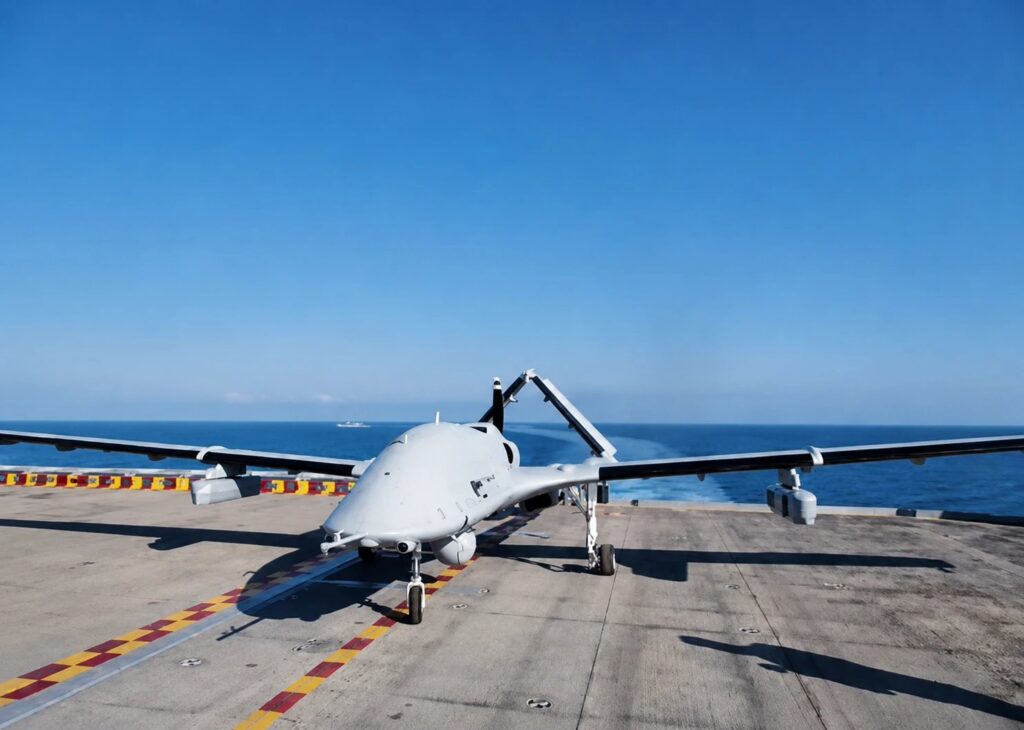
The Italian Air Force initially plans to procure three systems, each with two drones. The Astore Levante is based on Baykar's TB-3 and is assembled in Italy by LBA Systems, a joint venture of Baykar and Leonardo. The platform is intended to replace the Predator MQ-1 operated by Italy and will fulfill three tasks: reconnaissance, armed support for its own forces, and training of drone crews. Certification is planned for the end of 2026 or early 2027. Without European approval, the Astore Levante ultimately remains a national special model; with it, it could enter a larger European market.
The technical starting point is by no means trivial. The TB-3 was developed for operation from ships with limited decks and is already intended for use on the Turkish amphibious assault ship TCG Anadolu. Italy's Navy has also been examining the deployment of TB-3 drones on the carrier Cavour, which also hosts F-35B aircraft, since April. This makes the program more than just a procurement for the Air Force. It is a test of whether European naval forces can integrate unmanned systems into their existing carrier and reconnaissance architecture.
The armament question determines the European dimension
At its presentation in Farnborough in July, the Astore Levante was shown with Turkish weapons, including Roketsan's guided MAM bombs and Baykar's cruise missile KEMANKEŞ-1. The head of the Italian Air Force, General Antonio Conserva, stated that the natural armament is initially Turkish but did not rule out other suppliers. Simultaneously, discussions are ongoing with MBDA and smaller Italian industrial companies.
This is not just a detail of the equipment but an industrial policy decision. A fully Turkish armament would make the platform quickly available and preserve the operational logic of the TB-3. However, it would present the Astore Levante in European procurement programs as an imported system with Italian final assembly. In contrast, the integration of MBDA weapons could improve interoperability with European command and logistics systems and facilitate access to EU and NATO customers. MBDA is not a national supplier but a European corporation with French, Italian, British, and German industrial shares.
However, one should not expect this to lead to European autonomy. The platform remains dependent on Baykar's design and Turkish manufacturing expertise; the sensors come from Italy, certification will be European, and the armament could originate from two different industrial ecosystems. This is a division of labor model, but not yet a common European defense planning. MBDA can provide a European effectors catalog. However, it cannot automatically generate common requirements, common budgets, or common rules of engagement.
Why the partnership is politically plausible
The cooperation fits into a realistic phase of European defense integration. Europe's armed forces need quickly available, relatively cost-effective reconnaissance and effectors. At the same time, many European programs—from FCAS to large land combat systems—are slowed down by national leadership claims and complicated divisions of labor. The Astore Levante follows a different logic: An existing Turkish design is made compatible with European sensors, weapons, and approval processes.
Italy is pursuing a comprehensible strategy with this. Leonardo receives an industrial role, the Air Force gets a successor for the Predator MQ-1, and Baykar gains a European production and certification partner. For Ankara, access to European markets is valuable; for Rome, cooperation is a way to acquire capabilities without developing its own unmanned combat aircraft from scratch. The planned use of TB-3 drones on the Cavour and the potential later sale to other European users would enhance this effect.
The risk lies in the political labeling. If every program with European final assembly is labeled as strategic autonomy, one confuses industrial participation with technological sovereignty. Italy can integrate European components and still remain dependent on Baykar for flight control, platform IP, supply chains, and export approvals. Conversely, it would also be wrong to treat Turkish participation as a dependency in principle. NATO capability often arises precisely through reliable interlinking, not through the fiction of complete national control.
The judgment will be made at the scaling
The first three systems with a total of six drones are a demonstrator, not a fleet solution. The crucial factor will be whether certification is completed on time, whether MBDA armament is approved without years of integration loops, and whether other European air or naval forces place orders. Only then would an Italian-Turkish project have become a European procurement model.
The Astore Levante thus reveals the productive but uncomfortable truth of European defense integration. Europe does not need to invent every capability itself if it wants to procure them quickly and interoperably. However, it must also not confuse the assembly of a foreign system with strategic independence. The six Italian drones can bridge Europe's industrial fragmentation—or merely disguise it more elegantly. Whether they do one or the other will not be decided at the roll-out but at the next order.
Sources
Italy's Air Force plans to procure six Astore Levante drones by 2026-2027 to replace the Predator MQ-1. The drones, based on the Turkish Baykar TB-3 design, will serve reconnaissance, armed support, and training roles. Ongoing discussions with MBDA aim to integrate European weapons, enhancing interoperability within European defense frameworks.
- Italy's Air Force plans to acquire six Astore Levante drones by 2026-2027.
- The drones will replace the Predator MQ-1 and serve multiple roles.
- The Astore Levante is based on the Turkish Baykar TB-3 design.
- Integration discussions with MBDA for European weapons are ongoing.
- The program aims to enhance European defense capabilities and interoperability.