
J-16's First Visit to Egypt, J-10C Concludes Joint Training in Thailand, PLA Air Force's 2026 Three-Line Long-Distance Deployment Becomes Routine
 Li Minghui
J-16 First Deployment to Egypt, J-10C Concludes Joint Training in Thailand, PLA Air Force's 2026 Tri-Line Long-Range Deployment Becomes Routine
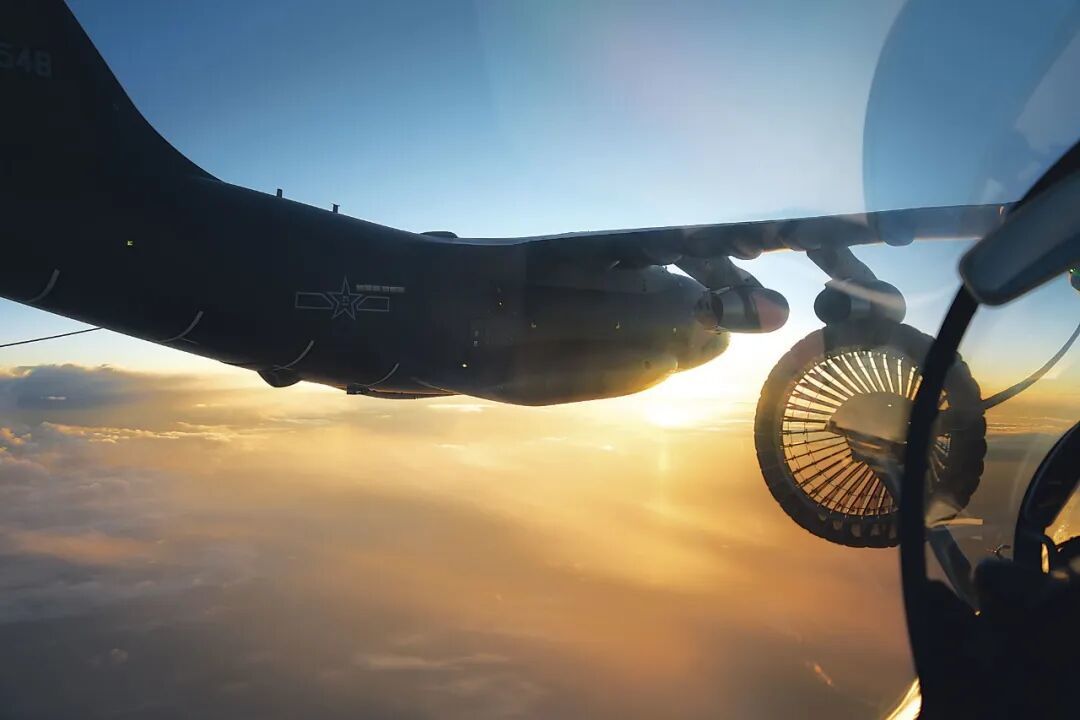
On August 21, the aircraft appearing over Egypt was not last year's J-10C, but the J-16, which is making its first deployment to Africa for joint training. More noteworthy than the aircraft model itself is the YY-20A, which simultaneously refueled two J-16s while en route, also serving as an airborne command node. This scene illustrates that the PLA Air Force is now looking to validate not just whether they can fly there, but whether they can do so with a complete system and immediately begin training upon landing.
The Three Joint Exercises Are Not About the Same Thing
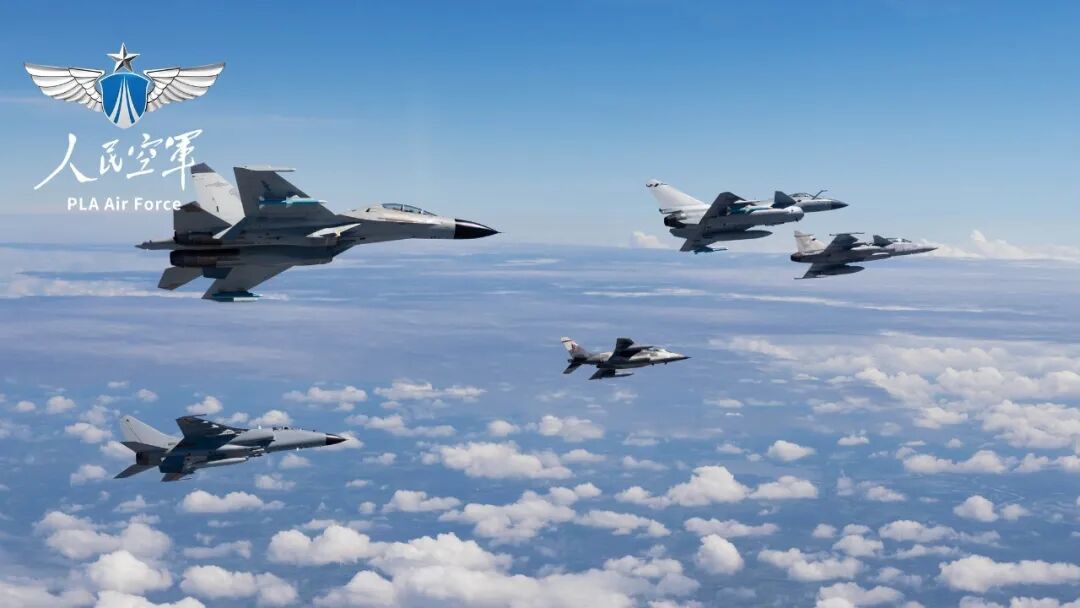
In the past week, the PLA Air Force has simultaneously conducted operations in three directions. The "Civilization Eagle-2026" in Egypt has entered its second implementation phase, the "Eagle Strike-2026" in Thailand has just concluded, and the "Divine Eagle-2026" in the Belarus direction has entered a comprehensive exercise phase. While each of these three joint exercises is not new when viewed separately, their simultaneous occurrence within the same timeframe changes the context significantly.
- In the Egypt direction, the J-16 is making its first trip to Africa, working alongside the YY-20A, special aircraft, and helicopters, focusing on long-range delivery, multi-purpose strikes, and coordination in unfamiliar airspace.
- In the Thailand direction, the Chinese side brought fighter jets, early warning aircraft, tankers, helicopters, and surface-to-air missile systems, with training objectives extending from air combat to joint air defense and rescue operations.
- In the Belarus direction, mixed groupings and joint command are the main focus, resembling the refinement of cross-regulation and cross-task procedural coordination.
In simple terms, this is not three parallel news stories, but a complete capability chain. Southeast Asia tests routine collaboration, Africa tests intercontinental deployment, and Belarus tests joint command; together, they resemble a strategic air force that is taking shape.
Real Progress Lies in the Support Chain, Not in Individual Aircraft Performance
Many people focus on the fact that the J-16 is heavier and can carry more ordnance than the J-10C, which is certainly true. However, from a military-industrial and systemic perspective, the real challenge lies in the support chain. According to public information, the formation flying to Egypt covered over 6,000 kilometers, crossing four countries across two continents, and involved nearly 9 hours of flight, during which dual aircraft refueling was completed. This threshold is not about engine thrust, but about tanker availability, flight route coordination, mission planning, maintenance parts, and rapid ground deployment. Without these, even the farthest flying heavy fighter jet is merely a one-time demonstration.
The situation in Thailand similarly illustrates the point. The simultaneous deployment of fighter jets, early warning aircraft, tankers, helicopters, and surface-to-air missile systems indicates that the PLA Air Force is beginning to treat overseas joint training as a miniature version of systemic operations, rather than merely a diplomatic flight display. The mixed training of airborne troops in Belarus addresses another shortcoming, focusing on how to compress joint command procedures into an executable state under different units and task backgrounds. To put it in the words of Li Minghui, while platform upgrades are certainly important, the real challenge that requires significant investment is always the underlying support organizational capability.
How Far Are We from a True Global Air Force?
However, I believe that we should not interpret this round of tri-line joint training too optimistically. First, whether joint training can become routine depends on whether the number of support platforms like the YY-20A is sufficient to sustain multi-directional missions over the long term, rather than just a few concentrated deployments. Second, overseas training and sustained overseas operations are not the same; the former primarily assesses delivery and coordination, while the latter also considers ammunition resupply, base availability, and maintenance capabilities. Third, the more heavy platforms like the J-16 operate across seas and continents, the greater the pressure on engine lifespan, parts turnover, and maintenance standardization will be.
Therefore, the most noteworthy signal from this round is not that the PLA Air Force has become globalized, but that it is gradually transforming long-range deployment from a one-time proof of concept into a regular training subject. The next real observation should not be whether they will go to Egypt again, but whether the PLA Air Force can stabilize the frequency of such systemic deployments along the second and third long-range flight routes over the next year.
The People's Liberation Army Air Force (PLAAF) conducted joint military exercises involving J-16 aircraft in Egypt on August 21, 2026, marking their first deployment to Africa. Concurrently, exercises were held in Thailand and Belarus, focusing on long-range deployment and multi-domain operations. The YY-20A tanker supported the J-16s with aerial refueling, indicating a shift towards regular training operations rather than one-time demonstrations.
- J-16 aircraft conducted joint training in Egypt for the first time.
- YY-20A provided aerial refueling for J-16s during transit.
- Three simultaneous military exercises occurred in Egypt, Thailand, and Belarus.
- The exercises focus on long-range deployment and multi-domain operations.
- The PLAAF is transitioning from one-time demonstrations to regular training operations.