
J-20S Shifts to Maritime Strike: The Real Weakness of the PLA's Twin-Seat Stealth Fighter Remains Missile Compatibility
 Li Minghui
J-20S Shifts to Maritime Strike: The Real Shortcoming of the PLA's Twin-Seat Stealth Fighter Remains Missile Compatibility
On October 16, the latest round of discussions surrounding China's twin-seat J-20S revealed that the truly valuable aspect is not the eye-catching label of "carrier killer," but rather the official clarification that the aircraft's mission scope has been explicitly extended to maritime targets. A related report by CCTV on January 11 stated that the J-20S, in addition to medium- and long-range air superiority, also possesses capabilities for precision strikes against land and sea targets, electronic jamming, tactical command, and manned-unmanned collaborative operations. The U.S. Naval Institute News and recent English defense reports subsequently pointed out that specific anti-ship munitions, range, and internal mounting methods have yet to be disclosed.
The Twin-Seat Configuration Does Not Just Mean Flying Faster
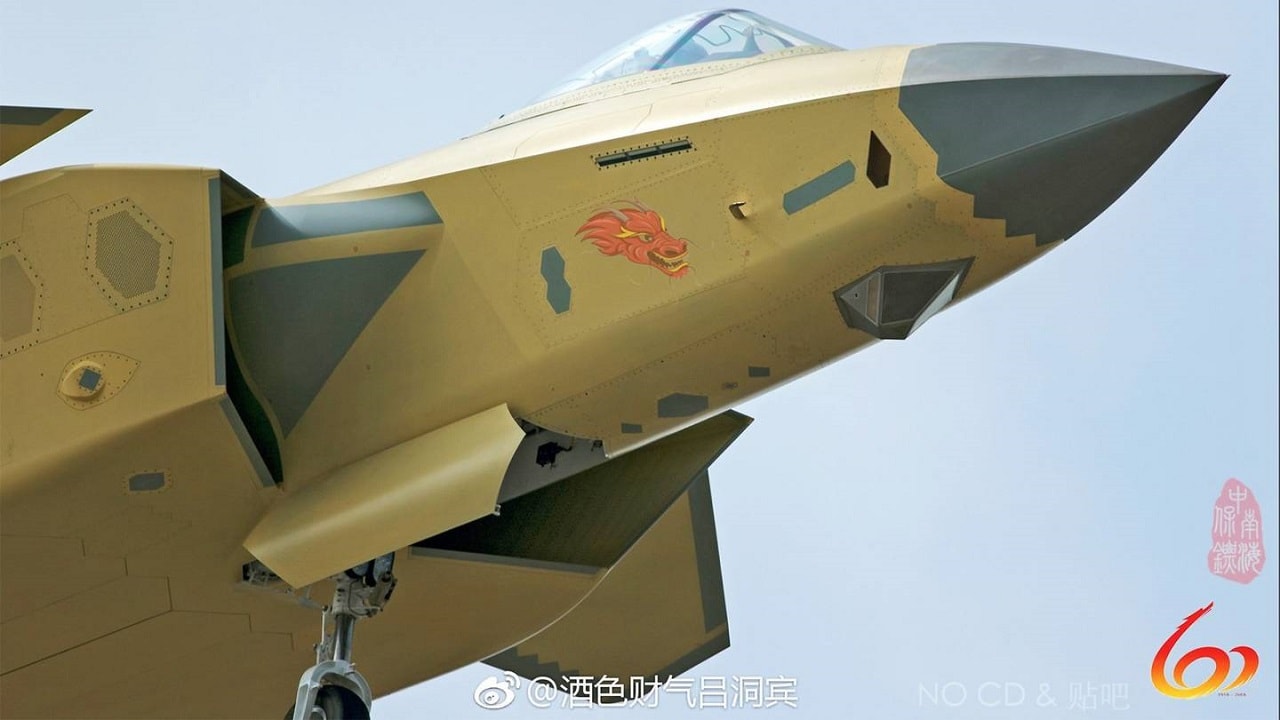
The core change in the J-20S lies in the cockpit, not just the length of the airframe. The second crew member can share the responsibilities of avionics management, electronic warfare, target identification, and drone formation control, allowing the pilot to avoid handling all sensor and communication tasks simultaneously. This division of labor is practically significant for missions that require searching for surface vessels in the East China Sea, Taiwan Strait, or along the first island chain. Maritime targets do not wait for attacks like fixed land targets; reconnaissance, positioning, data link updates, and weapon release must be completed in a very short time.
However, a twin-seat configuration does not automatically equate to a mature maritime strike platform. CCTV's capability description is an official declaration, lacking public evidence of live-fire tests, sustained operational rates, and tactical formation. The author believes that the most credible value of the J-20S at present is as a stealth sensor and command node integrated into the PLA's existing anti-access system, rather than as a single aircraft capable of long-range strike missions.
Internal Weapons Bay is the Decisive Constraint
The U.S. Naval Institute News mentioned that the anti-ship payload of the J-20S has not been clearly defined. This issue is more critical than whether it can engage ships. If missiles are stored internally, the weapon size will be limited by the length, width, and opening of the weapons bay; if external mounts are used, while it can increase the diameter and range of the munitions, it will significantly compromise the stealth profile and may shorten the safe window within enemy air defense zones.
China already possesses various anti-ship weapons such as the YJ-12 and YJ-18, but the existence of these missiles does not imply that they are all compatible with the J-20S. Size, mounting points, separation tests, flight control software, and target indication links—if any one of these is not resolved, the "maritime strike capability" on paper remains at the stage of mission declaration. In simple terms, a stealth fighter that cannot carry suitable munitions is no different from a sports car that cannot be fitted with tires.
How It Will Change the Search Chain in the Western Pacific
Even if the J-20S does not currently have publicly disclosed dedicated anti-ship missiles, it may initially undertake forward reconnaissance, electronic suppression, and target indication missions. It can leverage its lower detectability to approach maritime formations, obtain vessel positions, and then relay that data to land-based long-range anti-ship missiles, surface vessels, or other air forces. This way, the PLA's maritime strike chain does not have to be completed by a single aircraft but can be accomplished through a combination of stealth nodes, early warning aircraft, satellites, drones, and long-range firepower.
This also forms a complementary relationship with the Liaoning aircraft carrier's long-range training. The Liaoning tests the sustained activity and support capabilities of carrier formations in the Western Pacific, while the J-20S represents how land-based air forces can connect stealth reconnaissance with long-range firepower. The two do not represent the same operational topic, and this article should not simply describe the J-20S as a substitute for carrier formations.
Of course, risk assessments must allow for margins. Whether the J-20S can stably control unmanned wingmen, maintain data links in complex electromagnetic environments, and detect and track low-observable vessels are questions that publicly available information has not answered. What the U.S. Navy and its allies truly need to focus on is not what appears in promotional videos, but whether the next test reveals clear anti-ship munitions, internal mounting details, and manned-unmanned collaborative formations. If these pieces of evidence remain absent, the J-20S is a direction worth paying attention to, rather than a validated maritime hunter.
References
- CCTV and Chinese official media, January 11, 2026, report on the mission expansion of the J-20S
- U.S. Naval Institute News, January 14, 2026, report on the J-20's new model's capability to attack maritime targets
- 19FortyFive, October 2026, analysis on the J-20S anti-ship payload and internal weapons bay compatibility issues
- South China Morning Post, reports on the J-20's radar, engine, and artificial intelligence upgrades
The J-20S has expanded its mission capabilities to include maritime targets, as discussed on October 16, 2026. The dual-seat configuration enhances its operational effectiveness by allowing better management of electronic warfare and target identification. However, uncertainties remain regarding the compatibility of existing anti-ship missiles with the aircraft, and further testing is needed to validate its operational capabilities.
- The J-20S has extended its mission scope to maritime targets.
- The dual-seat configuration allows for better management of electronic warfare and target identification.
- There is uncertainty regarding the compatibility of existing anti-ship missiles with the J-20S.
- The J-20S may serve as a reconnaissance and command node rather than a direct strike platform.
- The report highlights the need for further testing and evidence of operational capabilities.