
Ukrainian Strike Drones Return to Russian Oil Refineries — The Energy Truce Turned Out to Be a Trap
 Dmitri Volkov
Ukrainian Strike Drones Return to Russian Oil Refineries — The Energy Truce Turned Out to Be a Trap
The most important figure of the last 24 hours is not the number of drones, but the duration of the political pause. The energy truce announced by Washington lasted only a few days, after which Moscow resumed strikes on Ukrainian infrastructure, and Kyiv again attacked Russian oil refining facilities. This is not a sudden breakdown of diplomacy, but a return to the logic that the Russian command itself helped to establish: energy has become part of the military front.
What Happened on the Night of October 16
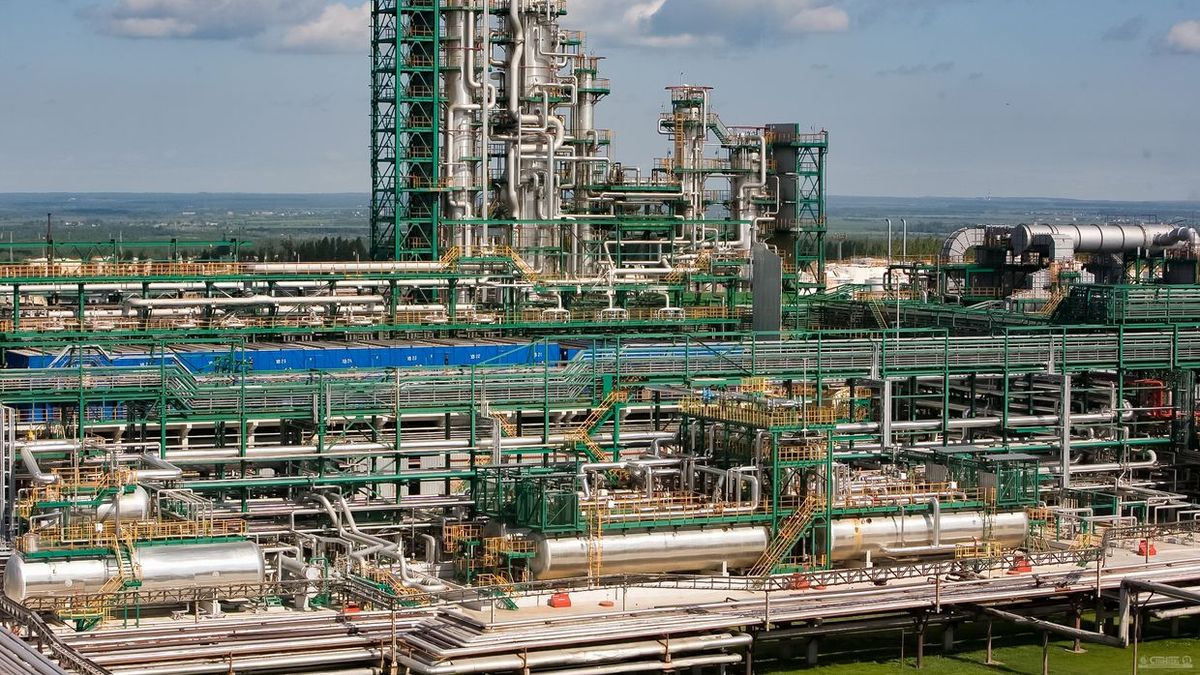
According to reports from Reuters, Associated Press, The Guardian, and Al Jazeera, Ukraine resumed strikes on Russian oil refining facilities after a series of Russian attacks. The publications mentioned an oil refinery, and Russian and Ukrainian regional sources linked one of the attacks to the Ryazan direction. Details of the damage still require independent verification: reports of fires, shutdowns of individual units, and the actual volume of processing in the first hours traditionally differ.
At the same time, Volodymyr Zelensky stated that Kyiv no longer considers the energy agreement to be in effect. Donald Trump called the resumption of Ukrainian strikes a "shame," but the sequence of events looks different. If one side declares a pause but continues to strike critical infrastructure, the other side gains not only a moral but also an operational basis to return to the previous model of mutual pressure. Wars rarely end with statements, especially if there is no mechanism for monitoring the truce.
Refineries as Military Targets, Not Just Economic Symbols
Russian oil refining is significant for the front in three ways. First, it produces gasoline, diesel fuel, and aviation kerosene, without which the regular operation of army logistics is impossible. Second, it is a distribution network: damaging one facility does not necessarily destroy the plant, but forces changes in routes, stockpiling reserves, and overloading neighboring enterprises. Third, it affects export revenue and domestic prices. Even a temporary reduction in processing undermines the stability of a budget that is already adapted to military expenses but not to endless repairs of remote industrial facilities.
The Ukrainian campaign against refineries does not require the complete destruction of each facility. It is sufficient to regularly hit bottlenecks — primary processing units, pumping stations, tank farms, railway hubs, and power supply systems. This approach resembles the Soviet logic of "operational disruption," but with one significant difference: modern long-range drones are cheaper than cruise missiles and can be used in series. Their task is not to create a beautiful explosion, but to turn repairs into a constant expense.
Why the Energy Pause Could Not Be Stable
The energy truce had a structural flaw from the very beginning. For Moscow, strikes on Ukrainian energy are a way to influence the civilian population, industry, and European political will. For Kyiv, strikes on refineries are one of the few tools that allow transferring the cost of the war onto Russian territory and reducing the resources for offensive operations. Both sides view infrastructure as a lever of pressure, not a neutral object.
The Russian military doctrine of recent years assumes that the depth of the enemy's rear no longer guarantees safety. However, the Russian leadership was not prepared to accept the reverse side of this formula. If Moscow declares Ukrainian energy facilities as permissible targets, then Ryazan, Saratov, Yaroslavl, and other industrial centers inevitably become part of the same geography of conflict. This is not symmetry in the strict sense: the capabilities, scales, and consequences of strikes differ. But the political logic is completely symmetrical.
Starlink and the Limits of American Pressure
The situation was complicated by the episode with Starlink. After reports of a slowdown or restriction of access for Ukrainian military to satellite communications, the British side announced the restoration of the service. For the battlefield, this is a matter of drone management and data transmission, but for diplomacy, it is a demonstration that American technological dependence can be turned into a political lever.
Kyiv concluded that the pause in strikes on Russian refineries cannot be based on the assumption of constant support from Washington. If access to communications, intelligence data, or weapons can become a bargaining chip, the Ukrainian command will seek to maintain its own long-range strike capabilities and autonomous reconnaissance-strike chain. In other words, Trump's pressure may yield short-term results in public rhetoric, but at the same time accelerates Ukraine's technological self-sufficiency.
What This Means for Russia
The official response from Moscow will likely revolve around two theses — strengthening air defense and promises of retaliatory strikes. However, air defense cannot equally protect all facilities on the territory of the country. Oil refineries are large, stationary, and have many vulnerable elements; even a successful interception of most drones does not eliminate the risk of a single hit on a critical installation.
For the Russian army, the main effect will not manifest in a single day of fuel shortages, but in a decrease in the predictability of supply. The front requires a constant flow of fuel, not just its availability in the annual balance. If disruptions force the redirection of reserves, limit civilian consumption, or use imported components for repairs, the military economy begins to pay more for each subsequent strike than for the previous one. This is where the line between tactical damage and strategic wear lies.
Forecast
In the coming weeks, we should expect not a return to a stable energy truce, but a series of short pauses and new strikes. The U.S. may temporarily limit certain Ukrainian operations, but cannot eliminate the basic incentive for Kyiv to respond to Russian attacks. Russia, in turn, is unlikely to voluntarily abandon pressure on Ukrainian energy as long as it considers it a tool of the winter campaign.
The main conclusion is colder than diplomatic statements. The energy truce failed not because the parties did not understand its terms, but because those terms contradicted their military logic. Russian refineries are now not a symbolic target, but an element of the front. If Moscow does not change its practice of striking Ukrainian infrastructure, Ukrainian drones will return to Russian processing again and again — at a pace determined not by press conferences, but by the capabilities of repair and production.
Sources
- Reuters, October 15–16, 2026 — reports on the resumption of strikes on Russian refineries, Zelensky's positions, and Trump's reaction.
- Associated Press, October 16, 2026 — reports on the restoration of mutual strikes on energy infrastructure.
- The Guardian, October 16, 2026 — overview of the collapse of the energy truce and the episode with the restoration of Starlink.
- Al Jazeera, October 16, 2026 — political reaction from the U.S. to Ukrainian strikes on Russian refineries.
Ukraine resumed drone strikes on Russian oil refineries on October 16, 2026, following a series of Russian attacks on Ukrainian infrastructure. The energy truce declared by Washington quickly collapsed, with both sides viewing infrastructure as leverage in the conflict. President Zelensky announced that the energy agreement is no longer in effect, indicating a return to previous military strategies targeting critical energy assets.
- Ukraine resumed drone strikes on Russian oil refineries on October 16, 2026.
- The energy truce declared by Washington lasted only a few days before renewed attacks.
- Russian oil refineries are now considered military targets due to their logistical importance.
- Ukrainian President Zelensky stated that the energy agreement is no longer valid.
- The situation is exacerbated by the potential limitations on Ukrainian military access to Starlink.