
Japan Names China Its Greatest Threat but Still Can't Fight the War
 Marcus Chen
Japan Names China Its Greatest Threat but Still Can't Fight the War
Japan is asking for a record ¥8.9 trillion — $56.1 billion — in defense spending next year. The number is not the story. The story is what Tokyo says that money is for, and what its own document admits it still cannot do.
The 2026 Defense White Paper, released this month, opens with a warning that the international community is facing its greatest trial since World War II and entering a new era of crisis. It names China the greatest strategic challenge and says a serious conflict on the model of Russia's invasion of Ukraine cannot be ruled out in East Asia.
The Diagnosis Is Getting Sharper
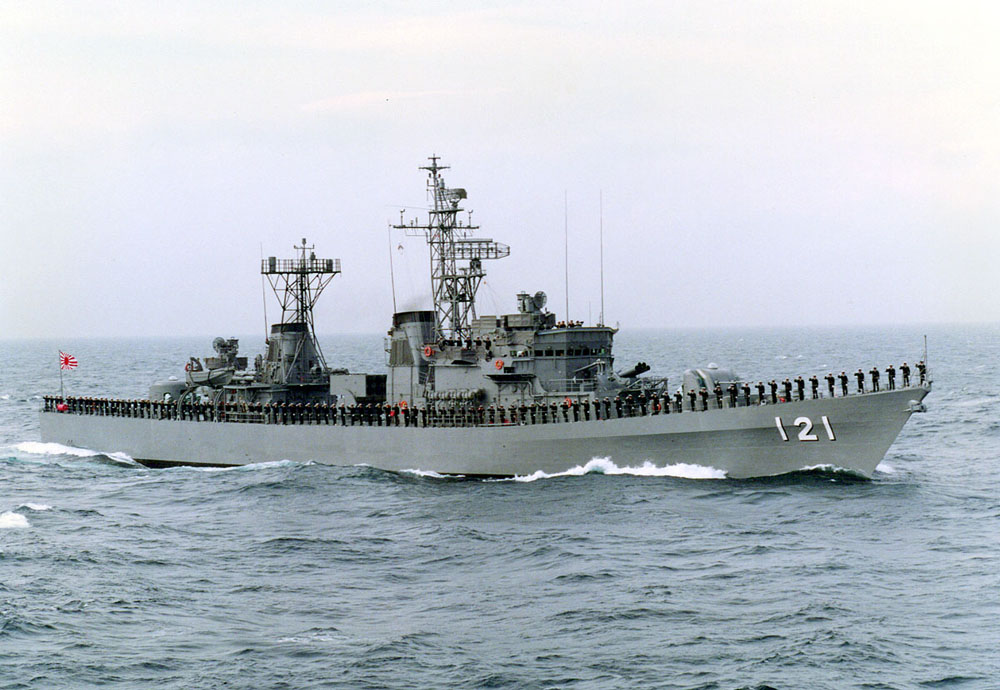
Tokyo is no longer hedging about who the threat is. China is named outright, alongside Russia and North Korea, and the paper singles out Beijing's deepening joint exercises with Moscow as an alarming trend. For a government that spent decades refusing to name its neighbors in defense documents, this is a real shift in tone.
What is more interesting is what the paper prescribes. It draws the lesson from Ukraine that future wars will be attritional and industrial, so it calls for lower-cost systems, faster research and production, increased output, and stockpiling of materiel. It plans to buy large numbers of low-cost unmanned vehicles across air, sea, and underwater domains, folded into a program called SHIELD — the Synchronized, Hybrid, Integrated and Enhanced Littoral Defense — targeted for fiscal 2027.
That is the right list. Anyone who has watched Ukraine knows that mass and munitions, not platforms alone, decide attritional wars.
But the Industrial Base Is Walking Away
Here is where the document undercuts itself. In the same pages where it argues that Japan's indigenous defense industry is increasingly important, it concedes that companies like Komatsu and Mitsui have already abandoned or downsized their defense work. You cannot announce a production and stockpiling strategy while the factories that strategy depends on are closing the door.
The white paper's answer is that higher budgets will reinforce the defense industrial base. Maybe. But budgets are inputs, not outputs. A ¥8.9 trillion request does not deliver a single extra munition if the production lines, the skilled workers, and the long-term contracts are not there to turn money into shells.
The Promise and the Gap
The document's central commitment is that, by fiscal 2027, Japan will strengthen its defense capability to the point where it can take primary responsibility for dealing with invasions against its nation. Fiscal 2027 is roughly eighteen months away. That is not much runway to go from a self-defense force built around a decades-old division of labor — Japan holds the line, America does the heavy lifting — to a force that defeats an invasion on its own.
Grant Newsham, a senior research fellow at the Japan Forum for Strategic Studies, put it bluntly to Defense News. He describes Japan's decades of pathological dependence on the Americans to take care of its defense, and its so-called pacifist mindset and contrived constitutional prohibitions on an effective defense force. His bottom line: Ukraine really spurred Japanese awareness — figuring that Taiwan was next, with everything that would portend for Japan's security. This has not, however, translated into a Japan Self-Defense Force that is organized and capable of fighting a war.
That is the gap in one sentence. Awareness has arrived. Capability has not.
Washington Is Reading From the Same Script
Tokyo is not writing this alone. The same week the white paper made headlines, Pentagon policy chief Elbridge Colby was in Manila telling a Southeast Asian audience that Washington is not disengaging from Asia but wants partners, not protectorates. He framed the posture as deterrence by denial along the First Island Chain — Japan to Taiwan to the Philippines to Borneo.
Read together, the two messages are the same sentence from opposite directions. Washington is telling allies to carry more of their own defense. Tokyo is telling Washington it will. The white paper is, in effect, Japan's written acceptance of Colby's demand.
Accepting in principle is cheap. Taking primary responsibility for dealing with invasions is not a slogan — it means Japan would need its own full-spectrum answer to a Chinese assault: intelligence and targeting, long-range strike, air and missile defense, sea denial, and enough ammunition to stay in the fight past the first week. The paper's own emphasis on stockpiling is a quiet admission that this stockpile does not yet exist.
Conclusion
Japan has spent the past several years writing progressively more honest defense documents. The 2026 edition is the most honest yet: it names China, accepts the Taiwan logic, and promises to stand on its own by fiscal 2027. What it has not done is build the force to match the words.
Naming a threat and being able to fight it are different jobs, and Tokyo knows it. The question is whether the next budget request closes the gap or just reprints last year's warning with a bigger number. If Taiwan is next — and Tokyo has already figured that out — Japan is running out of documents and running out of time.
Japan has identified China as its greatest strategic threat and is requesting a defense budget of ¥8.9 trillion ($56.1 billion) for the next fiscal year. The 2026 Defense White Paper outlines plans to enhance defense capabilities by fiscal 2027, including the acquisition of unmanned vehicles. However, Japan's Self-Defense Forces currently lack the organization and capability to effectively respond to military threats, highlighting a significant gap in readiness.
- Japan's defense budget request is ¥8.9 trillion ($56.1 billion) for the next fiscal year.
- The 2026 Defense White Paper identifies China as the greatest strategic threat.
- Japan plans to enhance its defense capabilities by fiscal 2027.
- The document acknowledges the decline of Japan's indigenous defense industry.
- Japan's Self-Defense Forces are not currently organized to fight a war.