
Japan's 2026 Abukuma Deal Gives Philippines Hulls Not Sea Control
 Marcus Chen
Japan's 2026 Abukuma Deal Gives Philippines Hulls Not Sea Control
Six old Japanese escorts would add roughly 720 sailors' worth of new manpower demand to a Philippine Navy already short of trained crews. That is the first number to watch after Tokyo and Manila agreed on May 28 to accelerate defense equipment talks covering Abukuma-class destroyer escorts and TC-90 aircraft.
The headline is easy: Japan is moving from security assistance to actual warship transfer talks with the Philippines. The harder question is whether Manila can turn second-hand hulls into persistent sea denial in the South China Sea before China normalizes a larger naval presence around Luzon, Palawan, and the approaches to Taiwan.
What Tokyo And Manila Actually Agreed
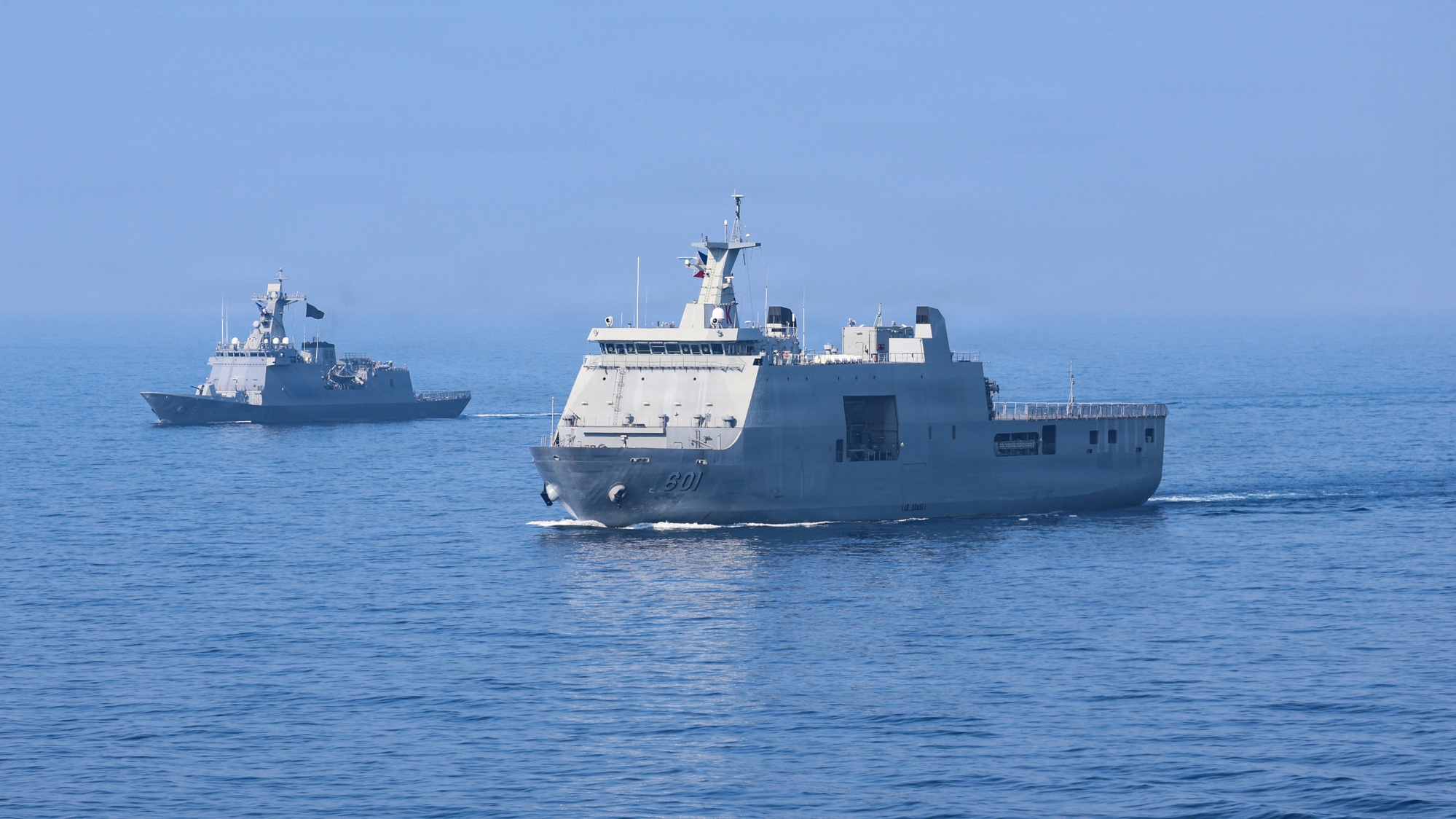
Japan's Ministry of Foreign Affairs said Prime Minister Sanae Takaichi and President Ferdinand Marcos Jr. elevated the relationship to a Comprehensive Strategic Partnership, the first such framework for the Philippines. More important for the fleet balance, the two leaders decided to begin negotiations on a classified military information protection agreement and to accelerate talks on transferring defense equipment, specifically including Abukuma-class destroyers and TC-90 aircraft.
That package connects three pieces that usually get discussed separately. A General Security of Military Information Agreement would let Tokyo and Manila share protected defense data. The Abukuma talks would put Japanese naval steel into Philippine service. Continued Official Security Assistance, patrol vessel support, and coast guard capacity building would feed the lower end of maritime domain awareness.
Japan's Defense Ministry had already laid the groundwork on May 5, when the two defense ministers welcomed the entry into force of the Reciprocal Access Agreement, the signing of an Acquisition and Cross-Servicing Agreement, and Japan Self-Defense Force participation in Balikatan 41-26. The same statement called for stronger maritime domain awareness and new information-sharing frameworks. In plain terms, the May 28 summit gave political cover to what the defense ministries had been building operationally.
The Abukuma Is Useful But It Is Not A Modern Frigate
The Abukuma-class is not a silver bullet. According to the Japan Maritime Self-Defense Force, the class displaces 2,000 tons standard, is 109 meters long, makes 27 knots, and carries about 120 personnel. Its listed weapons include a 76 mm gun, a 20 mm close-in weapon system, surface-to-surface missile equipment, an ASROC anti-submarine rocket system, and two triple short torpedo launchers.
That is a serious package for patrol and escort work, especially for a navy that needs more hulls in the West Philippine Sea. But the ships entered Japanese service around the end of the Cold War. Their combat systems, sensors, datalinks, electronic warfare suite, and missile inventory matter more than the brochure weapons. A 2,000-ton ship with old sensors is a target. The same ship tied into Japanese, Philippine, and U.S. maritime surveillance becomes a tripwire and a shooter.
The Philippine Navy's problem is not that it owns no capable ships. The Jose Rizal-class frigates and newer missile-capable craft already give Manila a modest surface combatant force. The problem is geometry. From Subic to Second Thomas Shoal is roughly 500 nautical miles by sea route. From Luzon to the Bashi Channel is another patrol problem entirely. A small fleet cannot be in Palawan, Scarborough Shoal, the Luzon Strait, and maintenance at the same time.
Manila Needs Availability More Than Symbolism
If Japan transfers multiple Abukumas, the useful metric will be operational availability, not hull count. Assume six ships, 120 crew each, plus shore maintenance and training pipelines. That is a major personnel bill. If only two or three are deployable on a normal cycle, Manila gains presence but not control. If Japan funds refits, spares, training, and maintenance support, the same hulls become a meaningful patrol rotation.
Anyone who has served on a destroyer knows the ship is only the visible part of the weapon system. The real system is the pier, the parts locker, the technicians, the fuel contract, the encrypted chat room, and the commander who knows where the target is. Without that back end, used warships become flag-showing platforms. With it, they complicate Chinese planning.
This is why the intelligence agreement matters as much as the ships. Japan has already provided coastal surveillance radar support to the Philippines, while Japanese P-3C and P-1 aircraft, U.S. P-8A patrol planes, Philippine sensors, and commercial satellite feeds all look at overlapping water. A protected information channel lets those inputs move faster and more confidently. For a small navy, cueing is combat power.
China's Map Problem Is Getting Harder
Beijing will describe the Japan-Philippines move as bloc politics. That misses the operational driver. China has been using coast guard, militia, naval, and air assets to make Philippine resupply and patrol activity more expensive. It has also shown it can move naval pressure across the South China Sea, the Taiwan approaches, and the Philippine Sea. Tokyo and Manila are responding because those theaters now touch each other.
The Luzon Strait is the hinge. A Taiwan contingency, a South China Sea confrontation, and Japan's southwestern island defense problem all meet there. During Balikatan 2026, Japanese forces fired anti-ship missiles from Philippine soil for the first time, while U.S. and allied forces rehearsed maritime strike and key terrain security. Add transferred Japanese escorts and a classified information pact, and the Philippines becomes less of a rear area and more of a forward sensor-and-shooter partner.
Still, the math should restrain the rhetoric. Six Abukumas would not let Manila defeat the People's Liberation Army Navy in a surface fight. They would give the Philippines more days on station, more sonar coverage, more missile cells or launchers if modernized, and more options to escort resupply missions without pulling its few best frigates from every other task.
The Real Test Comes After The Signing
The next questions are prosaic and decisive. Who pays for modernization? Which missiles remain aboard or are replaced? Can the Philippine Navy absorb Japanese maintenance standards? Will the information agreement actually move classified maritime tracks in near real time, or will it sit in a binder while ships still rely on voice reports and public AIS?
The May 28 summit was a political marker, but the military value will be created in refit yards and watch floors. Japan can give Manila hulls. It can help build a data-sharing architecture. It can train crews and normalize combined operations under the RAA and ACSA. What it cannot do is instantly manufacture Philippine sea control.
That is the blunt conclusion. The Abukuma deal would make China's South China Sea calculus harder, especially around the Luzon approaches, but only if Tokyo treats transfer as the start of a sustainment program rather than the end of a diplomatic announcement. Hulls are not strategy. Available hulls, fed by shared intelligence and kept at sea, start to become one.
Japan and the Philippines agreed to accelerate defense equipment talks on May 28, 2023, involving the transfer of six Abukuma-class destroyers and TC-90 aircraft to the Philippine Navy. This agreement aims to enhance military cooperation and maritime domain awareness in the South China Sea. However, the Philippine Navy faces challenges in crew training and operational availability of the transferred ships.
- Japan agreed to transfer six Abukuma-class destroyers to the Philippines.
- The deal includes discussions on a military information protection agreement.
- The Philippine Navy is currently short of trained personnel to operate the new ships.
- The Abukuma-class destroyers are not modern frigates and have limitations in combat systems.
- The agreement aims to enhance maritime domain awareness and operational cooperation.