
Japan's 2026 Terra B1 Drone Buy Starts Fixing the Air Defense Math
 Marcus Chen
Japan's 2026 Terra B1 Drone Buy Starts Fixing the Air Defense Math
Three months. That is the timeline Japan set for moving an interceptor drone from demonstration to procurement and initial delivery. According to Terra Drone's August 25 statement, the Acquisition, Technology and Logistics Agency (ATLA) scheduled trials from late July to early August, a mass procurement contract in late August, and delivery around September 2026. In Japanese defense procurement terms, that is speed bordering on wartime behavior. More important, it shows Tokyo has finally accepted a basic lesson from Ukraine and the Middle East: if you use high-end missiles to kill every low-end one-way drone, the defender loses the cost exchange long before it loses the battle.
Defense News reported on August 27 that ATLA signed a mass-production procurement agreement for Terra B1 after a Maritime Self-Defense Force demonstration last month. Terra Drone says the aircraft emerged from a field of 38 proposals and became the only platform to pass the demonstration test. ATLA has not disclosed the contract value or the number of drones on order, so the exact scale remains unknown. But the procurement logic is clear enough. Japan is not buying prestige. It is buying magazine depth.
Tokyo Is Buying Time More Than Airframes
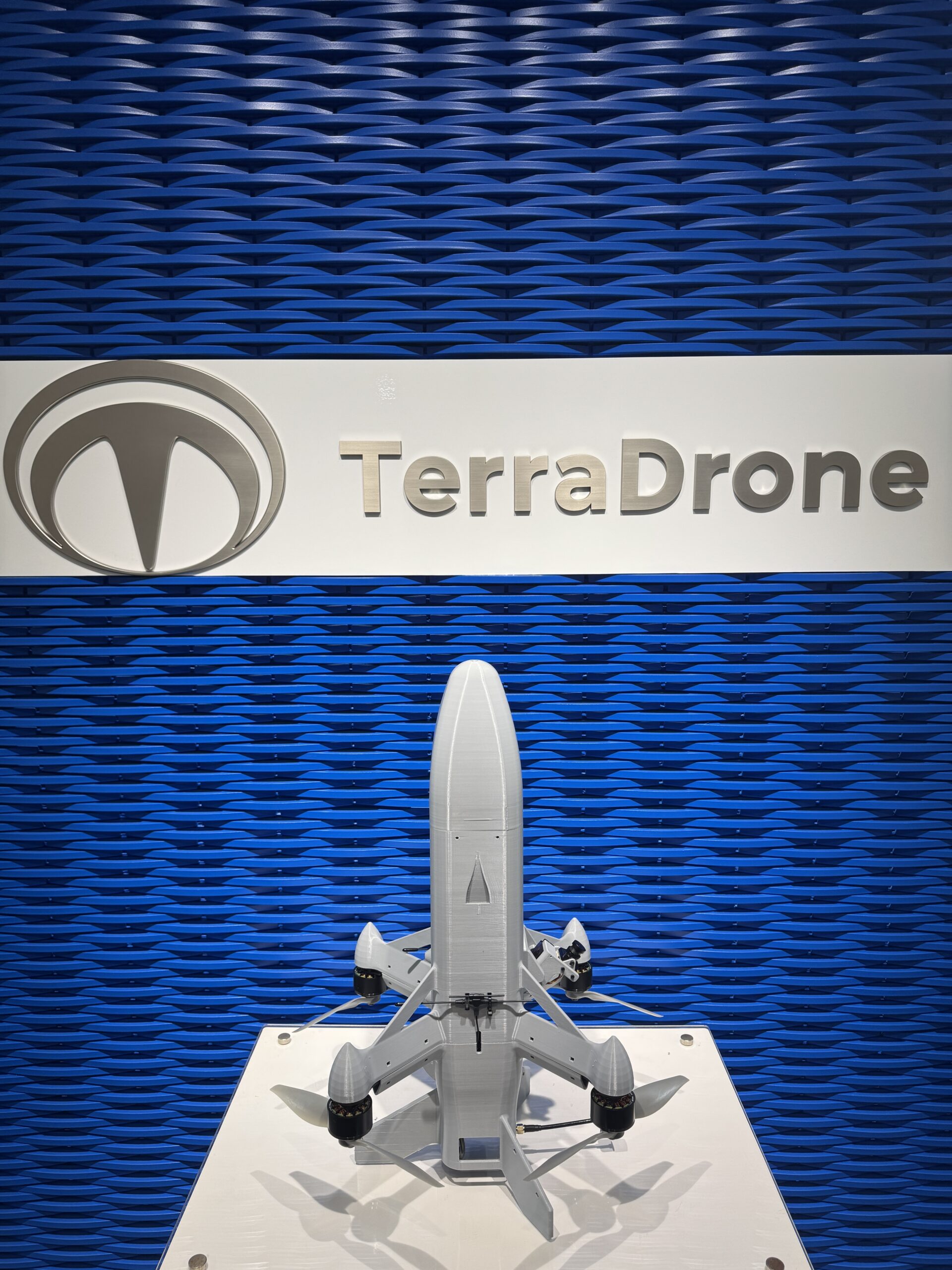
The key detail in the official Terra Drone release is not just that Terra B1 passed. It is that ATLA's requirement set covered range, endurance, speed, guidance, simultaneous control, launch and recovery, integration, safety, maintenance, replenishment, training, and the period from contract signing to delivery. Anyone who has served around fleet operations knows what that means. Japan was not asking for a clever prototype. It was asking whether this thing can be supplied, sustained, and handed to operators fast enough to matter.
That is a much healthier question than the one many Indo-Pacific militaries have been asking for the last decade. Too often the region has treated air defense as a platform problem: buy another destroyer, buy another radar, buy another missile battery. But one-way attack drones change the arithmetic. A defender may detect them just fine and still bleed out if each intercept costs tens or hundreds of times more than the incoming threat. Terra Drone's own explanation says the program was shaped by Shahed-type attacks and by the operational lesson that low-cost interceptors can preserve expensive missile inventories for harder targets.
That is the gap. Japan is trying to build a lower layer in the defensive stack before the problem becomes acute in East Asia.
Why This Matters at Sea
The initial user is expected to be the Maritime Self-Defense Force. That makes sense. Fixed bases can at least disperse, camouflage, or harden. Ships have fewer hiding places and limited missile cells. A destroyer or auxiliary operating around the Nansei Islands or farther southwest does not just need exquisite sensors. It needs a way to deal with repeated low-cost attacks without burning through its vertical launch inventory on targets that should never have been worth a major interceptor in the first place.
Japan has been talking for years about defending the southwest island chain, protecting bases, and sustaining operations under missile and air attack. What it has needed is a cheaper, faster way to absorb the drone part of that threat set. Terra B1 will not solve the high-end problem. It will not stop ballistic missiles, and it will not replace shipborne surface-to-air missiles against fast jets or large salvos. But if it can reliably thin out loitering munitions and one-way drones, it frees the rest of the force to spend premium munitions on premium threats.
That is exactly how a navy should think about layered defense. Sea control is not only about who has the better ship. It is about who can stay in the fight after the fifth, tenth, and fiftieth cheap attack.
3D Printing Is the Real Strategic Story
Defense News highlighted another point that deserves more attention than the drone itself: Terra Drone plans to use distributed 3D printing to accelerate production and reduce single-site vulnerability. CEO Toru Tokushige argued that the model allows rapid modification as threats evolve and lowers the risk that one strike can cripple the supply chain. That is not a marketing footnote. It is the industrial concept behind the procurement.
Japan's defense buildup has a chronic bottleneck. Tokyo can approve plans quickly, but production capacity, labor, and manufacturing flexibility move more slowly. Nikkei Asia has already reported this year on Japanese firms pushing deeper into small interceptor drones and on foreign drone makers eyeing Japan's industrial base. The Terra B1 decision suggests ATLA is now willing to back a manufacturing model built for iteration and volume rather than for peacetime perfection.
There is a broader Indo-Pacific implication here. If Japan can field printed interceptor drones in useful numbers, it creates a template for allied stockpiling and distributed sustainment across the first island chain. Small, adaptable interceptors produced across multiple sites are easier to surge, easier to replace, and easier to tailor for different services than a boutique missile-centered solution. In a prolonged fight, that matters more than brochure performance.
The Numbers Still Missing
There are limits to the optimism. ATLA has not released quantities, unit cost, or demonstrated kill rates. Terra Drone says Ukraine's battlefield lessons informed the program, but Japanese operating conditions will differ, especially in maritime environments with salt, wind, electromagnetic clutter, and long sustainment tails. The program's speed is impressive, yet speed can also hide weak testing if the bureaucracy is trying to prove it can move fast.
So the right conclusion is not that Japan has solved drone defense. It has not. The right conclusion is that Japan has finally started solving the right problem. Instead of pretending every aerial threat deserves a gold-plated intercept, Tokyo is building a force structure that distinguishes between a Shahed-class nuisance and a truly strategic target. That is how serious militaries preserve combat power.
If Terra B1 arrives in September in more than token numbers and performs well enough for wider naval, air, and ground adoption, this procurement will look like more than a niche drone story. It will mark the moment Japan stopped treating drone defense as a technology demonstration and started treating it as an ammunition economy problem. In any future fight around Taiwan or the East China Sea, that distinction will matter a lot more than the airframe's name.
Japan is procuring Terra B1 drones to enhance its air defense capabilities, with initial delivery expected by September 2026. The Acquisition, Technology and Logistics Agency (ATLA) signed a mass-production agreement following successful demonstrations. This move aims to address the threat posed by low-cost drones and improve logistical support for the Maritime Self-Defense Force.
- Japan is moving to procure Terra B1 drones by September 2026.
- The procurement is a response to lessons learned from conflicts in Ukraine and the Middle East.
- ATLA signed a mass-production procurement agreement after successful demonstrations.
- The initial user of the drones will be the Maritime Self-Defense Force.
- Terra Drone plans to use 3D printing to enhance production capabilities.