
Japan's Ministry of Defense Considers Nuclear Submarines in 2026: SSN Concept that Surpasses the Constraints of the Taigei Class
 Tanaka Takashi
The Japanese Ministry of Defense Considers Nuclear Submarines in 2026: SSN Concept Beyond the Constraints of the Taigei Class
During a press conference on September 11, Defense Minister Shinjiro Koizumi confirmed that nuclear submarines are not excluded from Japan's defense posture review. This is not a decision for introduction. However, it is noteworthy that discussions regarding the Japan Maritime Self-Defense Force's next submarine have shifted from the vessel's stealth and quietness to the issue of how long it can remain submerged in the vast Western Pacific.
Capabilities and Limitations of the Taigei Class
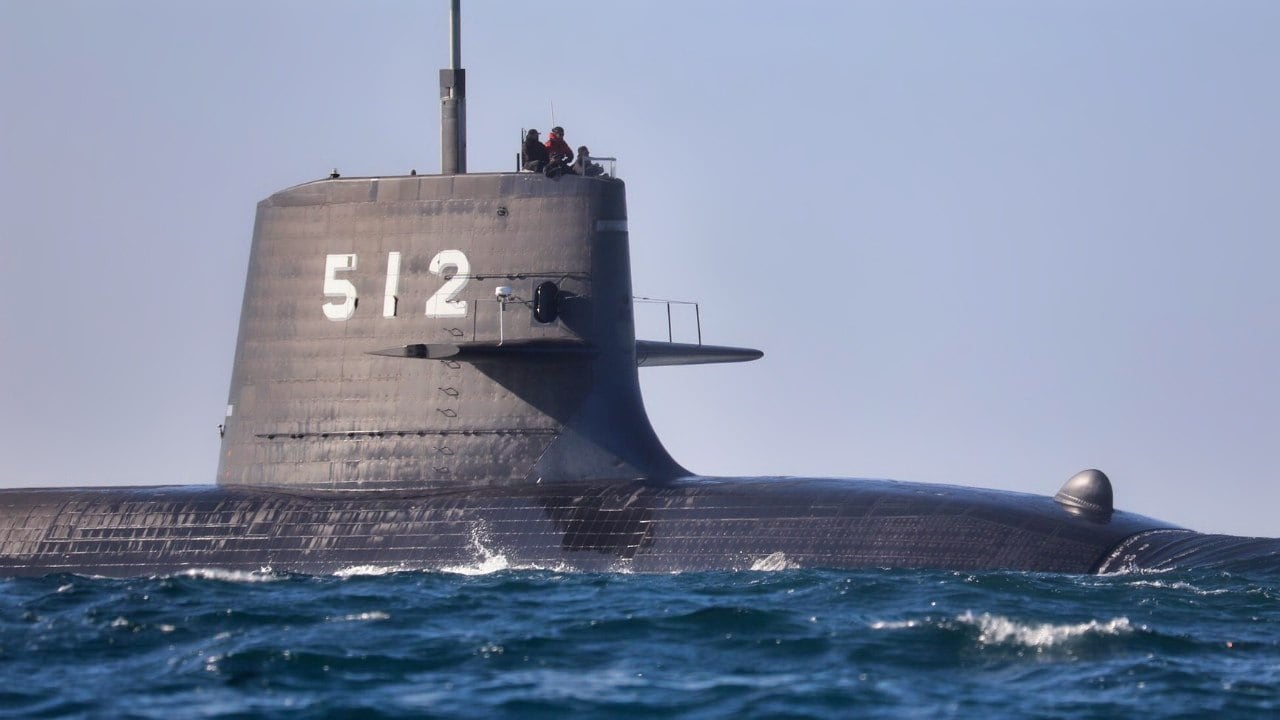
The JMSDF's Taigei class has a standard displacement of about 3,000 tons, a length of about 84 meters, employs lithium-ion batteries, and is said to be equipped with six 533mm torpedo tubes. This is a significant improvement that extends underwater endurance compared to conventional types, but the power source remains diesel-electric. When operating at high speeds for extended periods, it is necessary to use a snorkel for power generation, which poses operational constraints in terms of energy management during wide-area deployment.
With a nuclear attack submarine (SSN), long-duration high-speed submerged operations and rapid movement over long distances become possible. As the surveillance area expands from the East China Sea to the Philippine Sea and further into the Western Pacific, this is not merely an improvement in range. It is a matter of response time, as submarines can change position while avoiding surfacing or frequent recharging, based on contact information obtained from satellites, P-1 patrol aircraft, drones, and the U.S. military's information network.
Separating Capability from Intent
Army Recognition reported that the government is not making a decision to procure SSNs but is considering it as one of the options for the early revision of three strategic documents. While the defense minister cites speed and submerged duration as advantages, he also acknowledges challenges such as the increase in hull size, costs, the need for nuclear specialists, and acoustic issues. Therefore, it is premature to assume that new vessels will be constructed immediately.
Nevertheless, the examination of capabilities serves as a signal of intent. Defense News pointed out that the 2026 defense white paper positions China as the "greatest strategic challenge" and requests a defense budget of approximately 8.9 trillion yen for FY2027. Nuclear submarines serve as tools for anti-submarine warfare and can also become operational bases underwater that can survive attacks on bases or runways. If Japan connects with the U.S. sensor network, it could also push the maritime surveillance of the Japan-U.S. alliance further afield.
The Biggest Barrier is Not the Reactor but the Operational System
Japan needs to establish a reactor, dedicated maintenance facilities, radiation safety systems, crew training, and accident response mechanisms. While the U.S. AUKUS cooperation is informative, the framework designed for Australia cannot be directly transferred to Japan. The deeper the technological cooperation with the U.S., the heavier the political decisions regarding equipment selection, base acceptance, and information sharing become.
In the author's view, the core of the SSN discussion is not just whether "we can track Chinese submarines." It is about whether Japan's submarines can receive allied target information and establish command and control that allows them to operate autonomously for extended periods, with rules of engagement and political approval. Nuclear propulsion provides range but does not resolve the slowness of decision-making. The real risk is the imbalance between the ability to send vessels far and the maturity of the national system that operates them.
References
- Army Recognition (September 2026)
- Defense News (August 10, 2026)
- U.S. Congressional Research Service Report: Japan’s Evolving Defense Policy and the U.S.-Japan Alliance
The consideration of nuclear submarines is not a procurement decision. However, it is a clear turning point in defense policy for 2026, prompting a reevaluation of the operational range of the JMSDF.
Japan's Ministry of Defense is considering the development of nuclear submarines (SSN) as part of its defense strategy for 2026, particularly in response to challenges posed by China. The discussions focus on enhancing operational capabilities and addressing limitations of current submarine classes. This consideration reflects a significant shift in Japan's military policy, emphasizing the need for improved stealth and operational range in the Western Pacific.
- Japan's Ministry of Defense confirmed that nuclear submarines are not excluded from defense considerations for 2026.
- The discussion includes the capabilities and limitations of the current Tairyu-class submarines.
- The focus is on enhancing operational range and stealth in the vast Western Pacific.
- The report highlights the need for new infrastructure and training for nuclear operations in Japan.
- The 2026 defense white paper positions China as Japan's 'greatest strategic challenge.'