
Japan's Ministry of Defense Requests 8.9 Trillion Yen for 17 MQ-9B Drones and Advancement of Type 12 Shipboard Deployment; Maritime Self-Defense Force to Strengthen Pacific Surveillance Capabilities
 Tanaka Takashi
Japan's Ministry of Defense Requests 8.9 Trillion Yen for 17 MQ-9B and Advancement of Type 12 Shipborne Systems; Maritime Self-Defense Force to Enhance Pacific Surveillance
In the budget request for fiscal year 2027 released by the Ministry of Defense on August 31, the most striking aspect is not the total figure of 8.9 trillion yen itself. Looking at the breakdown for the Japan Maritime Self-Defense Force, the focus of the budget is quietly shifting from "increasing the number of ships" to a posture of "seeing far, striking first, and submerging for longer."
Pacific Shift Indicated by MQ-9B and Type 12
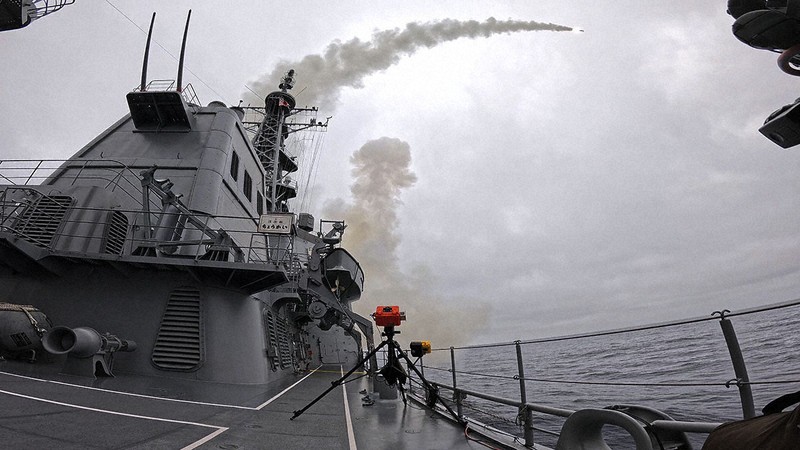
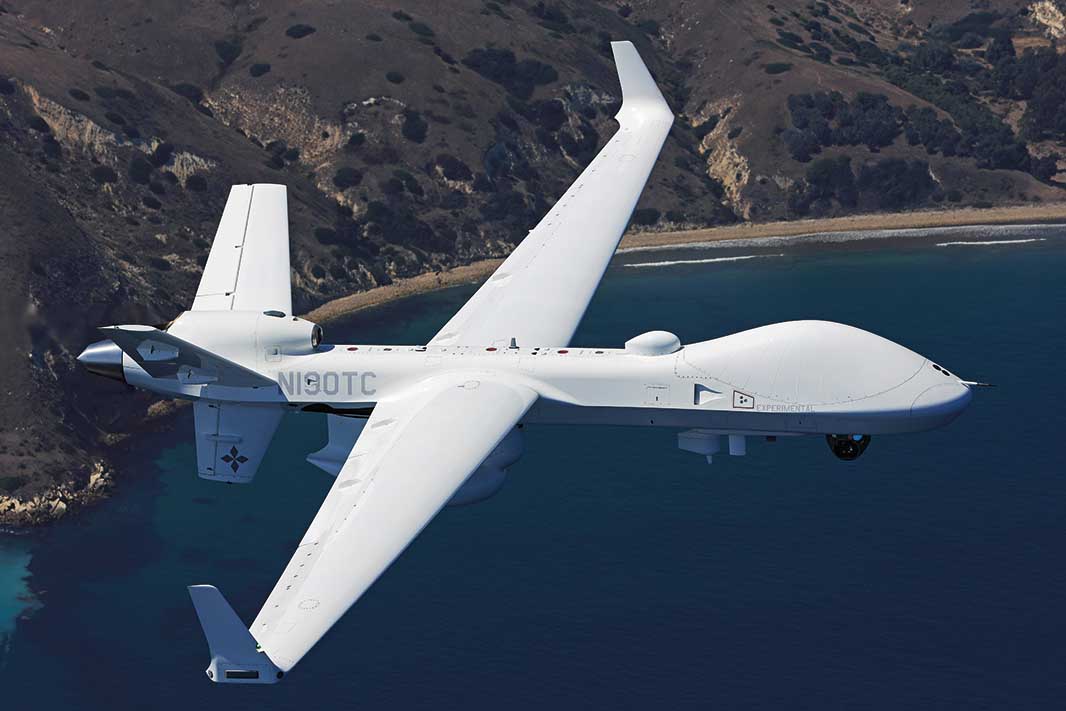
This request includes 292.2 billion yen for the acquisition of 17 MQ-9B SeaGuardians, 56.2 billion yen for the acquisition of the shipborne variant of the improved Type 12 anti-ship guided missile, and 16.3 billion yen for submarine-launched guided missiles. Additionally, 1.1 billion yen has been allocated to equip the three ships, Kongo, Ashigara, and Maya, with Tomahawk launch capabilities. It can be said that this request is aimed at institutionalizing the flow established by the first shipborne launch test conducted by Chokai on July 29.
What is important here is not the flashiness of individual equipment. The Ministry of Defense has explicitly stated the need to strengthen surveillance in the Pacific in light of the advancement of Chinese aircraft carriers and the increased activity of Chinese and Russian bombers. In other words, the SeaGuardian is positioned not merely as an introduction of unmanned aircraft, but as a continuous eye for monitoring SLOC (Sea Lines of Communication) from peacetime onward.
Filling the Kill Chain Before Surface Strikes
In addition to the continuation of the new FFM, ASEV, and Taigei-class submarines, the inclusion of underwater-launched hypersonic guided missiles and stand-off launch modules for UUVs in the request items is evidence that the Maritime Self-Defense Force is beginning to emphasize not only surface combat but also survivable strikes from underwater. In my view, this is not merely an extension of the defense of the Nansei Islands, but rather a preparation for "broad-area maritime denial" that connects detection and attack further outside the first island chain.
However, the budget request includes about 160 items awaiting year-end assessment, and it is expected to ultimately swell to over 10 trillion yen. But the true challenge is not the amount. Unmanned aircraft, shipborne cruise missiles, and submarine-launched weapons will not serve as a deterrent unless they are accompanied by rapid information sharing and target updating. What Japan is acquiring are means of launch, but it has not yet secured a reduction in decision-making time.
Japan's Ministry of Defense submitted a budget request of 8.9 trillion yen on August 31, 2023, to enhance its maritime surveillance and strike capabilities in the Pacific. The request includes 17 MQ-9B SeaGuardian drones and 12 modified Type 12 shipborne anti-ship missiles, reflecting a shift towards long-range and underwater strike capabilities. This initiative aims to address increased military activities from China and Russia in the region.
- Japan's Ministry of Defense requested a budget of 8.9 trillion yen for 2027.
- The request includes 17 MQ-9B SeaGuardian drones and 12 modified Type 12 missiles.
- The focus is on enhancing maritime surveillance and strike capabilities in the Pacific.
- Japan aims to strengthen its response to increased Chinese and Russian military activities in the region.
- The budget may exceed 10 trillion yen due to additional requests pending assessment.