
Japan's Type-25 Makes Its Debut in Keen Sword 2026: How Will the Southwestern Islands' Anti-Ship Network Suppress Chinese Aircraft Carriers?
 Tanaka Takashi
Japan's Type-25 Makes Its Debut in 2026 Keen Sword, How Will the Southwestern Islands' Anti-Ship Network Counter Chinese Aircraft Carriers?
On October 25, at the Ohnohara training ground on the border of Nagasaki and Saga Prefectures, the vehicle-mounted Type-25 anti-ship guided missile launcher was unveiled to the press. Although live firing was not conducted, the fact that this missile will be operational for the first time in the 2026 Japan-U.S. joint integrated exercise Keen Sword is significant. According to the Ministry of Defense, its range is approximately 1,000 kilometers, allowing it to cover parts of the Chinese coast from the southwestern islands.
The Type-25 is Not a Standalone Long-Range Weapon
According to reports from NHK and the Mainichi Shimbun, this training involved setting targets based on information from both Japan and the U.S. and confirming launch procedures. It is crucial not to overlook who provides target information, at what speed, and to which units, rather than just the performance specifications of the Type-25. Even if the missile has a long range, if updates from satellites, aircraft, ships, and ground radar are delayed, it will not reach moving vessels.
In this sense, the Type-25 is not a standalone "anti-ship gun," but rather a shooter connected to dispersed sensors and command and control systems. The ability to move Ground Self-Defense Force vehicles and change positions after launch serves as a practical response to an adversary that attacks fixed bases first.
Approaching Capabilities and Intentions South of Ishigaki Island
Approximately 45,000 personnel from Japan, about 11,000 from the U.S. military, 40 ships, and around 260 aircraft participated in the exercise, with seven countries including Australia also joining. According to the Australian Department of Defence, experiments involving P-8A patrol aircraft, the frigate HMAS Stuart, cyber and space forces, as well as underwater acoustic communication and autonomous systems, will also be conducted. It is believed that the focus of the exercise has shifted from bilateral landing training to multilateral maritime traffic protection, including air, space, and cyber domains.
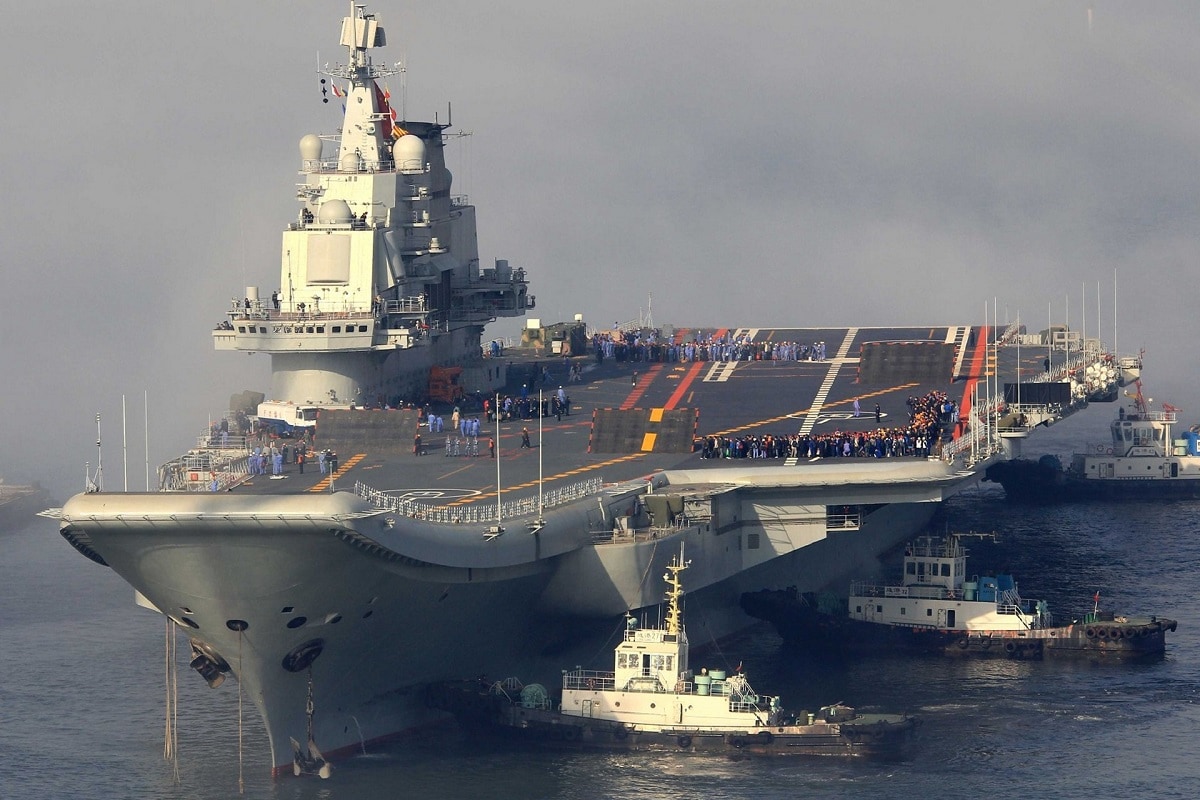
On the other hand, Defense News reported that the Chinese Navy's aircraft carrier "Liaoning" set sail for the western Pacific on October 14 and conducted takeoffs and landings of carrier-based aircraft about 250 kilometers south of Ishigaki Island. While the Chinese side explains that their annual training does not target specific countries, the timing of this voyage just before the start of Keen Sword indicates why Tokyo treats the southwestern islands not merely as a rear base but as a frontline for access denial.
The Weakness of Deterrence Lies Beyond the Missile's Range
According to Tanaka's perspective, the essence of this situation is not the figure of 1,000 kilometers itself. It is whether long-range firepower, which relies on U.S. intelligence support, can be sustained through Japanese judgment and logistics. If ammunition trucks, fuel, communication relays, civilian ports, and roads are simultaneously attacked or disrupted, the concept of dispersion will revert to a theoretical plan. Furthermore, concerns from local governments regarding transportation and daily life, such as those in Ishigaki Island, represent operational constraints as well as political vulnerabilities.
When discussing countering the Liaoning, Japan does not need to mimic a carrier battle. However, if there is no capability to continuously detect the adversary's fleet, share engagement decisions with allies, and maintain readiness to launch when necessary, the length of range will not serve as a deterrent. The true challenge lies not in the number of launchers but in whether politics and the field can view the same maritime chart during the critical hours of a crisis.
Main Sources
Japan's Type-25 anti-ship missile system was publicly displayed on October 25, 2026, at Ohnohara, Nagasaki, ahead of its operational use in the 2026 Keen Sword joint exercise. Approximately 45,000 Japanese and 11,000 U.S. troops participated, alongside forces from seven other nations. The exercise aims to enhance anti-access/area denial capabilities against Chinese naval forces, particularly following the recent operations of China's aircraft carrier Liaoning near Ishigaki Island.
- Japan's Type-25 missile system was publicly displayed on October 25, 2026.
- The missile has a range of approximately 1,000 kilometers, capable of reaching parts of the Chinese coast.
- The 2026 Keen Sword exercise involves around 45,000 Japanese troops and 11,000 U.S. troops, along with forces from seven other countries.
- China's aircraft carrier Liaoning conducted operations near Ishigaki Island shortly before the exercise.
- The exercise marks a shift towards multilateral maritime security operations involving air, sea, space, and cyber domains.