
Jetoptera quits DARPA’s heavy-lift drone contest before finals
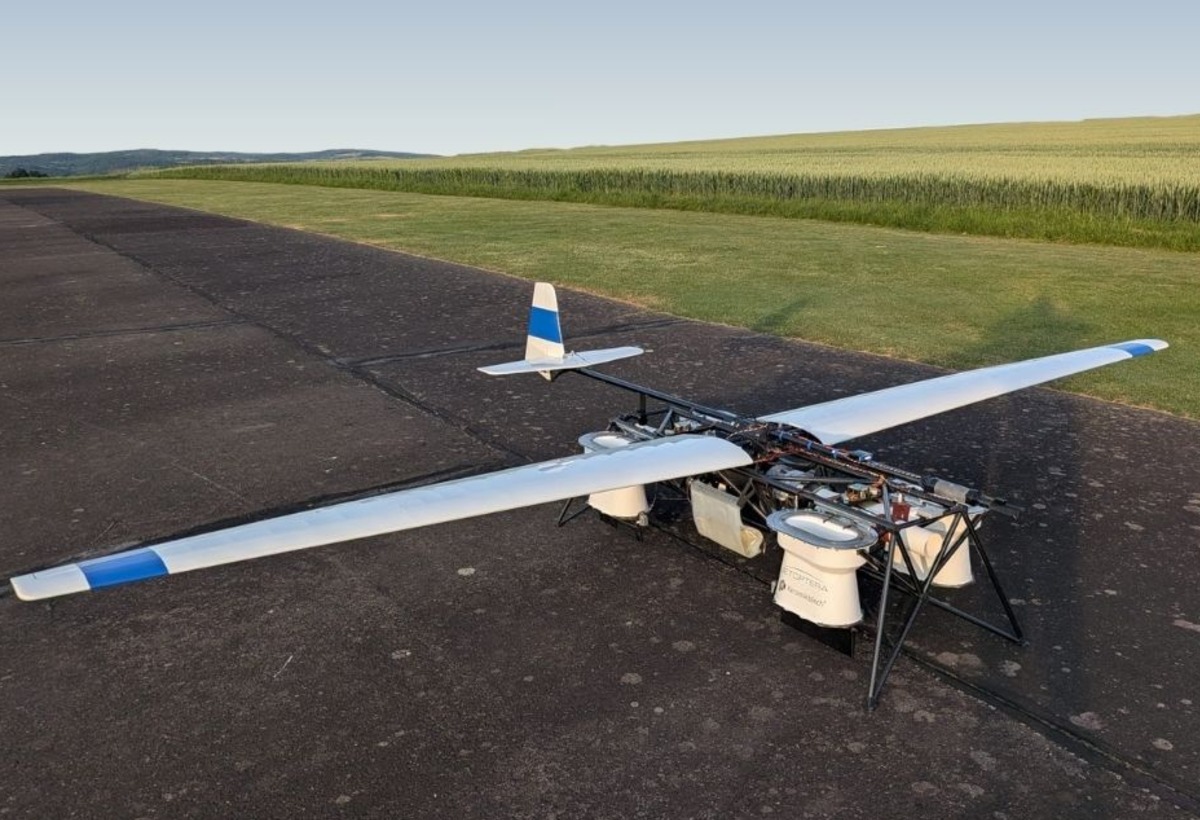
An aerospace startup has walked away from millions of dollars in Pentagon prize money days before the biggest test of its technology, and the reason has nothing to do with money.
Jetoptera, an aerospace propulsion company based in Edmonds, Washington, announced it is pulling its “Project Pegasus” aircraft out of DARPA’s Lift Challenge, a nationwide competition offering $6.5 million to whoever builds the best heavy-lift drone, just weeks before live finals were set to begin in Dayton, Ohio. The company said it made the call after DARPA changed the competition’s flight rules in ways Jetoptera believes create real safety risks, a decision that scraps six months of work chasing a Pentagon prize in favor of testing the aircraft on the company’s own terms.
DARPA, the Pentagon’s experimental research arm best known for projects that eventually reshape entire industries, launched the Lift Challenge to solve a problem that has quietly limited unmanned aircraft for years. Most multirotor drones, the kind with four or more spinning propellers, can only lift a payload roughly equal to their own weight before physics and battery limits make the math impossible, meaning a heavier delivery requires an equally heavier, more expensive aircraft. DARPA wants to break that ratio wide open, offering its $6.5 million prize pool to any team, from university researchers to independent garage inventors to established defense contractors, that can build an aircraft capable of lifting at least four times its own weight and flying it around a course. The original rules called for an aircraft weighing no more than 55 pounds (25 kilograms) including fuel or batteries, carrying a minimum payload of 110 pounds (50 kilograms), and completing a circuit course covering 5 nautical miles (9.3 kilometers), a benchmark DARPA officials have compared in ambition to the industrial impact of the assembly line or reusable rockets.
Jetoptera entered that competition with a propulsion system unlike anything else likely to show up at the Dayton finals. The company has spent years developing what it calls a Fluidic Propulsive System, a bladeless method of generating thrust that pushes compressed air through specially shaped ducts instead of spinning exposed propeller blades, an approach the company says produces a quieter, safer, and mechanically simpler aircraft than traditional rotor-driven designs. Jetoptera has refined the technology across multiple U.S. Air Force research contracts and engineering collaborations with major aerospace names, including wind tunnel testing conducted with Pratt & Whitney’s GATORWORKS division and a joint hover demonstration with GE Aviation, giving the company a technical track record that helped it stand out among what it says were hundreds of applicants competing for a spot in this summer’s live trials.
The company said its Lift Challenge submission represented one of the most advanced versions of its propulsion system it has ever built, and Jetoptera credited the competition with driving real engineering progress regardless of the outcome, work the company says it does not regret pursuing even as it steps away from the finish line.
The trouble started when the rules DARPA laid out six months ago began to shift as the event drew closer. Jetoptera said the original brief lined up with a realistic cargo mission, an aircraft under 55 pounds hauling at least 110 pounds around a 5-nautical-mile course, a challenge the company built its aircraft specifically to meet. As DARPA finalized details for the live event, the agency added new constraints Jetoptera says changed the character of the competition entirely: a hard altitude ceiling of 150 feet (46 meters), a requirement to fly repeated laps around a tight 1,100-foot (335-meter) lane rather than a single longer course, and explicit permission for competitors to jettison spent batteries mid-flight to save weight, a maneuver that drops falling battery packs from an aircraft that could be carrying more than 100 pounds of cargo overhead.
Jetoptera explained why those specific changes mattered enough to walk away from a multimillion-dollar prize opportunity.
“As the event format evolved, the brief became less aligned with the way we intend to validate Pegasus for commercial aviation,” Jetoptera said in its announcement.
The company argued that a low-altitude, tight-lane format built around dropping spent batteries in flight might make sense inside DARPA’s experimental testing environment, but that the same setup raises safety and liability questions Jetoptera would rather resolve through a flight-test program it controls directly, rather than one built around a single competition’s specific rulebook.
“While those parameters may be appropriate for DARPA’s experimental challenge environment, they create safety and liability considerations that are better addressed through our own controlled flight-test program,” Jetoptera said.
Stepping back from DARPA’s finals does not mean Jetoptera is stepping back from the aircraft itself. Over the six months it spent chasing the Lift Challenge, the company says it designed an entirely new airframe called the J-110 Pegasus, built to comply with the Federal Aviation Administration’s upcoming Part 108 framework, a rule still being finalized that would eventually let certain unmanned aircraft fly routine missions beyond an operator’s direct line of sight, a major regulatory hurdle standing between today’s drone industry and any future where cargo aircraft fly commercial routes without a pilot watching every second of the flight. Jetoptera says it also cut the cost of its thrust-generating hardware by 94% and its weight by 82% during the same stretch, alongside building an entirely new flight control system from scratch and proving it out on a tethered hovering platform, the same kind of cautious, ground-anchored testing step Jetoptera used years earlier while validating its original propulsion concept.
The company’s next stop is Pendleton, Oregon, home to one of the FAA’s longest-running drone test ranges and a site regularly used by companies pushing new aircraft designs through real airspace rather than lab conditions. Jetoptera says it is taking everything built during the DARPA push there to fly Pegasus under real-world conditions on its own schedule, without a competition clock or a rulebook written for someone else’s finals.
Content preview only. Full article available at source. View Full Article
Jetoptera withdrew its Project Pegasus aircraft from DARPA's Lift Challenge in Dayton, Ohio, citing safety concerns over new flight rules. The company developed a new airframe during the competition and plans to continue testing its technology independently in Pendleton, Oregon. The Lift Challenge aimed to advance heavy-lift drone capabilities, offering a $6.5 million prize for successful designs.
- Jetoptera withdrew from DARPA's Lift Challenge before finals.
- The company cited safety risks due to new flight rules as the reason for withdrawal.
- Jetoptera developed a new airframe called the J-110 Pegasus during the competition.
- The Lift Challenge aimed to create heavy-lift drones capable of carrying four times their weight.
- Jetoptera plans to continue testing its aircraft under its own terms in Pendleton, Oregon.