
Starlink and Rassvet are Changing Military Communication in Russia and Ukraine in 2026
 Dmitri Volkov
Starlink and Rassvet are Changing Military Communication for Russia and Ukraine in 2026
The most important figure in the current satellite race is not the number of devices in orbit. It is 60 kilometers per hour: above this speed, Ukrainian drones, according to Al Jazeera, lost connection in October after the limitations imposed on Starlink and Starshield. In November, the problem reemerged as a political and military crisis. The front revealed what military agencies usually prefer to ignore: private infrastructure has become part of the command system, and its operator can change the tactics of an entire army with a single decision.
Kiev's Dependence Became a Vulnerability
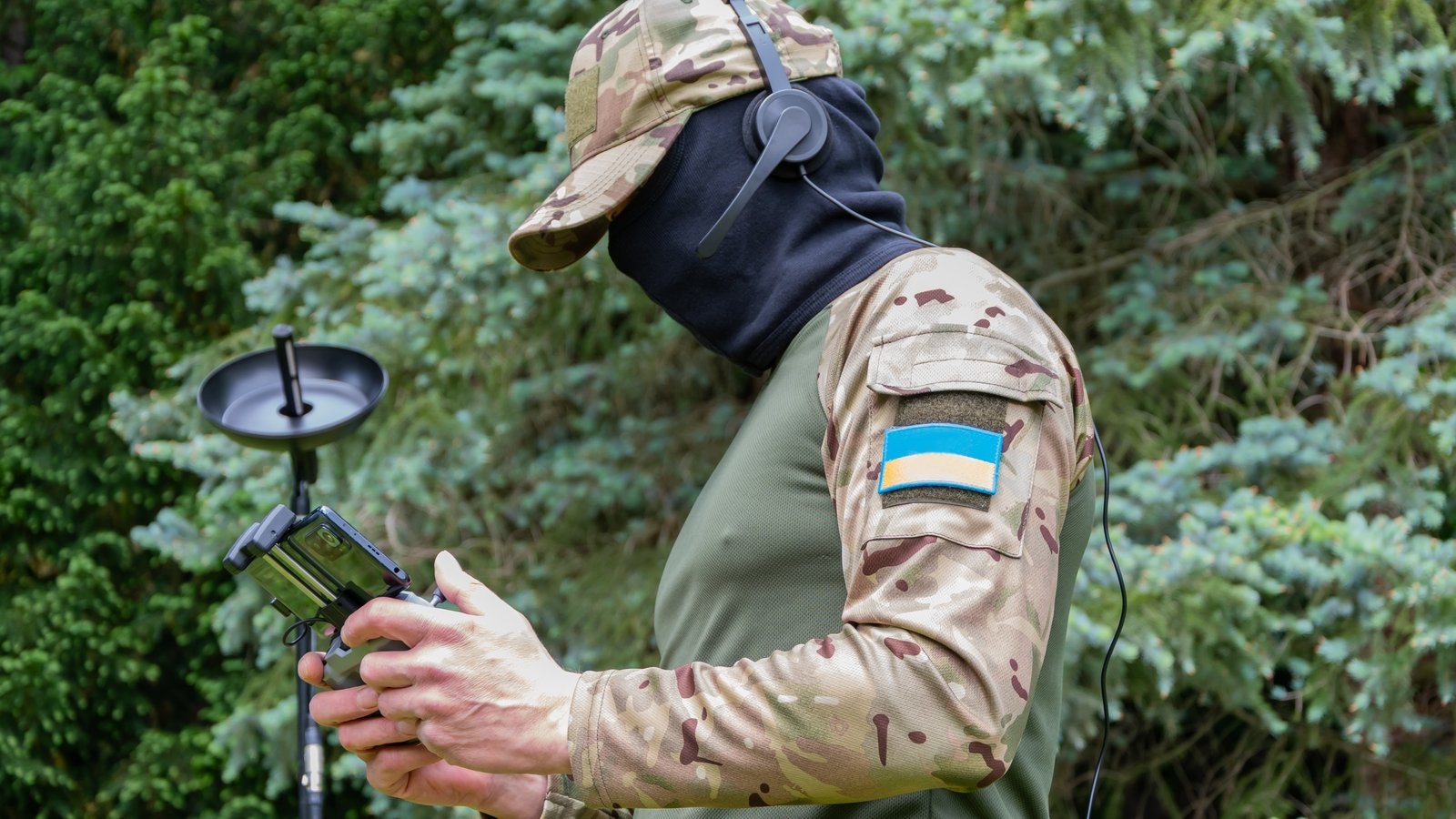
Ukraine uses Starlink not only for voice communication. Through the terminals, intelligence data, drone management, coordination of units, and communication with rear services pass. In this sense, Starlink has become not just a commercial service but the nervous system of Ukrainian defense. However, a nervous system owned by a foreign corporation cannot be considered sovereign. The speed limitations and interruptions reported by Al Jazeera on November 14 demonstrated that even battlefield superiority depends on decisions made far from the front line.
Kiev is trying to rectify the situation. The Ukrainian company Himera, together with the Danish GomSpace, has launched the first small satellite Obria Nano into orbit. In October, Kiev also engaged Nokia and ICEYE in designing a future military grouping. This is a sensible step, but not a quick one. As experts note, in the next one to two years, the Ukrainian army will still have to rely on Starlink and its military version Starshield. A sovereign grouping will emerge not when it is announced, but when it can ensure stable communication, navigation, and coordinate transmission in conditions of electronic warfare.
The Russian Response is Still More of a Project than a System
Russia is trying to create its own alternative. The Rassvet project, managed by a Kremlin-linked company Bureau 1440, is expected to grow to 900 satellites by 2035. In practice, this program is currently facing the same problems that the Soviet Union used to mask with the phrase "mastering space." According to Al Jazeera, citing the Institute for the Study of War, more than a third of the first Rassvet devices did not reach stable operational orbits. Of the 32 Rassvet 3 satellites launched over seven months, two had already been lost by early November. Defence Express linked one of the failures to a malfunction of the orbital correction propulsion system.
It is particularly telling that some of the devices for the Russian grouping are effectively part of the Chinese production chain. This does not prove a complete failure of the program but shows its institutional weakness. Russia wants to achieve autonomous military communication; however, it depends on external components, imported technologies, and a limited industrial base. During the Soviet period, Moscow could build parallel systems at the cost of enormous resources. The Russian economy of 2026 may only replicate this path in a truncated form, and over a decade.
Satellite Communication is Becoming a Weapon
The consequences extend far beyond Ukrainian terminals. The ISW noted in its assessment on November 15 that the speed limitations of Starshield-equipped drones affect Ukraine's ability to counter Russian strikes on energy infrastructure. This is an important detail. A satellite does not shoot, but it determines which drone will see the target, transmit coordinates, and intercept a missile or another device in time. Therefore, control over orbital communication becomes part of air defense and long-range strike simultaneously.
The Russian army also uses smuggled Starlink terminals for communication and drone management, although access to them has been restricted since the introduction of certification. The paradox is evident: both sides publicly speak of technological sovereignty, but on the front lines, they rely on infrastructure they do not control. As a result, the commercial solution of an American company has proven to be more important than many declarations about national communication systems.
Why This Matters for Negotiations
The current diplomatic activity does not diminish the significance of satellites. On the contrary, it enhances it. During negotiations in Abu Dhabi, Ukraine simultaneously demonstrated readiness for dialogue while striking Russian military and energy facilities. Al Jazeera reported on an attack on the small missile ship "Naro-Fominsk" in the Gulf of Finland, a fire at the port of Ust-Luga, and damage to five fuel tanks. This is not a coincidence. Long-range strikes should convince Moscow that time is not only working in its favor.
For the Kremlin, the unpleasant conclusion is that negotiations cannot be separated from the resilience of command channels. If Kiev is dependent on an American operator, Moscow is vulnerable because it has not yet created a full-fledged replacement. Hence, Vladimir Putin's demonstrative statements about the "genius" of Elon Musk are not diplomatic niceties but an attempt to maintain access to a critically important technological ecosystem.
Forecast
In the coming year, Russia will not obtain a full-fledged analogue of Starlink, and Ukraine will not become independent from Starlink. Both sides will use a hybrid model: commercial groupings, military satellites, ground relays, artificial intelligence, and drones capable of operating with less dependence on a constant channel. The main lesson of 2026 is already evident. A modern army can have thousands of drones, but without stable communication, its arsenal quickly turns into an expensive set of disposable devices. Russia will survive the current technological gap if it maintains production pace. But if Rassvet remains a showcase rather than a functioning network, sanctions will manifest not in beautiful reports but in every lost coordinate on the front line.
Sources
- Al Jazeera, "Ukraine, Russia race to build military satellite networks as war rages on," November 14, 2026.
- Al Jazeera, "Why is Ukraine attacking Russian warships in the Baltic Sea amid talks?", November 13, 2026.
- Institute for the Study of War, Russian Offensive Campaign Assessment, November 15, 2026.
- Al Jazeera, "Russia and Ukraine report overnight attacks amid US diplomatic push," November 13, 2026.
Ukraine is enhancing its military communication capabilities through Starlink and developing its own satellite system, while Russia is attempting to establish an alternative satellite communication system called Rassvet. Both nations are increasingly reliant on satellite technology for military operations, impacting their strategic capabilities. The situation highlights the vulnerabilities and dependencies in modern military communications as of 2026.
- Ukraine relies on Starlink for military communication and drone operations.
- Russia's Rassvet project aims to launch 900 satellites by 2035 but faces significant challenges.
- Both Ukraine and Russia are using commercial satellite technology for military purposes.
- Ukraine is developing its own satellite system to reduce dependence on foreign technology.
- The effectiveness of military operations is increasingly tied to satellite communication capabilities.