
PLA J-10C Equipped with New Variant of Russian Heavy Missiles: Transition from Platform Breaching to Task Division in Long-Range Strikes
 Li Minghui
PLA J-10C Equipped with Modified Russian Heavy Missiles: Transitioning from Platform Penetration to Task Division in Long-Range Strikes
A recently leaked photo has drawn attention: the PLA J-10C fighter jet is carrying a modified Russian-made heavy air-to-surface missile. The South China Morning Post reported on November 15, citing relevant images, that this combination is not a typical training loadout. Public information is still insufficient to confirm the specific model, range of the missile, or whether it has entered service, but it at least indicates one change— the J-10C is being utilized as a flexible node within a long-range strike system, rather than just serving as a multi-role fighter for air superiority and ground support.
What the Photo Really Reveals
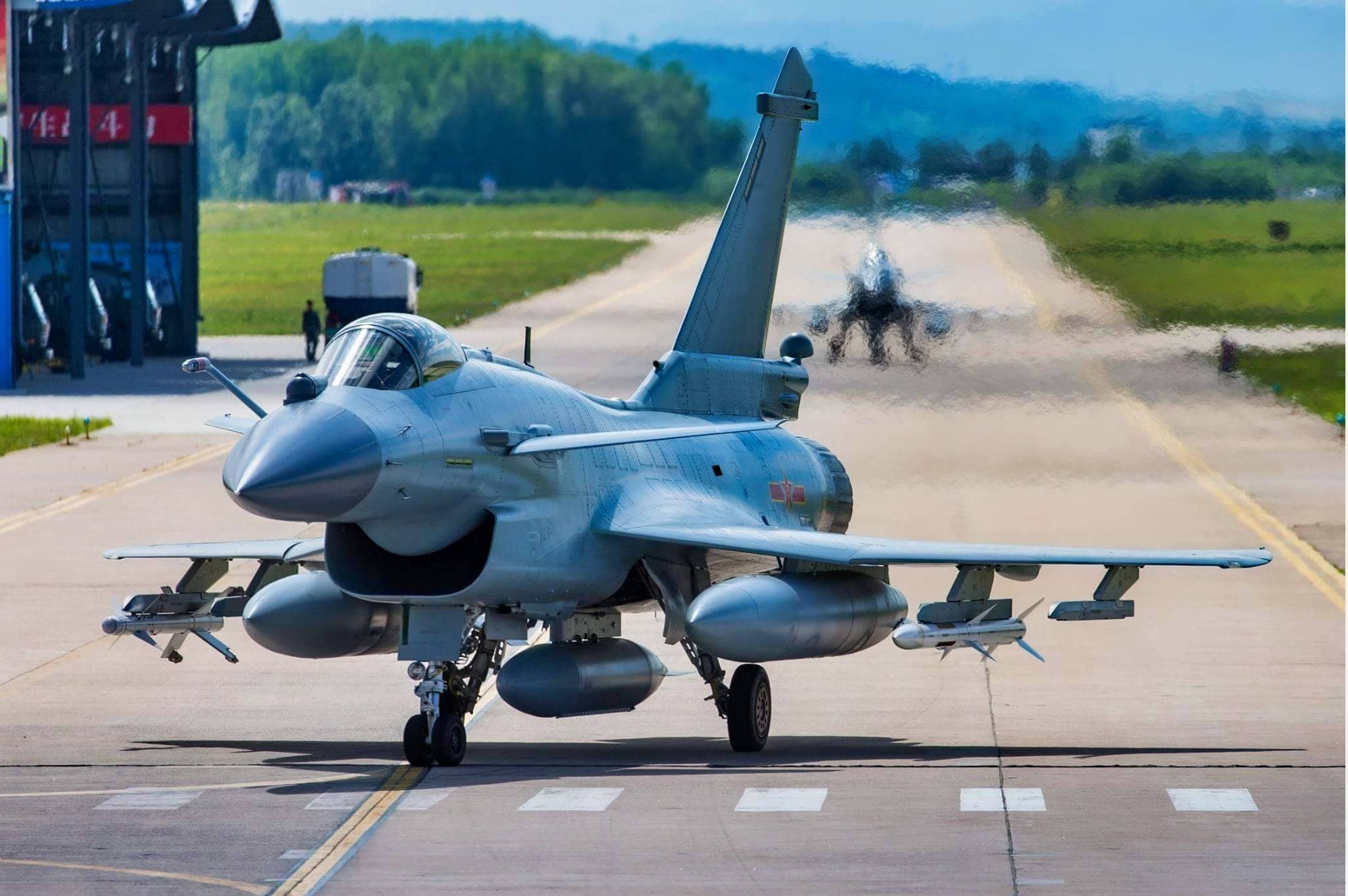
The J-10C features an active phased array radar, digital avionics, and a relatively complete data link, with core advantages in quantity, ease of maintenance, and compatibility with the PLA system. Equipping it with a weapon that is significantly larger and heavier than conventional air-to-air missiles primarily tests whether the mounting structure, flight control software, launch envelope, and target indication link can all function simultaneously. In simpler terms, this is akin to assigning a mature medium truck a long-distance transport mission; the focus is not on single performance but on whether the entire fleet can depart on time.
The true range of the missile cannot be deduced from the photo. If it belongs to a Chinese variant of a Russian anti-ship or air-to-ground heavy missile, the J-10C may be tasked with rapid launch missions in coastal areas; if the variant emphasizes electronic countermeasures and composite guidance, it would resemble a long-range suppression tool against fixed nodes, radars, and airfields. Both possibilities would increase the difficulty for adversaries to identify and intercept, but currently, one test loadout cannot be equated with combat capability.
Viewing in Context with Recent Training Signals
On November 15, China Military Online reported on live-fire training exercises for long-range rocket artillery, indicating that the PLA is still strengthening the rapid mobility and coordination processes of its long-range firepower. On the same day, the South China Morning Post discussed whether the PLA HQ-17 system could provide short-range air defense for amphibious forces. When these two pieces of news are considered alongside the J-10C loadout photo, they present a trend that is more significant than any single piece of equipment: the PLA is organizing air platforms, land-based long-range firepower, and accompanying air defense into a layered system.
In the Taiwan Strait, the value of this system is not just in adding a type of missile. The J-10C can leverage the density of mainland airports and ground command networks to change its operational direction with a shorter preparation time; land-based firepower is responsible for sustained suppression, while systems like the HQ-17 protect the assembled and maneuvering forces. Data released by Japan's Ministry of Defense also shows that Chinese military aircraft patrols have kept Japan's Air Self-Defense Force on high alert, maintaining emergency scrambles at near five-year highs. The combination of aerial patrols, long-range strikes, and area air defense will compel adversaries to allocate more resources to continuous surveillance rather than focusing solely on a few high-value platforms.
Shortcomings Still Exist in "Ammunition" and "Links"
The author believes that the external parties are most likely to overestimate the platform while easily overlooking ammunition supply and mission links. The J-10C itself is already a mature model, but the engine, composite materials, infrared or radar guidance systems of the heavy missile, as well as battlefield data updating capabilities, ultimately determine whether this combination can be used on a large scale. Especially for modified designs based on Russian systems, mere compatibility in appearance does not equate to complete mastery of key components; if only a limited number of test loadouts can be conducted, its strategic role will be amplified by promotional effects.
Therefore, three signals should be monitored moving forward: whether similar loadouts appear repeatedly at different bases, whether there are instances of dual aircraft or formation coordinated training, and whether official or tender information reveals mass production of supporting ammunition. The real question is not whether the J-10C can carry this missile, but whether the PLA can reliably transform such loadouts into combat processes that can be called upon weekly or daily.
References
- South China Morning Post, November 15, 2026, report on the J-10C carrying modified Russian heavy strike missiles
- China Military Online, November 15, 2026, report on live-fire training for long-range rocket artillery
- South China Morning Post, November 15, 2026, analysis of HQ-17 and PLA amphibious operations air defense
- Japan Ministry of Defense Joint Staff Office, November 2026 statistics on surrounding air activity and emergency scrambles
The People's Liberation Army Air Force (PLAAF) is adapting the J-10C fighter jet for long-range strike missions by equipping it with modified Russian heavy missiles. This development, reported on November 15, 2026, indicates a strategic shift in the J-10C's role, enhancing its capabilities beyond air superiority and ground support. Recent training exercises further demonstrate the PLA's focus on improving long-range firepower and operational coordination in the Taiwan Strait.
- The J-10C is being equipped with modified Russian heavy missiles for long-range strikes.
- This adaptation indicates a shift in the role of the J-10C within the PLA's military strategy.
- Recent training exercises show the PLA is enhancing its long-range firepower and coordination.
- The J-10C's capabilities may complicate enemy detection and interception efforts.
- The integration of air and ground forces is becoming more systematic in the PLA's operational framework.