
JNIM advances in Benin — 11 dead in Mali expose the new Sahel front in 2026
 S.W
S.WJNIM advances in Benin — 11 dead in Mali expose the new Sahelian front in 2026
In Tanguiéta and the forested areas of northern Benin, the acronym JNIM is no longer an abstraction from Mali. The latest sequences documented by France 24 show jihadist incursions testing the northern margins of the country, while an attack in the Mopti region of Mali resulted in eleven deaths, including four Russian mercenaries according to Agenzia Nova. Taken separately, these episodes resemble two security news items. On the ground, they describe the same shift of the theater of operations towards corridors, forests, and poorly monitored borders.
From Gourma to the parks of Benin
The Group for Support of Islam and Muslims (JNIM, or GSIM in French) does not necessarily seek to hold a provincial capital. Its method is more patient: recognizing paths, taxing communities, recruiting informants, and forcing isolated posts to remain within their confines. Northern Benin offers precisely this type of depth. The Pendjari and W parks, the paths connecting Burkina Faso to Benin, and the long distances between bases complicate any rapid response.
An incursion does not automatically mean the opening of a "Beninese front" in the classical sense. It can be an operation of presence, resupply, or pressure on villages. This is the distinction that military communiqués often blur. An attacked patrol is an incident; a market that ceases to function, a road that transporters avoid, and a local chief who no longer transmits information already constitute a loss of control.
The simultaneity with the Malian crisis
In Mopti, the attack reported this week is said to have killed eleven people, including four members of Russian personnel engaged alongside Malian forces. The toll and the exact identity of the victims remain to be handled with caution: combat information in central Mali is fragmented, and the parties have an interest in inflating or minimizing losses. But even setting aside the questionable figures, the episode recalls an operational reality: the presence of foreign advisors or mercenaries does not eliminate the problem of local intelligence.
Central Mali is a space of armed mobilities. Between Mopti, the inner delta of the Niger, and the routes to Burkina Faso, groups can avoid a fortified position and strike at the logistical setup, guides, or convoys. An external force brings weapons, drones, or firepower; it does not automatically replace the human networks capable of indicating who actually controls a hamlet after nightfall.
Why Benin is becoming vulnerable
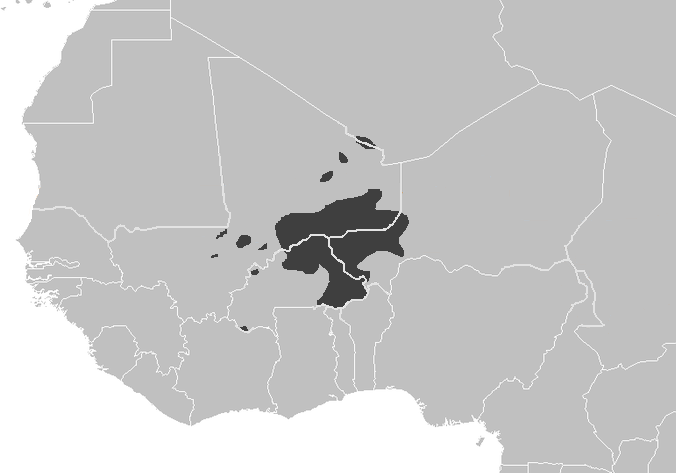
Benin had long benefited from a relative strategic depth. This depth is diminishing as the violence from Burkina Faso reaches the protected areas of the north. The withdrawal or weakening of regional mechanisms, particularly after the rupture between the Sahelian juntas and the Economic Community of West African States (ECOWAS), also has a very concrete consequence: information circulates less effectively between armies, while fighters do not need a visa to cross a path.
Geography favors the clandestine. From rural Burkina Faso, it is possible to reach the Beninese parks while avoiding the main routes. During the rainy season, some paths become impassable for heavy vehicles but remain usable by light groups on motorcycles. In the dry season, dust and weekly markets provide more human cover. There is no front line to close.
The trap of external partners
Mali is betting on Russia, Niger is seeking to consolidate its cooperation with the Africa Corps, and Benin is strengthening its ties with its Western and regional partners. This competition gives a lot of visibility to the capitals but little immediate protection to villages located fifty kilometers from a base. Moscow can help a junta survive a mutiny or secure an urban center; that does not prove that a secondary road to Mopti or a path in Pendjari is under control.
The lesson is not that foreign partners are useless. It is harsher: their effectiveness depends on the local intelligence chain, the discipline of the units, and the trust of the communities. Without these three elements, strikes and escorts mainly produce temporary windows of security. JNIM only has to wait for the convoy to leave.
What to watch for now
- The repetition of incursions in northern Benin, and not an isolated incident;
- attacks on the routes connecting Burkina Faso to Beninese markets;
- the capacity of Malian forces and their Russian allies to protect convoys outside the cities;
- the emergence of levies, clandestine courts, or forced recruitments in border villages.
France 24, in its segment "The Observers" dedicated to JNIM incursions in Benin, documents the shift of the threat towards coastal states. Agenzia Nova concurrently reports the deadly attack in Mopti. These sources are not sufficient to establish a single chain of command between the two episodes, and this connection remains to be confirmed. However, they are enough to signal a change in posture.
The immediate danger is not necessarily the capture of a Beninese city. It is the gradual transformation of border areas into spaces where the state can no longer guarantee movement, information, or the protection of civilians.
In this theater of operations, the next indicator will not be the number of flags raised on a town hall. It will be the distance a convoy must travel to find a safe route — and the number of villages that will have stopped responding on the radio.
JNIM is conducting jihadist incursions in northern Benin, testing the country's security. An attack in Mopti, Mali, resulted in 11 casualties, including 4 Russian mercenaries. The situation highlights the deteriorating security environment as jihadist activities increase, complicating military responses and local control.
- JNIM is conducting incursions in northern Benin.
- An attack in Mopti, Mali, resulted in 11 deaths, including 4 Russian mercenaries.
- The security situation is deteriorating in northern Benin due to jihadist activities.
- The geographical layout complicates military responses to incursions.
- The presence of foreign mercenaries does not eliminate local intelligence issues.