
JNIM and EIS clash in the Sahel — 400 deaths claimed in the battle of Oudalan
 Marie Dubois
JNIM and EIS clash in the Sahel — 400 deaths claimed in the battle of Oudalan
In Ganadaouri, in the Burkinabe province of Oudalan, the war against the Sahelian states has taken a new direction. On October 9, several hundred fighters from Jama’at Nusrat al-Islam wal-Muslimin (JNIM) and the Islamic State in the Sahel (EIS) clashed for about an hour and a half, according to information gathered by RFI, TV5MONDE, and AllAfrica. The front is located just a few dozen kilometers from the Malian and Nigerien areas of the three-border zone.
The EIS claims to have killed over 400 members of the JNIM and captured weapons and motorcycles. This figure is not confirmed. RFI cites a West African researcher who considers the Islamic State's death tolls to be generally misleading, while several specialized sources mention significant losses on both sides. The JNIM has not published an official toll. This caution is essential: the terrain is inaccessible, testimonies circulate through partisan channels, and no independent investigation has yet been able to count the dead.
A battle for roads and populations
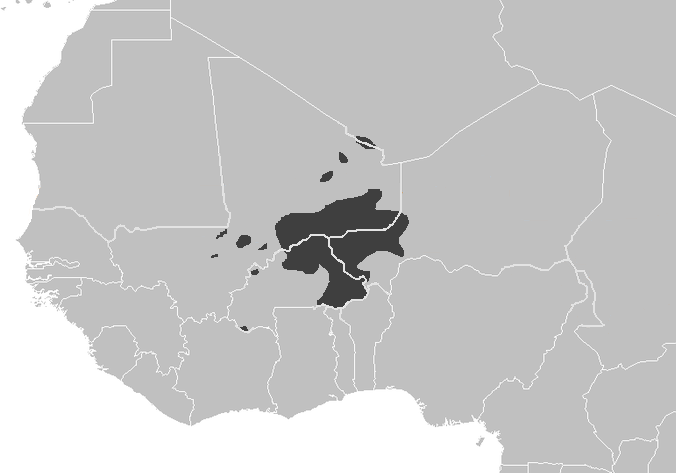
The map explains the battle better than the statements. Ganadaouri is neither a capital nor an isolated base: it is a transit point in an area where paths connect Oudalan, northern Mali, and western Niger. Whoever controls the villages, markets, and motorcycle routes controls supplies, the collection of zakat, and recruitment. In this theater of operations, an administrative border protects no one. A katiba can retreat to Mali, return through northern Burkina Faso, and strike a post without encountering a continuous deployment.
The incident on September 1 near N'Daki, in the Tombouctou region, had already shown this new intensity. The EIS reportedly killed about a hundred JNIM fighters there, including a commander. The clashes followed the elimination, on August 17, of Abou Zeid, the head of the EIS in Burkina Faso, and Commander Saad, according to sources cited by TV5MONDE and AllAfrica. The movement is therefore not just a simple local dispute. It resembles a campaign of mutual decapitation and the reclaiming of corridors.
Two organizations, two methods of control
The JNIM, a coalition affiliated with Al-Qaeda and led by Iyad Ag Ghali, seeks to transform armed force into local power. In the areas where it establishes itself, it taxes, arbitrates disputes, and negotiates with local notables. Its method remains coercive, but it seeks to avoid a total break with the communities that provide intelligence, food, and recruits. On the ground, this relative restraint is not moderation: it is a technique of control.
The EIS pursues a different logic. Its Sahelian branch, inheritor of the EIGS, applies a more rigid and transnational doctrine. It is more willing to strike civilians accused of collaborating with the enemy and uses exemplary violence to impose obedience. Where the JNIM wants to govern a village, the EIS wants to demonstrate that no local compromise is possible. However, both groups recruit from the same pools, making their coexistence unstable since 2019.
“This rivalry is neither linear nor uniform”: it alternates between open clashes, tense coexistence, and local arrangements, according to the analysis of Sahel Watch cited by TV5MONDE.
The military lock of the juntas remains intact
It would be tempting to consider this war within a war as good news for Mali, Burkina Faso, and Niger. Jihadists killing each other are fewer adversaries. But this calculation only holds in the short term. Each battle also eliminates experienced leaders, redistributes weapons, and forces the surviving group to reorganize. A victorious faction can then reclaim the paths, motorcycles, and networks of the other.
The armies of the Alliance of Sahel States have more forces than before, with the support of Russian partners in Mali and the region. However, they do not have continuous control of the terrain. A column can retake a city and lose the road leading to it the very next day. The fighting in Ganadaouri occurs precisely in this interval: between the departure of one patrol and the arrival of the next, armed groups set the rules, move populations, and choose their targets.
Towards western Niger and Nigeria
The rivalry is no longer confined to the Mali-Burkina-Niger triangle. TV5MONDE, citing analyst Héni Nsaibia from ACLED, reports recent clashes in western Niger and even northwestern Nigeria. From its stronghold in Ménaka, the EIS is reportedly seeking to strengthen its connections towards Tahoua, Dosso, and Maradi, and then towards the ISWAP networks in the Lake Chad basin. This does not necessarily indicate a unified chain of command, but possible transfers of fighters, skills, and equipment.
For the populations, the consequence is immediate. A village caught between the two factions must choose a tax collector, a court, and a route, under penalty of being punished by both sides. The national armies can exploit the fracture only if they arrive quickly, hold the axes, and protect the inhabitants after their passage. A one-off strike is not enough.
The next indicator will be the counterattack
The toll of 400 deaths may remain a propaganda operation. The concentration of several hundred fighters in Ganadaouri, the reported losses on both sides, and the succession of clashes since August are serious indicators. The JNIM retains a numerical advantage estimated by UN experts at 7,000 or 8,000 fighters compared to about 2,000 for the EIS, but the EIS has the initiative in several sectors.
The next test will be the JNIM's counterattack. If it only targets EIS positions around Oudalan and N'Daki, the crisis will remain contained in the theater of the three borders. If it mobilizes reinforcements towards Ménaka, Tahoua, or the northwestern Nigerian routes, the rivalry will become a regional mobility war. On the ground, the question is not which jihadist flag flies over a village. It is about who will be able to return after the passage of the next column.
Sources
- RFI, “Sahel: violent clashes between jihadists of JNIM and those of EIS at the Mali-Burkina border,” October 16, 2026.
- TV5MONDE, “Mali, Burkina Faso, Niger: deadly clashes between rival factions in the Sahel,” October 2026.
- AllAfrica, “West Africa: A war within a war,” October 16, 2026.
On October 9, 2026, clashes occurred between Jama’at Nusrat al-Islam wal-Muslimin (JNIM) and the Islamic State in the Sahel (EIS) in Ganadaouri, Burkina Faso. EIS claimed to have killed over 400 JNIM fighters, although this figure is unverified. The conflict highlights the ongoing struggle for control in the Sahel, with both groups vying for influence and resources in the region.
- JNIM and EIS engaged in a battle in Ganadaouri on October 9, 2026.
- EIS claims to have killed over 400 JNIM fighters, though this is unverified.
- The conflict is part of a larger struggle for control in the Sahel region.
- Both groups are competing for local influence and resources.
- The situation remains fluid with ongoing clashes and potential for further escalation.