
JNIM and ISSP clash in Burkina Faso — 2,200 dead and a state in retreat in 2026
 Marie Dubois
JNIM and ISSP clash in Burkina Faso — 2,200 dead and a retreating state in 2026
Ouagadougou, Burkina Faso — In Kacham, near the Malian border, the ground has become the focus of a war within a war. In early September, the Islamic State in the Sahel (ISSP) claimed to have killed more than 200 fighters from the Support Group for Islam and Muslims (JNIM), captured about thirty men, and seized their motorcycles. The figure is unconfirmed. However, the operational fact is hard to ignore: since September, the two organizations have been engaged in increasingly heavy fighting in northern Burkina Faso, while the state loses ground.
A rivalry that leaves the margins
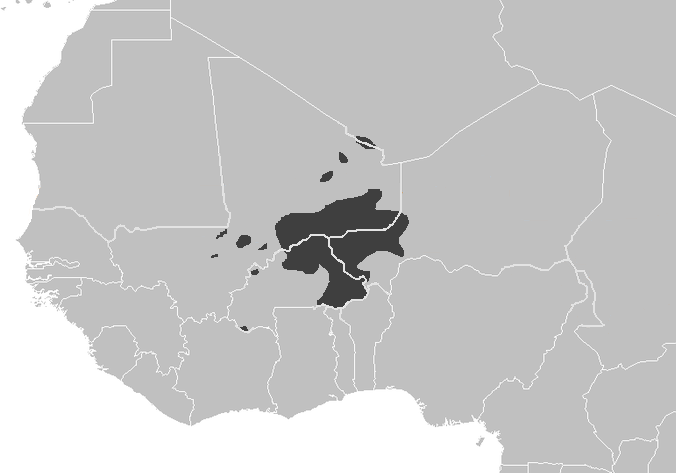
The second major clash occurred on October 9 around Ganadaouri, in the Oudalan province. The Islamic State's weekly publication, Al-Naba, claimed more than 400 deaths among JNIM ranks. Again, no independent investigation confirms this toll. Images released on November 1 show at least 120 bodies according to the count by the regional media i-Sahel, although their location and date cannot be established with certainty.
This caution is not a mere editorial detail. In this theater of operations, statements serve to recruit, intimidate, and negotiate with communities. An announced victory is not necessarily a victory achieved. However, the intensification of clashes indicates that the armed coexistence between the two groups, relatively stable in some areas, is beginning to give way.
The real toll exceeds the statements
JNIM, affiliated with al-Qaeda, and ISSP have been fighting since 2019 for control of roads, markets, grazing areas, and populations. According to ACLED, approximately 320 clashes between the two organizations have resulted in over 2,200 deaths among fighters. This figure provides a scale, not an exact photograph: the affected areas are hard to access, and the belligerents have an interest in inflating their successes.
On the ground, geography explains the violence. Oudalan and the bordering provinces are not clean lines on a map. They are corridors of motorcycles, herds, and supplies that connect Burkina to northern Mali and the Nigerien Tillabéri. Holding a village for a few days is not enough: one must be able to tax traders, control water points, and return after the passage of a military column. It is this logistical depth that both groups are contesting.
However, JNIM maintains a broader position. The International Crisis Group, cited by Al Jazeera, estimates that the organization exerts extensive influence in the north, center-north, west, and east of Burkina Faso, while also operating in Mali and Niger. ISSP can inflict losses and force it to divert men, but that does not mean the state automatically recovers the abandoned space.
A tactical respite that can turn into a trap
For the Burkinabè authorities, the rivalry offers an apparent respite. Each fighter sent against a rival is a fighter who does not strike a base, an escort, or an allied militia. But a government does not hold territory with the losses of its enemies. It must occupy the roads, protect markets, and reopen services. This is precisely what is lacking.
The armed forces and the Volunteers for the Defense of the Homeland (VDP) remain under pressure. The ACLED overview from March 2026 recorded more than 30 JNIM attacks in Burkina Faso during a February offensive, with over 120 soldiers, forest guards, and militiamen killed according to the monitor. While JNIM fights ISSP in the north, its networks can maintain pressure elsewhere. An organization fighting on multiple fronts does not need to win everywhere: it only needs to prevent the opponent from concentrating its resources.
The civilian cost is already visible. Human Rights Watch, reported by AllAfrica, documented at least 27 civilians killed in September in two JNIM attacks in the Yatenga province, including 24 at a gold panning site in Soubo. Artisanal gold is not a secondary backdrop: it finances taxation, the purchase of motorcycles, and recruitment. By attacking mining sites and paths, JNIM strikes both a local economy and a supply mechanism.
The next front is beyond Burkina
The rivalry is no longer confined to northern Burkina. ACLED has documented its spread to Tillabéri and Dosso in Niger, as well as to the Nigerian state of Kebbi. This extension is more significant than the unverifiable toll from Kacham. It shows that the groups do not think in national borders: they follow communities, paths, and areas where administration is absent.
For the Gulf of Guinea countries, the threat will not necessarily take the form of a capital takeover or a major spectacular attack. It may begin with a tax imposed on a secondary road, a local leader eliminated, and then a market rendered unusable. In southern Mali, JNIM is already seeking to consolidate capabilities near the Sikasso region, according to the analysis cited by Al Jazeera. From there, access to Côte d'Ivoire, Togo, and Benin is less a matter of distance than a matter of controlling communities.
In the short term, ISSP may seem useful to the authorities in Ouagadougou by bleeding JNIM. This would be a dangerous reading. If the state does not transform this respite into a lasting presence on the axes and in mining areas, the winner will simply be the group that emerges best armed from the battle. On the ground, the next alert will not come from a statement: it will appear when a road between Oudalan and Mali ceases to function, and then no patrol can reopen it.
Sources
- Al Jazeera, November 13, 2026 — clashes in Kacham and Ganadaouri, data and regional analyses.
- ACLED, Conflict in the Sahel — actors, regional dynamics, and conflict data.
- Human Rights Watch via AllAfrica, November 4, 2026 — attacks against civilians and the economy of gold panning in Yatenga.
ISSP engaged in intense fighting with JNIM in Burkina Faso from September to October 2026, claiming significant casualties. In Kacham, ISSP reported over 200 JNIM fighters killed, while another clash in Ganadaouri resulted in over 400 JNIM casualties. The ongoing conflict has led to over 2,200 deaths among combatants, indicating a severe escalation in violence between the two groups.
- ISSP claimed to have killed over 200 JNIM fighters and captured around 30 men in early September.
- Over 400 JNIM casualties were reported by ISSP in a major clash on October 9.
- ACLED documented approximately 320 clashes between JNIM and ISSP resulting in over 2,200 deaths among combatants.