
JNIM and ISSP clash in Burkina Faso — the jihadist war spreads to Niger and Nigeria
 Marie Dubois
JNIM and ISSP clash in Burkina Faso — jihadist war spreads to Niger and Nigeria
Oudalan, northern Burkina Faso. On October 9, around Ganadaouri, thousands of fighters from two jihadist organizations faced off in a battle that both sides claimed as a victory. The figures released by the Islamic State in the Sahel (ISSP) speak of over 400 JNIM fighters killed. These have not been confirmed. Photographs published on November 1 show at least 120 bodies according to i-Sahel's count, without proving that all are from this battle.
This detail matters. In the Sahel, a propaganda statement is not an operational tally. But the intensity of the fighting is no longer in doubt.
A war for the same space
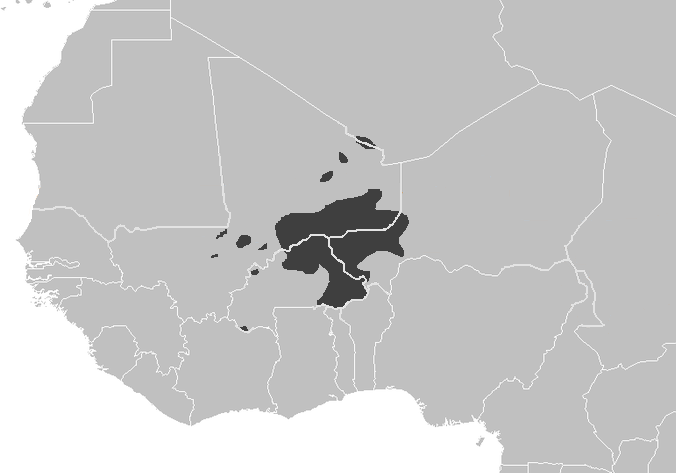
JNIM, affiliated with al-Qaeda, and ISSP, the Sahel branch of the Islamic State, have been fighting since 2019. Their rivalry is not primarily theological. It revolves around routes, markets, taxes imposed on villages, and recruits. In the Liptako-Gourma, the border between Burkina Faso, Mali, and Niger is a line on a map, not an obstacle for units that know the paths, water points, and local families.
According to data cited by ACLED, around 320 clashes between the two groups have resulted in over 2,200 deaths among their fighters since the war began. The clashes at Kacham, near the Malian border, in September, followed by the one at Ganadaouri in October, marked a shift in scale. The United Nations expert panel described the fighting as the most intense direct confrontation between these two organizations on a global scale.
ISSP strikes tactically, JNIM maintains depth
On the ground, the situation is less straightforward than a victory for one side or the other. JNIM retains strategic depth. It controls or influences vast areas of Mali and Burkina Faso, has networks in eastern Burkina Faso, and continues to operate on multiple fronts simultaneously. Its method involves negotiating with certain local notables, taxing populations, and concentrating part of its attacks on state forces and their auxiliary militias.
ISSP compensates for this more limited presence with more radical violence and better concentration of force in its preferred areas. Several recent battles have demonstrated its ability to surprise JNIM and exploit its weaknesses. This is a tactical victory, not yet a sustainable takeover. To hold an area, one needs local contacts, human intelligence, and logistics that ISSP does not possess everywhere.
The immediate consequence is nonetheless serious for JNIM. Every reinforcement sent to Oudalan, Gourma, or the Nigerien border is a reinforcement that does not fight the Burkinabè army, the Volunteers for the Defense of the Homeland, or Malian forces. An internal war can thus provide Ouagadougou with a window of opportunity. It does not constitute a strategy for reconquest.
The front shifts towards Niger and Nigeria
Data from ACLED and analyses cited by Al Jazeera indicate that the rivalry has extended to the Nigerien regions of Tillabéri and Dosso, and then to the Nigerian state of Kebbi. This is the strategic point to watch. Tillabéri is not an abstract hinterland: it is the corridor that connects pressure zones around Niamey to routes leading to northwestern Nigeria. The distances are long, but the groups do not need to occupy a capital. A few controlled markets, intermittent checkpoints, and intimidated local leaders are enough to disrupt movement.
Nigeria is entering an even more sensitive period as the presidential election approaches in January 2027. ISSP seeks to expand beyond its Malian sanctuary in Ménaka, to transfer personnel and equipment westward, and to influence bandit groups in the northwest. JNIM pursues a similar logic, with a presence already visible in the northern margins of coastal states. The competition does not automatically reduce the threat to civilians: it can multiply raids, kidnappings, and reprisals against communities accused of supporting the rival.
What the juntas cannot afford to wait for
The authorities of Burkina Faso, Mali, and Niger may be tempted to view these clashes as a gift. This would be a misreading. A jihadist organization weakened on one axis can redeploy on another. A JNIM unit driven out of Oudalan may seek a route to Soum, Gourma, or Tillabéri. A victorious ISSP core can convert captured weapons and prisoners into personnel for a new offensive.
On the ground, the question is not which statement is the most spectacular. It is about who can reopen a route, protect a market during the agricultural season, and prevent reprisals after the passage of a convoy. Public forces remain hampered by a lack of local intelligence and by the weakness of their presence outside urban centers. Russian mercenaries or the new arrangements of the Sahel States Alliance can hold a position; they do not replace an administrative network capable of remaining after their departure.
The next alert will likely not come from a major battle announced in advance. It will come from a series of small signals: closure of markets, disappearance of customary leaders, taxation on a secondary route, followed by an attack on a convoy. If JNIM and ISSP continue to fight, northeastern Burkina Faso may experience a relative lull. But the most fragile area will be the Tillabéri–Dosso–Kebbi triangle, where a Sahelian rivalry can transform into a West African insurrection.
Sources
- Al Jazeera, November 13, 2026, analysis of clashes between JNIM and ISSP in Burkina Faso.
- Africa Defense Forum, November 2026, summary on jihadist rivalry in Liptako-Gourma.
- ACLED, data cited by both analyses, approximately 320 clashes and over 2,200 fighters killed since 2019.
- United Nations expert panel on West Africa and the Sahel, report presented to the Security Council in August 2026.
On October 9, 2026, thousands of fighters from JNIM and ISSP engaged in clashes near Ganadaouri, Burkina Faso. The ISSP claimed significant casualties for JNIM, although these figures remain unverified. The conflict has intensified, with over 320 clashes reported since 2019, resulting in more than 2,200 deaths. The rivalry is now extending into Niger and Nigeria, impacting local security and civilian populations.
- Thousands of fighters from JNIM and ISSP clashed in Ganadaouri on October 9, 2026.
- ISSP claimed over 400 JNIM fighters were killed, though this has not been confirmed.
- Approximately 320 clashes have resulted in over 2,200 deaths since 2019.
- The conflict has expanded into Niger and Nigeria, particularly in Tillabéri and Kebbi.
- The rivalry between JNIM and ISSP is affecting local populations and security dynamics.