
JNIM and ISSP Gain Northwest Nigeria — Kebbi Becomes the New Jihadist Front in 2026
 Marie Dubois
JNIM and ISSP Gain Northwest Nigeria — Kebbi Becomes the New Jihadist Front in 2026
In Kebbi, in northwest Nigeria, the threat does not yet take the form of a conquered city or an attacked base. It is rather measured by the movement of fighters, weapons, and methods from Liptako-Gourma. Since April 2026, the extension of fighting between Jama'at Nusrat al-Islam wal-Muslimin (JNIM) and the Islamic State Sahel Province (ISSP) into the Nigerien regions of Tillabéri and Dosso, and then into the Nigerian state of Kebbi, has shifted the contact line several hundred kilometers southward.
This shift deserves more attention than the triumphant statements about the rivalry between the two organizations. On the ground, the populations do not see two competing doctrines. They see two systems of taxation, recruitment, and coercion that seek the same rural roads, the same markets, and the same unemployed young men.
The Border No Longer Stops Armed Networks
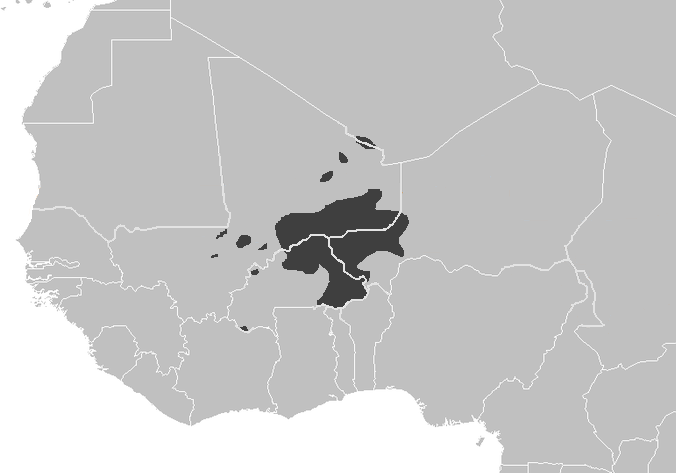
The important point is not that a jihadist column has officially crossed a border. This is too military a reading of an operational theater that functions by relays. One group establishes contact with local bandits, provides a doctrine, explosives, or protection, and then gradually regains access to a track. The distance between Ménaka, Tillabéri, and Kebbi is a logistical problem for a regular army. For a network that moves in small cells, by motorcycle and with the support of constrained communities, it is an exploitable corridor.
The Africa Defense Forum, in its analysis published in November, reports that the ISSP is trying to extend its foothold from its stronghold in Ménaka towards Niger and the Nigerian border, while transferring fighters, equipment, and know-how with the Islamic State West Africa Province (ISWAP), active in the Lake Chad basin. This articulation does not necessarily mean a merger of commands. It rather indicates a circulation of skills between theaters, which is enough to complicate the response from Niamey and Abuja.
Kebbi Offers a Favorable Ground for Influence
Kebbi is not Borno. At this stage, there is no public evidence of territorial control by the ISSP over any portion of the state. This is precisely why spectacular announcements should be avoided. The immediate risk is more discreet: infiltration of bandit networks, collection of clandestine taxes, intimidation of local leaders, and attacks on isolated forces or convoys.
The border with Niger crosses an area where administrative depth is low. Maps show an international boundary; tracks, markets, and family ties show a continuous space. For a Nigerian patrol, the pursuit stops at the border or becomes a diplomatic operation. For a recruiter, it continues until the phone, motorcycle, or cache changes hands.
JNIM has a particular advantage in this type of environment: the organization generally seeks to negotiate with notables, impose fiscal arrangements, and present itself as a substitute authority. The ISSP, more transnational and more brutal towards recalcitrant civilians, can exploit the same grievances with a different strategy. Their competition does not automatically reduce the threat. It can multiply violence against villages suspected of supporting the rival.
A Succession War Before the Nigerian Election
The political calendar adds an operational constraint. Nigeria is heading towards the presidential election in January 2027. According to the analysis by Charlie Werb cited by the Africa Defense Forum, the ISSP seeks to influence bandit groups in the northwest and gain their ideological support. Even if this attempt remains partial, it targets the weak link in Nigerian security: the artificial separation between banditry, kidnappings, and jihadist insurgency.
A cell does not need to convince all bandits. It only needs to offer them protection, a weapon, or a financial outlet superior to that proposed by the state. From there, kidnappings can become a source of intelligence, rackets a form of taxation, and smuggling routes a means of resupply. This is how a policing problem slowly transforms into an operational theater.
Nigerian authorities still have assets: numerous forces, air capability, and considerable experience in fighting Boko Haram and ISWAP. But these resources are heavily taxed in Borno, the northwest, and the Middle Belt. An air presence does not hold a market, does not protect an informant, and does not restore a road after a convoy has passed.
The Real Test Will Be the Route, Not the Statement
ACLED reminds us that the Sahelian crisis is fueled by competition between JNIM, IS Sahel, state forces, self-defense militias, and mercenaries from the Africa Corps. Its recent analysis also highlights that jihadist violence has worsened in Niger, Burkina Faso, and Nigeria. This observation is more useful than the unverifiable tolls published after each operation: it describes a system of actors that feeds off security vacuums.
The operational priority for Abuja should be to monitor secondary routes connecting Kebbi to Niger, livestock markets, and crossing points, while protecting local informants. Without human intelligence, drones will only confirm movements after they have passed. Niamey, for its part, cannot treat Tillabéri and Dosso as distant margins: any pressure exerted on these regions pushes networks towards northwest Nigeria.
Public data is still lacking to confirm the exact extent of the ISSP's presence in Kebbi. But the absence of a jihadist flag should not be confused with the absence of presence. If armed groups begin to regularly tax roads and arbitrate local conflicts, the new front will already be established before the capitals give it a name.
Sources
JNIM and ISSP are expanding their operations in Kebbi, Nigeria, since April 2026, moving fighters and resources from Liptako-Gourma. The conflict has shifted southward, with both groups competing for local influence and resources. They are infiltrating local bandit networks and intimidating local leaders, complicating the security situation ahead of Nigeria's presidential election in January 2027.
- JNIM and ISSP are expanding their operations into Kebbi, Nigeria.
- The conflict has shifted southward from Liptako-Gourma since April 2026.
- Both groups are competing for influence and resources in the region.
- The situation involves infiltration of local bandit networks and intimidation of local leaders.
- The upcoming Nigerian presidential election in January 2027 adds a political dimension to the conflict.