
Poland's Two MiG-29 Against Drone Technology 2026 – Europe's New Division of Labor on the Eastern Flank
 Dr. Klaus Weber
Poland's two MiG-29s against drone technology 2026 – Europe's new division of labor on the eastern flank
Poland intends to transfer two more MiG-29s to Ukraine in exchange for Ukrainian drone and defense technology. At first glance, this appears to be a limited barter deal. In reality, it demonstrates how Europe's defense policy is changing in the autumn of 2026: No longer does each country attempt to maintain all capabilities independently. Instead, bilateral divisions of labor are emerging, where one state provides platforms while another supplies industrial or operational experience. This is pragmatic. However, it is not yet European defense integration.
An old fighter jet as a strategic currency
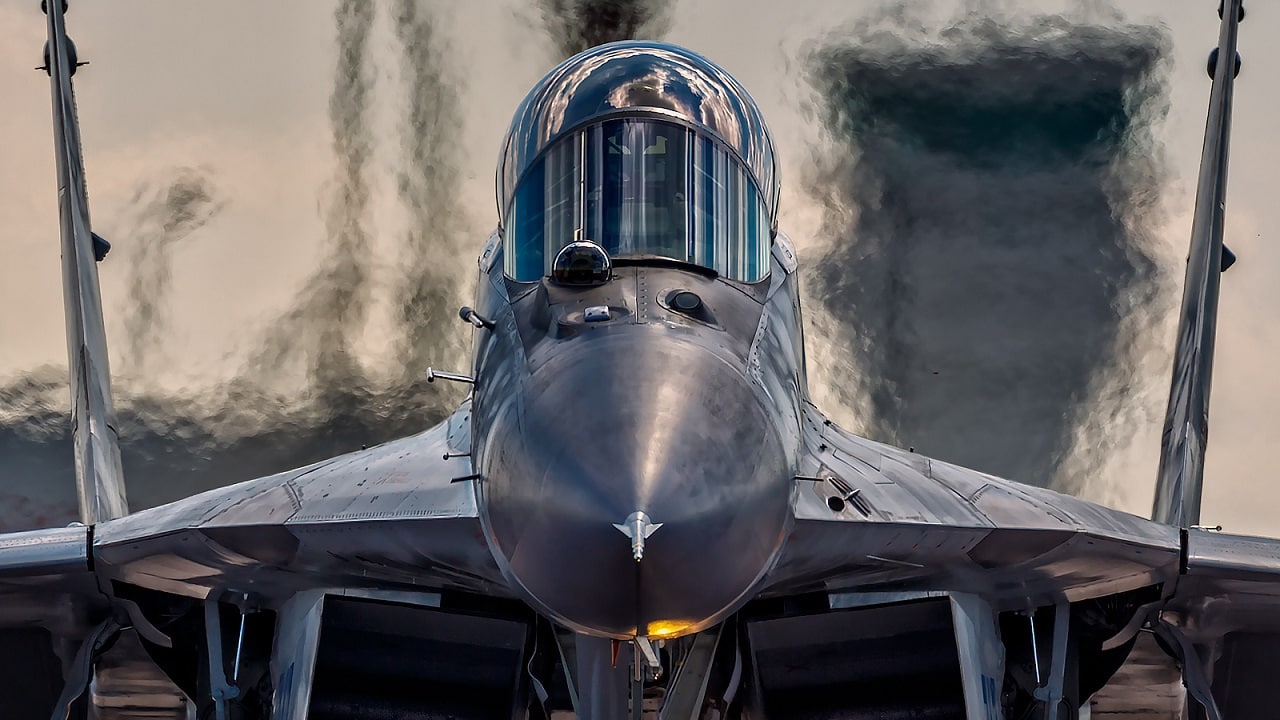
According to Defence24, the details of the agreement between Warsaw and Kyiv are still being finalized. Since March 2023, Poland has already delivered 14 MiG-29s to Ukraine and plans an additional military aid package worth approximately 50 million euros. The two additional aircraft do not represent a military turning point. The MiG-29 is a Soviet model from the late Cold War era, whose maintenance, spare parts supply, and armament are becoming increasingly complicated.
For this reason, the exchange is politically interesting. Warsaw is giving away material that is intended to disappear from its own fleet in the medium term, and in return, it gains access to technologies that are being tested directly in the current war. Ukrainian drone and counter-UAS systems are not merely an export product. They are the result of a daily adaptation competition against Russian reconnaissance and attack drones. Poland is not purchasing an abstract innovation but a shortened learning curve.
From platform logic to system logic
The most important consequence lies not with the MiG-29 but with the definition of military capability. A fighter aircraft is only relevant if reconnaissance, communication, airfield protection, ammunition, and spare parts are functioning. Therefore, on the eastern flank, the ability to adapt quickly is gaining importance. An older jet can still be useful as a carrier, training tool, or spare parts source; at the same time, a small Ukrainian software or sensor component can enhance the protection of an entire unit.
This is an uncomfortable correction for European procurement planning. For decades, defense capability has primarily been measured in terms of the numbers of large platforms. Now, the survival of a unit often depends on cheap drones, electronic warfare, and the speed with which new threats are translated into operational procedures. Poland is attempting to institutionalize this connection. The question is whether the agreement will be permanently transformed into joint production, certification, and training or remain a one-time political gesture.
Germany helps Poland and shifts alliance work
Meanwhile, Deutsche Welle reported on November 16 that the Bundeswehr is assisting Poland in protecting itself against Russia. This development is more significant than the symbolic formula of a German solidarity declaration. Poland is now not only a recipient of allied security but also the central military hub on the eastern flank. German support for Polish protection and logistics structures means that Berlin is increasingly organizing its own defense beyond German borders.
This corresponds to the military reality. Reinforcements for the Baltic states, supplies for Ukraine, and the security of the Suwałki Corridor depend on Polish transport routes, airfields, and depots. Protecting Poland also protects NATO's freedom of movement. However, it remains unclear whether this cooperation is based on robust command structures or primarily consists of national individual measures. A German-Polish presence is not yet a European system if information, rules, and responsibilities do not align in times of crisis.
The 45 billion euro question
According to the Financial Times, Brussels is planning another Ukraine loan of 45 billion euros, which is to be borrowed against the EU budget. This financing can provide Ukraine with short-term planning security. However, it does not automatically solve the European capability problem. Loans create financial leeway; they do not create production lines, trained operators, or uniform technical standards.
Here lies the institutional contradiction. At the political level, European solidarity is organized through shared debt. At the military level, implementation remains national and bilateral. Poland exchanges aircraft for technology, Germany supports Polish protection tasks, and the EU provides a financial framework for this. These three levels can complement each other, but they are not the same. Without binding priorities, the loan risks financing national gaps instead of building a common European capability.
A realistic but limited progress
The MiG-29 exchange is therefore neither proof of Europe's strategic autonomy nor an inconsequential side agreement. It demonstrates a useful pragmatism: Poland has older platforms, Ukraine has frontline and adaptation experience, Germany has resources for alliance defense, and the EU has credit capacity. The crucial question is whether this will lead to a permanent division of labor with common standards.
Weber would not overlook the difference between capacity and capability. Poland can give up more material, Germany can take on more responsibility, and Brussels can mobilize more money. Only when these contributions are jointly planable, interoperable, and permanently available does defense capability emerge. Europe's new division of labor on the eastern flank is thus a step forward – but only as long as no one confuses the exchange of two old MiG-29s with integration.
Sources
Poland is transferring two MiG-29 aircraft to Ukraine in exchange for drone and defense technology. This exchange reflects a shift in European defense policy, emphasizing bilateral cooperation over individual capabilities. Germany is also providing support to Poland for its defense against Russia, while the EU plans to offer a significant loan to Ukraine to enhance its military capabilities.
- Poland is transferring two MiG-29 aircraft to Ukraine.
- Poland has previously delivered 14 MiG-29s since March 2023.
- The exchange aims to provide Poland with access to Ukrainian drone technology.
- Germany is supporting Poland's defense against Russia.
- The EU is proposing a 45 billion Euro loan to Ukraine.