
JNIM and the Islamic State clash in Burkina Faso — 400 claimed dead and a border war in 2026
 Marie Dubois
JNIM and the Islamic State clash in Burkina Faso — 400 deaths claimed and a border war in 2026
Oudalan, northeast Burkina Faso, October 9. In this province that borders both Mali and Niger, fighters from the Group for the Support of Islam and Muslims (JNIM, linked to al-Qaeda) and those from the Islamic State Province in the Sahel (ISSP) have clashed for several days. On October 13, the ISSP claimed to have killed more than 400 JNIM men, including several leaders. The toll has not been independently confirmed. However, the claimed scale is enough to signal a change in theater. The jihadist rivalry is no longer a series of rural skirmishes. It is becoming a battle for routes, recruits, and populations in the Mali–Burkina Faso–Niger corridor.
A battle whose figures remain to be verified
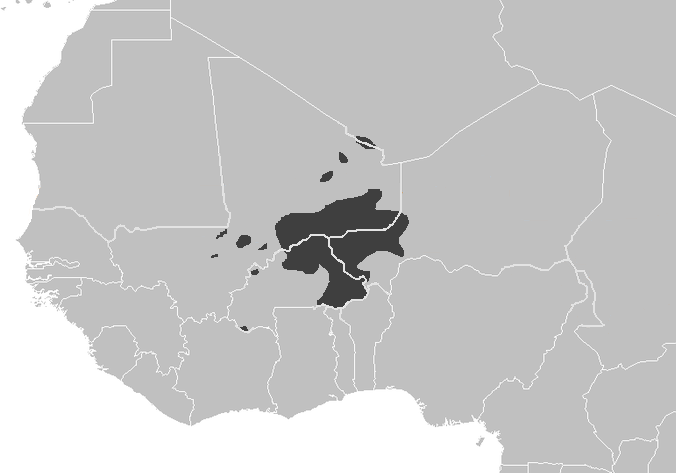
Africanews, citing analyst Heni Nsaibia from ACLED, presents this operation as potentially the deadliest ever recorded between the two organizations. The ISSP had already claimed over 200 JNIM deaths in the same area at the beginning of September. According to Nsaibia, more than 320 clashes between the two groups have caused around 2,200 deaths between 2019 and September 2026. These figures largely rely on statements from factions and on very limited access to the ground. Therefore, it is necessary to distinguish what is claimed from what is confirmed. The operational signal, however, is less disputable: since September, the pace and concentration of clashes have increased.
The UN expert report submitted to the Security Council in early August already described this confrontation as the most intense in the world between a branch of al-Qaeda and an organization affiliated with the Islamic State. The fighting initially concentrated in Mali and Burkina Faso. It is now reaching western Niger and northwestern Nigeria. An administrative border does not hinder units that move by motorcycle, use local relays, and know the paths better than regular forces.
The real issue is control of space
JNIM and ISSP are not competing for a capital. They are competing for livable space and the resources that make it exploitable. The Oudalan–Ménaka–Tillabéri triangle commands routes connecting markets, grazing areas, water points, and sanctuaries. Whoever controls these axes can tax convoys, impose arbitration, recruit in villages, and transfer weapons or fighters without crossing an official checkpoint.
Wassim Nasr, cited in the Africanews analysis, speaks of a race for control of borders and the same recruitment basins. This is exactly the problem seen from the ground. A map may show a line between Burkina Faso and Niger. For a column of pick-ups or motorcycles, this line only exists when the army is present. Between two posts, control is measured by the time needed to pass a cargo, evacuate an injured person, or punish a village suspected of informing.
The ISSP maintains a foothold around Ménaka, Mali, but its influence extends towards Tahoua, Dosso, and Maradi, up to the Nigerian border. This push facilitates exchanges with ISWAP, active in the Lake Chad basin. Thus, the conflict between factions does not prevent the circulation of know-how. A branch can fight JNIM in Burkina Faso while benefiting from a broader supply and mobility network towards Nigeria.
Two jihadist models, two forms of coercion
JNIM generally seeks to root itself. It negotiates with certain communities, relies on local grievances, and primarily focuses its attacks on state forces and foreign troops. This does not make it less brutal: kidnappings, executions, and collective punishments are part of its arsenal. But its pragmatism allows it to present itself as an arbiter where administration has disappeared.
The ISSP applies a harder and more transnational line. It is less willing to accept local arrangements and strikes civilians who refuse its authority. This difference explains the transfers of fighters reported by UN experts, even if they remain limited. In July, JNIM claimed to have killed one of its commanders after his defection to the Islamic State. The battle of Oudalan can be read as an ISSP attempt to break the social network that gives JNIM its depth, and not just as a military conquest operation.
What the juntas cannot resolve through narrative
Ouagadougou, Bamako, and Niamey have built their legitimacy on the promise of regaining control of the territory after the departure of French forces. However, this internal war shows the limits of that promise. The juntas can denounce the legacy of Barkhane, change partners, and multiply announcements of reconquest. They cannot, through a communiqué, close the corridors that connect three countries.
The UN report estimates JNIM's strength at between 7,000 and 8,000 fighters, compared to about 2,000 for the ISSP. Even if these estimates are imperfect, they indicate that the ISSP cannot simply replace JNIM everywhere. Its advantage lies elsewhere: local concentration, brutality against civilians, and the ability to exploit ungoverned spaces. JNIM, for its part, has larger human reserves and is said to have already sent reinforcements to the area. A counter-offensive is therefore likely, but its outcome will not necessarily be a lasting victory. It may only shift the pressure line towards Tillabéri or northwestern Nigeria.
The warning for the coming weeks
Three indicators should be monitored: attacks on markets and water points, the emergence of new checkpoints on secondary routes, and movements of fighters towards the Nigerian border. If the ISSP retains Oudalan or gains regular access to the corridors of Tahoua and Dosso, the conflict will cease to be a Sahelian quarrel and become an operational continuity between central Sahel and the Lake Chad basin.
On the ground, the question will not be who publishes the highest casualty figure. It will be which faction can move men, fuel, and ammunition after the rainy season. This is where the next front will be decided. Information remains incomplete, but the timeframe is short: an abandoned road today can become the rear base of an offensive against Niger or Nigeria before the general staffs have identified it.
Sources: Africanews, October 16, 2026, with analyses from ACLED and Heni Nsaibia; report from UN experts submitted to the Security Council in August 2026; statements claimed by the ISSP and JNIM, whose tolls have not been independently confirmed.
ISSP claimed to have killed over 400 JNIM fighters in Oudalan, Burkina Faso, during clashes in October 2026. The fighting has escalated into a significant battle for control over territory and resources between the two jihadist groups. JNIM is estimated to have 7,000 to 8,000 fighters, while ISSP has around 2,000. The conflict has intensified, affecting the borders of Burkina Faso, Mali, and Niger.
- ISSP claimed to have killed over 400 JNIM fighters in recent clashes.
- The conflict has escalated into a battle for control over key routes and resources.
- The JNIM is estimated to have between 7,000 and 8,000 fighters, while the ISSP has around 2,000.
- The fighting has intensified since September 2026, with increased frequency and concentration of clashes.
- The conflict is affecting the borders between Burkina Faso, Mali, and Niger.