
Sweden's Patriot Deployment 2026 Highlights Europe's Air Defense Problem — Networking Instead of Mass
 Dr. Klaus Weber
Sweden's Patriot Deployment 2026 Highlights Europe's Air Defense Problem — Networking Instead of Mass
On October 15, 2026, Sweden launched a Patriot interceptor missile under realistic operational conditions for the first time in Crete. In December, a Swedish Patriot unit is set to protect the NATO logistics hub in Poland, through which military equipment and civilian aid are delivered to Ukraine. More than 100 Swedish soldiers are participating in the air defense exercise SPARTAN ARROW 26. This is a visible contribution to deterrence. However, strategically more important is what the test reveals about Europe's actual deficit: it is not just individual missiles that are lacking, but the ability to integrate different systems under time pressure into a robust defense.
The Swedish Test is More Than a National Debut
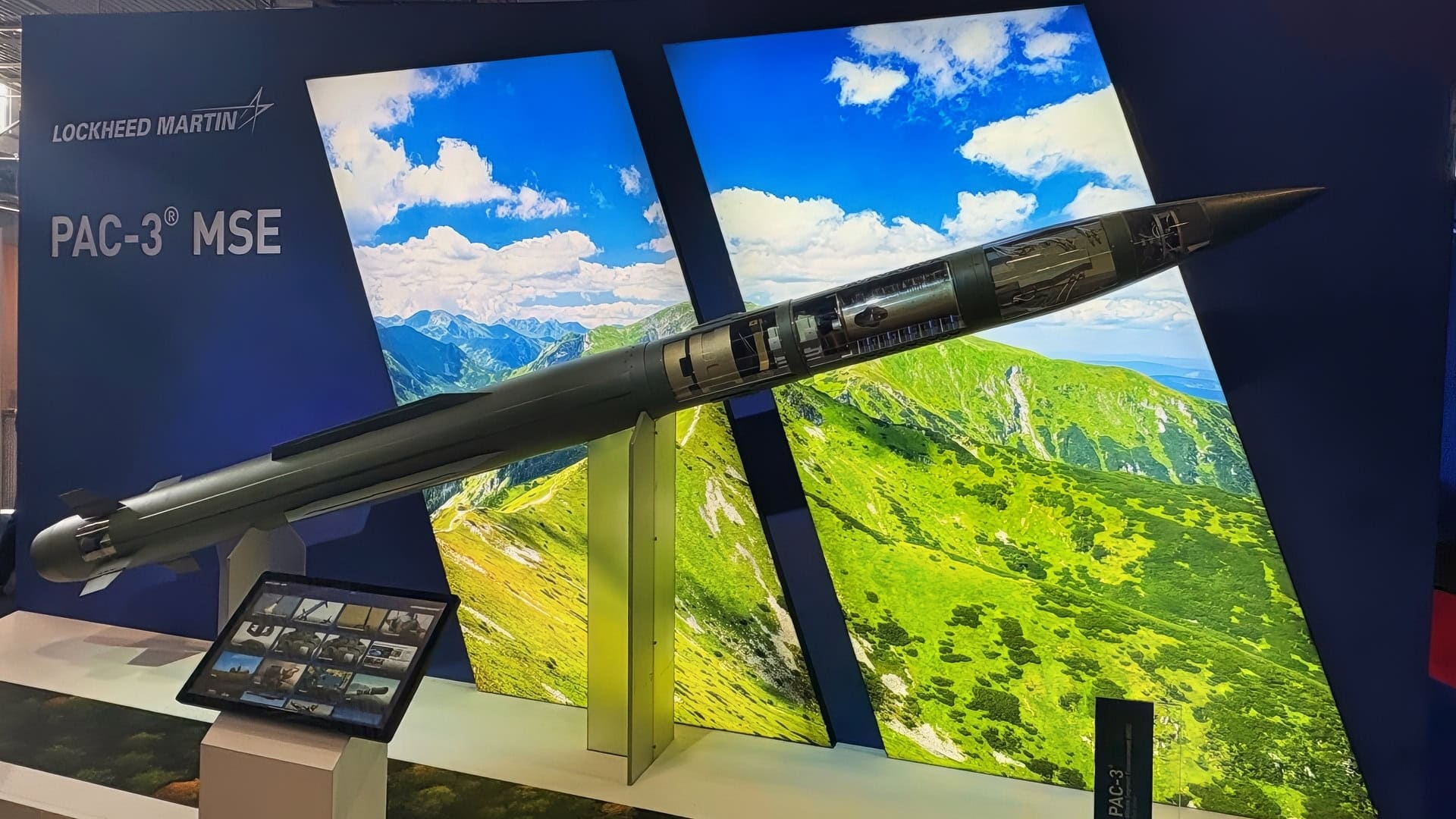
The Swedish air defense operates the Patriot under the national designation Luftvärnssystem 103. The exercise at the NATO Missile Firing Installation in Crete tested not only the launch. The unit had to deploy, establish positions, acquire targets, and operate in conjunction with allies. This sequence is precisely what determines in a real scenario whether a weapon system is available or exists only on paper.
Starting in December, Sweden will be deployed under NATO Air Command for the protection of the Polish hub. Concurrently, Stockholm has been providing Gripen fighter jets for NATO Integrated Air and Missile Defence since October. The political purpose is clear: Russian attempts to disrupt support for Ukraine should not hit the European logistics chain at its most vulnerable point. The operational purpose is more demanding. Hub protection must defend against drones, cruise missiles, and possibly ballistic missiles in a spatially limited but heavily contested environment.
The Real Message Comes from the German Command Post
Airbus Defence and Space reported a crucial integration step in this context. During SPARTAN ARROW 26, a German IRIS-T SLM, the Swedish Patriot system, and the German LeFlaSys were connected through a common command post. The German Surface to Air Missile Operations Centre, or SAMOC, coordinated various ranges. IRIS-T SLM covers the medium range, LeFlaSys complements the short range against drones, and Patriot takes on the longer-range defense.
This architecture is militarily more plausible than the political habit of viewing each system in isolation based on its country of origin. An air defense does not consist of a Patriot battery, an IRIS-T battery, and some short-range components side by side. It consists of sensors, data connections, decision rules, resistance to jamming, and the ability to assign the correct intercept component within seconds. Airbus reported that the exercise provided data on bandwidth, reaction times, and resilience against electronic disruption. It is precisely these unremarkable metrics that determine the operational capability of a European shield.
A connected air defense is not a product demonstration. It is an institutional decision about who detects targets, who grants fire authorizations, and who takes responsibility in the event of disruption.
Europe's Progress Remains Vulnerable
Progress should not be confused with strategic autonomy. Patriot remains an American-influenced system, and European air defense continues to rely on the United States for certain interception capabilities, spare parts, and production capacities. Sweden can improve its national operation, and Germany can integrate IRIS-T. However, this does not yet create European supply security. A battery is a capability; sufficient missile stocks, re-production, and robust supply routes are another.
The deployment in Poland makes this difference visible. NATO is not protecting just any military object there, but a hub for support to Ukraine. The more important the hub, the more it becomes a target. A limited number of Patriot interceptor missiles must therefore be prioritized against different threats. If an expensive PAC-3 missile is used against a cheap drone, a cost problem arises. If too long is waited, a protection problem arises. Without coordinated sensors and clear rules of engagement, even a highly modern system can only force the opponent into a less favorable, but not an impossible attack plan.
The Swedish Contribution Changes European Division of Labor
Politically, Sweden's step is nonetheless significant. The country has only been a NATO member since 2024 and is already taking on a task that goes far beyond symbolic alliance solidarity. Stockholm is not only contributing additional hardware but is also testing its armed forces in a multinational command and logistics chain. The simultaneous involvement of Gripen and Patriot in hub defense indicates a broader Swedish role assumption within the alliance.
For Germany, the test is equally instructive. Berlin possesses an European system with IRIS-T SLM that has proven its relevance in Ukraine. However, the value of a system only grows beyond the national stock when it reliably cooperates with Patriot and short-range assets. The SAMOC test is therefore a more concrete integration step than many declarations of intent regarding European defense autonomy. It shows that interoperability does not arise from resolutions, but through certification, training, and repeated tests under disruption.
More Networking Does Not Replace Mass
The political temptation now is to present the success of SPARTAN ARROW 26 as proof that Europe is already solving its air defense problem. That would be premature. Networking improves the efficiency of existing resources, but it does not automatically multiply the number of radars, launchers, and interceptor missiles. Europe's air defense needs both: a common digital backbone and industrial mass.
The December deployment in Poland will therefore be a practical test for European defense integration. If Sweden, Germany, and their allies can jointly detect targets, set priorities, and manage stocks, a real NATO capability will emerge. Conversely, if each country manages its rules of engagement, data, and supply reserves separately, the European shield remains a collection of good individual products.
The lesson from the Swedish Patriot launch is thus sober. Europe has begun to connect its air defense. But a network is not yet a protective shield as long as it lacks the ammunition, industrial depth, and political willingness to operate it sustainably. More networking can reduce Europe's dependence. However, it cannot eliminate the reliance on scarce American interceptor missiles.
Sources
- Defence Industry Europe, October 18, 2026, on the first Swedish Patriot live-firing in Crete and the planned protection of the NATO logistics hub in Poland.
- Defence Industry Europe, October 2026, on the Airbus test with German IRIS-T SLM, Swedish Patriot, and LeFlaSys in SAMOC.
- Reuters, October 18, 2026, on recent airspace violations and the increased strain on NATO's eastern flank.
Sweden conducted a live-fire test of the Patriot missile system on October 15, 2026, in Crete, marking its first operational use. More than 100 Swedish soldiers participated in the SPARTAN ARROW 26 exercise, which aims to enhance air defense capabilities. Starting in December, a Swedish Patriot unit will protect NATO's logistics hub in Poland, demonstrating Sweden's commitment to NATO and European defense integration. The exercise also highlighted the need for improved interoperability among European air defense systems.
- Sweden launched a Patriot missile under realistic conditions on October 15, 2026, in Crete.
- A Swedish Patriot unit will protect NATO's logistics hub in Poland starting in December.
- More than 100 Swedish soldiers participated in the SPARTAN ARROW 26 air defense exercise.
- The exercise tested the integration of various air defense systems including IRIS-T SLM and LeFlaSys.
- Sweden's involvement signifies a deeper commitment to NATO operations and European defense integration.