
JNIM and the Islamic State clash in Burkina Faso — the Sahel opens a new war in the war
 Marie Dubois
JNIM and the Islamic State clash in Burkina Faso — the Sahel opens a new war in the war
Ouagadougou, October 16, 2026. In the rural areas of Burkina Faso, fighters from the Group for Support of Islam and Muslims (JNIM, affiliated with Al-Qaeda) and those from the Islamic State in the Sahel (ISSP) are no longer just avoiding each other. They are fighting for the same routes, the same villages, and the same supply corridors. The clashes reported this week mark a change in the nature of the theater of operations.
A battle with an unverifiable toll
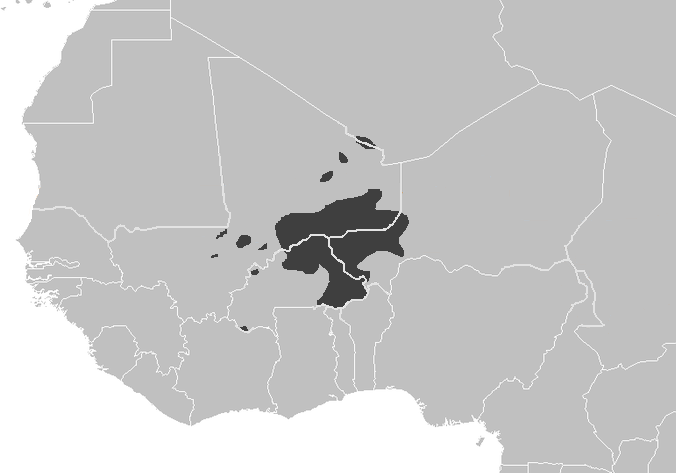
On October 13, the Bloomsbury Intelligence and Security Institute described an inter-jihadist clash in Burkina Faso as a victory claimed by the ISSP. On October 16, several outlets — Africanews, Agenzia Nova, and Asharq Al-Awsat — reported that the Islamic State claims to have killed more than 400 JNIM fighters. This figure is not confirmed by an independent source, nor by a verifiable communication from the Burkinabè army. It should therefore be treated as a propaganda claim, not as a count.
What is better established is the trend. The rivalry between the two organizations has hardened in Burkina Faso, to the point of producing open fighting. The published accounts do not yet allow for a definitive determination of the exact location, duration of the operation, or the identity of the engaged units. However, the repetition of the narrative by several media indicates that it is likely not just an isolated incident.
Control of corridors, not conquest of a border
On the ground, these groups rarely think in terms of administrative borders. They control segments of roads, water points, markets, and seasonal tracks. A column leaving eastern Burkina Faso can disappear into the bush, bypass a military position, and reappear several dozen kilometers away. It is this geographical depth that makes political maps misleading.
JNIM has an established advantage in local recruitment and negotiation with certain communities. The ISSP, on the other hand, seeks to impose a more brutal discipline and an uncompromising religious monopoly. As long as both movements primarily fought the state, their differences could remain secondary for outside observers. When they dispute the same villages, they become operational: taxation, kidnappings, movement of traders, and access to pastures.
A local defeat of JNIM would therefore not necessarily mean a strategic setback for Al-Qaeda. It could provoke a displacement of its fighters to the north or west, with increased pressure on the axes connecting Burkina Faso to Mali. The ISSP would then gain space but would also inherit a hostile population and a more difficult logistical network to maintain.
The risk of spillover to coastal states
Reports published on October 16 also mention clashes between JNIM and Islamic State-linked groups in northwestern Nigeria. Even though this aspect still requires confirmation, it corresponds to a known logic: when competition increases in the center of the Sahel, organizations seek fallback, recruitment, and funding zones further south.
For Ghana, Togo, Benin, and Nigeria, the danger is not just a spectacular attack. It is the gradual establishment of small cells on secondary roads, in border areas where the state is present intermittently. An internal war between jihadist groups can paradoxically accelerate this dispersion. Survivors do not disappear: they change theaters.
A tactical opportunity for Ouagadougou, but not a solution
The government of Ibrahim Traoré may see this confrontation as an opportunity to let its adversaries exhaust themselves. This is an appealing and dangerous reading. An army that does not sustainably hold the reclaimed localities does not transform a jihadist rivalry into victory. It only creates a vacuum that the most mobile group will fill after the patrols leave.
The decisive question is very concrete: who controls the track the day after the battle, who protects the market the following day, and who can prevent the return of armed men the week after? Victory statements do not answer any of these questions. From experience, it is the resupply and regular presence that determine the duration of control, not the announced number of dead.
What to watch for in the coming weeks
- The independent confirmation — or denial — of the toll of over 400 fighters claimed by the ISSP.
- The movement of JNIM units towards the Mali–Burkina Faso corridors or towards the northern borders of Nigeria.
- Attacks on markets, gendarmerie posts, and telecom relays, which would signal a struggle for the clandestine administration of territory.
- The ability of Burkinabè forces to remain in areas announced as reclaimed, beyond the initial operation.
The war between JNIM and the ISSP does not mechanically reduce the threat to civilians. It can, on the contrary, make the theater more unpredictable, with competing groups financing themselves through the same population. The next indicator will therefore not be the most triumphant statement, but the actual movement on the roads between two villages. If it stops, the front line will have advanced — even without a flag planted at the edge of the track.
Sources
- Africanews, October 16, 2026, Rival JNIM and Islamic State jihadists clash in intensifying Sahel turf war.
- Agenzia Nova, October 16, 2026, Burkina Faso: Jihadists battle, Islamic State claims killing of 400 Al-Qaeda militants.
- Asharq Al-Awsat / UA.NEWS, October 16, 2026, ISSP claims over 400 JNIM fighters killed in Burkina Faso.
- Bloomsbury Intelligence and Security Institute, October 13, 2026, Inter-Jihadist Clash in Burkina Faso: ISSP Claims Major Victory over JNIM.
- The Rio Times, October 16, 2026, Fighting between JNIM and IS-linked groups spreads to northwestern Nigeria.
Clashes erupted between JNIM and ISSP in rural Burkina Faso from October 13 to 16, 2026, with ISSP claiming over 400 JNIM fighters killed. This marks a significant escalation in their rivalry, as both groups vie for control of territory and resources. Reports also indicate potential spillover into northwestern Nigeria, raising concerns about regional stability.
- ISSP claims to have killed over 400 JNIM fighters, though this is unverified.
- Clashes are occurring in rural Burkina Faso, indicating a shift in the operational theater.
- The rivalry between JNIM and ISSP has escalated to open combat over territory.
- Reports suggest potential spillover of violence into northwestern Nigeria.
- The situation remains fluid, with implications for regional stability.