
JNIM and the Islamic State Clash in the Sahel — Burkina Faso Becomes the Battlefield
 Marie Dubois
JNIM and the Islamic State Clash in the Sahel — Burkina Faso Becomes the Battlefield
Banfora, Cascades region. On October 22, JNIM claimed the capture of a post from a Burkinabè militia in Kando, according to Sahel Liveuamap's tracking. A few hundred kilometers further north and east, fighters linked to al-Qaeda and the Islamic State are now engaged in unusually intense fighting. The significant fact is not just that one jihadist group has taken a post. It is that the theater of operations is fragmenting beneath the feet of the forces that claim to control it.
The available information remains incomplete. The claim regarding Kando has not been independently confirmed, and casualty figures are uncertain. But the trend is clear enough to be taken seriously: JNIM and the Sahel province of the Islamic State are no longer content to share areas of influence. They are seeking to close off the opponent's corridors.
A War Among Jihadists That Is Changing Scale
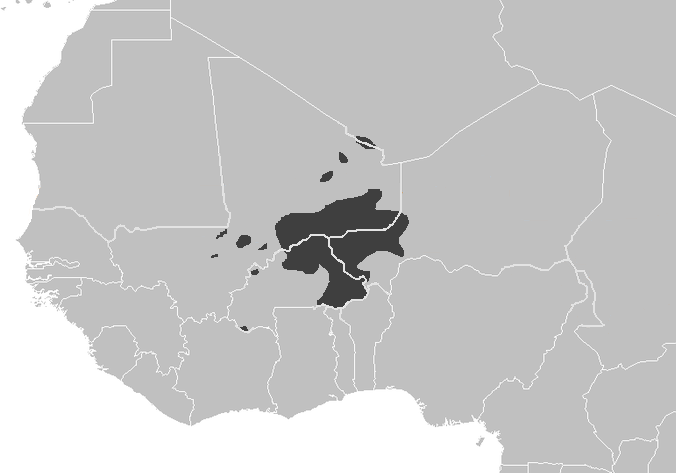
On October 16, Africanews reported clashes between the two factions in the border areas of Mali, Burkina Faso, and Niger, described as the most significant observed in this rivalry for a long time. JNIM, the Sahel branch of al-Qaeda, retains an advantage in its ability to negotiate with communities, tax roads, and infiltrate rural spaces. The Islamic State in the Sahel relies more on coercion, raids, and the destruction of rival networks.
On an administrative map, these groups appear as two organizations separated by borders. On the ground, they fight for the same water points, the same paths, and the same markets. The Kando area is particularly sensitive: it connects western Burkina Faso to the routes leading down to Côte d'Ivoire and Mali. A position held in the Cascades is not just a local base. It can serve as a relay for the movement of weapons, recruits, and livestock.
Why Burkina Faso Has Become the Breaking Point
Burkina Faso concentrates three operational weaknesses. First, the state must defend a vast territory with units often reliant on Volunteers for the Defense of the Homeland, militias whose mobility and intelligence remain uneven. Second, secondary roads are rarely secured beyond urban centers. A convoy can leave Banfora and lose all real cover before even reaching the first wooded areas.
Third, the pressure from JNIM in the north and east forces Ouagadougou to disperse its resources. This dispersion opens space for Islamic State fighters in the eastern margins, while JNIM tests the western accesses. The result resembles less a front line than a series of overlapping pockets. This is exactly the type of war where the possession of a post does not mean control of the province.
ACLED reminds us that the regional conflict brings together jihadist groups, state forces, community militias, and the Africa Corps. This multiplication of actors creates a thick fog. An attack attributed to JNIM can be an operation against the state, against a local militia, or against a position recently occupied by the Islamic State. Without solid human intelligence, military statements provide only part of the picture.
The Trap for the Sahel States Alliance
Mali, Burkina Faso, and Niger have promised to transform their political alliance into a combat instrument. The jihadist rivalry shows the immediate limit of this ambition. A common force can move armored vehicles, but it does not automatically create informants in villages or a reliable logistics chain across three countries.
Russia does not solve this problem on its own. Instructors or mercenaries can reinforce a garrison, escort a convoy, and conduct a sweep operation. They cannot replace the daily administrative presence that allows one to know who truly controls a market, a path, or a customary chief. On the ground, a victorious patrol in the morning can leave behind a vacuum exploited that very evening.
Territorial control is not measured by the flag raised over a post, but by the risk a trader takes when using the neighboring road.
The Next Threat Comes from the Corridors, Not the Capitals
The most dangerous consequence of this confrontation is its shift towards transit areas. If JNIM consolidates western Burkina Faso, it can increase pressure on routes to Mali and the coastal states. If the Islamic State attempts to respond from the east, it will likely seek to disrupt the axes connecting Burkina Faso to Niger and northern Nigeria.
This dynamic will also complicate recruitment. Each group can present the other as an apostate movement while offering young fighters a salary, a weapon, and a place in a command chain. Competition does not necessarily reduce violence. It can increase it, as each faction must prove that it remains capable of punishing, taxing, and protecting its territory.
For Burkinabè forces, the priority is not to symbolically retake every lost post. It is to hold the roads for several weeks, protect the markets, and rebuild local intelligence after the columns have departed. Kando may be a limited episode. But if fighting between JNIM and the Islamic State continues around the Cascades and the eastern axes, Burkina Faso will no longer just be the country where the insurgency is advancing. It will become the ground where two jihadist wars feed off each other.
Sources
JNIM claimed control of a militia post in Kando on October 22, 2026, amid intense fighting with ISIS in the Sahel. The conflict has escalated, with both groups competing for resources and territory in Burkina Faso. Operational weaknesses in the Burkinabè military are exacerbating the situation, leading to a fragmented control of the region. The ongoing clashes signify a shift in the dynamics of jihadist warfare in the area.
- JNIM claimed control of a militia post in Kando on October 22, 2026.
- Intense fighting between JNIM and ISIS has been reported in the Sahel region.
- Burkina Faso is experiencing operational weaknesses that affect its military response.
- The conflict is characterized by competition for resources and territory between jihadist groups.
- The situation in Burkina Faso is evolving into a battleground for jihadist factions.