
China's Liaoning Turns 2026 Carrier Drills Into Real Combat Power
 Marcus Chen
China's Liaoning Turns 2026 Carrier Drills Into Real Combat Power
The Liaoning is 14 years old, 305 meters long, and built around a ski-jump deck rather than catapults. It is not the carrier China would want at the center of a Taiwan war. But its October 2026 deployment shows why writing it off would be a mistake: Beijing is turning an aging training ship into a repeatable operating system for a three-carrier navy.
The Voyage Was More Than a Flag Showing
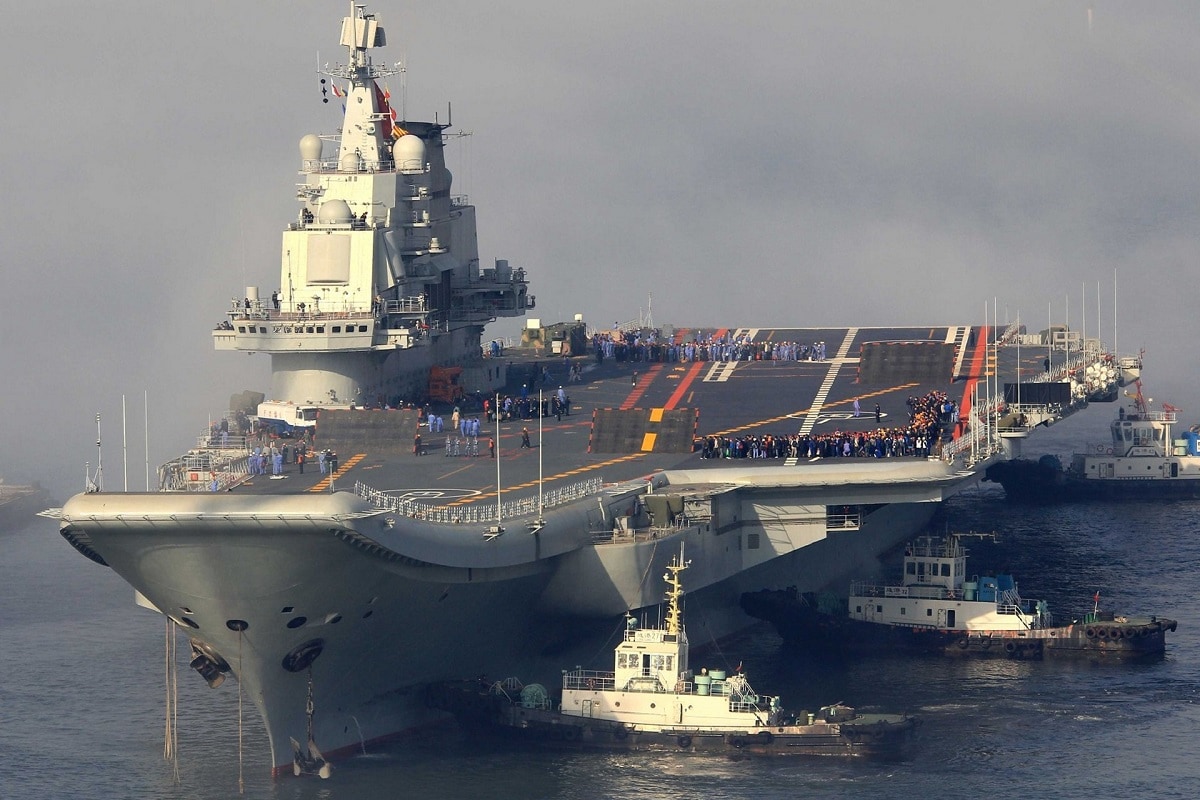
China's navy sent the CNS Liaoning into the western Pacific on October 14 as part of what Xinhua described as routine annual training. By October 23, the carrier group had operated near Japan's southernmost islands and was heading toward the South China Sea near the Philippines. Defense News reported that the group included two large destroyers and a guided-missile destroyer. Japan said it observed carrier aircraft operating about 250 kilometers south of Ishigaki Island.
That geography matters. This was not a short sortie in waters immediately adjacent to China. The group moved through the same maritime neighborhood that links Taiwan, the Japanese Southwest Islands, the Philippines and the South China Sea. It also overlapped in time with Keen Sword 27, the U.S.-Japan exercise that began on October 19. Beijing can call the voyage routine; every navy in the region still has to track it, classify it and decide how much air and maritime surveillance to dedicate to it.
What the Liaoning Can Actually Do
The Liaoning's limitations are obvious. Its ski-jump launch system restricts aircraft takeoff weight compared with a catapult carrier. Its air wing cannot match the sortie generation or fixed-wing airborne early-warning capacity that the United States expects from a carrier strike group. Taiwan analyst Alexander Huang told Defense News that the oldest of China's three carriers would not be the frontline reaction force in a contingency.
That is the wrong standard for judging this deployment. A training carrier does not need to be the best carrier in the fleet to create operational value. It needs to generate deck cycles, rehearse replenishment, test escorts, move with submarines and collect data on how pilots and ship crews perform far from home ports. A ship that repeatedly does those things gives the newer Shandong and Fujian crews a syllabus written at sea rather than in a briefing room.
The Liaoning is also an unusually useful test bed. The Shandong is an improved version of the same basic design, while the Fujian introduces catapults and a much more demanding flight-deck architecture. As Collin Koh of Nanyang Technological University told Defense News, the older carrier may be validating new technology, sensors and flight operations for the ships that will carry the real combat burden. In plain terms, China is using its least capable carrier to make its more capable carriers less experimental.
The Strategic Gain Is Persistence
One deployment proves little. A pattern proves more. Defense News counted at least six long-distance Liaoning deployments since the carrier's completion. The value of that repetition is not simply the number of aircraft launched. It is the growing ability to keep a carrier group at sea, coordinate with escorts and sustain operations while opponents watch every movement.
This creates a surveillance tax for Japan, Taiwan, the Philippines and the United States. A carrier group operating near the first island chain forces decisions about patrol aircraft, submarines, surface escorts and intelligence collection. It can remain politically below the threshold of a crisis while still making the region practice the response to one. The group does not need to attack anything to consume attention and expose how quickly allies can share a common operating picture.
The timing also exposes the interaction between Chinese and allied exercises. The Liaoning's movements began shortly before Keen Sword 27, and its aircraft reportedly operated in Japan's exclusive economic zone. That does not make a clash inevitable. It does mean that routine training is now occurring inside a crowded operational calendar, where a radar track, an aircraft intercept or a navigation decision can carry more weight than the original mission plan.
Why This Matters for a Taiwan Contingency
In a Taiwan scenario, the Liaoning would probably be more useful as a supporting sensor and air-defense node than as a lone strike platform. Its escorts, aircraft and data links could complicate the approach of U.S. and allied forces east of Taiwan. More importantly, its crews would arrive with experience in the exact waters where a blockade, quarantine or coercive campaign would unfold.
But there is a hard limit. Carrier operations do not eliminate China's logistics problem. The Liaoning still depends on tankers, escorts, maintenance and a protected information network. A carrier moving between Japan and the South China Sea is visible. Its aircraft need fuel, weapons and recovery windows. Its combat value falls quickly if the group cannot sustain sorties or if land-based missiles and submarines force it to maneuver defensively.
That is why the October voyage should not be described as proof that China has mastered carrier warfare. It is evidence that China is learning carrier warfare in public, at a tempo its neighbors cannot ignore. The United States has more experienced nuclear carrier crews and a larger global support network. China has the advantage of geography, a growing shipbuilding base and the ability to use the Liaoning as a school for the next two carriers.
The Bottom Line
The Liaoning is not China's answer to a U.S. carrier strike group. It is something more prosaic and, over time, more consequential: a recurring laboratory that turns ship time into institutional knowledge. If Beijing can keep converting routine deployments into better deck operations, sensors and escort coordination, the combat gap between its first carrier and its newest carrier will close faster than the hull count suggests.
The question for Washington and its allies is no longer whether the Liaoning could win a carrier duel. It is whether they are measuring the training cycle that will make China's next carrier force harder to deter. That is the real combat power being built in these “routine” drills.
Sources
CNS Liaoning conducted naval operations in the western Pacific from October 14 to 23, 2026, alongside two large destroyers and a guided-missile destroyer. The carrier group operated near Japan's Ishigaki Island and moved towards the South China Sea, coinciding with the U.S.-Japan Keen Sword 27 exercise. This deployment highlights China's ongoing naval training and operational capabilities despite the carrier's limitations.
- CNS Liaoning conducted operations in the western Pacific from October 14 to 23, 2026.
- The carrier group included two large destroyers and a guided-missile destroyer.
- Japan observed carrier aircraft operating near Ishigaki Island.
- The deployment coincided with the U.S.-Japan Keen Sword 27 exercise.
- The Liaoning serves as a training platform for China's naval operations.