
JNIM and the Islamic State Gain Northwest Nigeria — Kebbi Becomes the New Lock of the Sahel in 2026
 Marie Dubois
JNIM and the Islamic State Gain Ground in Northwestern Nigeria — Kebbi Becomes the New Lock of the Sahel in 2026
Birnin Kebbi, Kebbi State. The jihadist threat does not arrive here in the form of a column of pick-up trucks rushing toward a barracks. It advances through paths, markets, and alliances with bandit groups. Since April 2026, Jama’at Nusrat al-Islam wal-Muslimin (JNIM), the Sahelian branch of Al-Qaeda, and the Islamic State in the Sahel (EIS) have both been seeking to expand their presence into northwestern Nigeria. The area is not yet a new sanctuary. It has become a space of competition.
This is the important distinction. The maps that confine jihadism to the Mali–Burkina Faso–Niger triangle are now outdated in relation to the theater of operations.
A Push Toward Kebbi That Does Not Resemble an Invasion
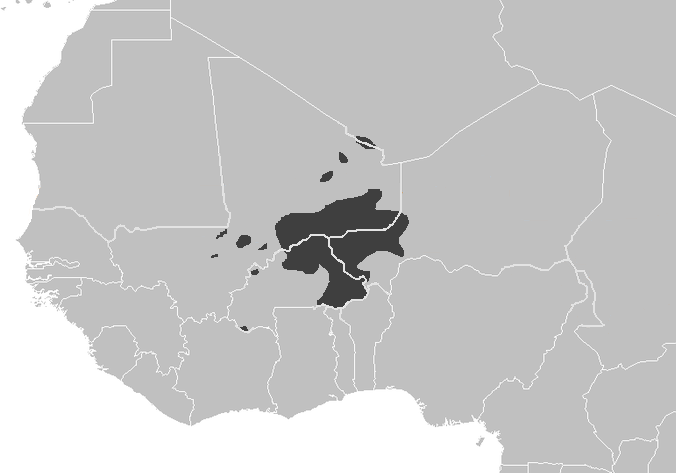
Clashes between JNIM and EIS in the Liptako-Gourma region escalated in 2026. According to ACLED and reports from the Africa Defense Forum, the fighting in August and October in northeastern Burkina Faso was the deadliest ever observed between the two organizations. The conflict is not only about doctrine. It concerns the same trafficking corridors, the same taxable populations, and the same recruits.
The pressure then shifted eastward. EIS, based around Ménaka in Mali, seeks to cross Niger and reach the Nigerian border. The group is transferring fighters, weapons, and expertise to the orbit of the Islamic State West Africa Province (ISWAP), active in the Lake Chad basin. JNIM, on the other hand, is leveraging its community and commercial networks to advance toward the coastal states. In Kebbi, this competition can take the form of clandestine taxes, imposed protection, and armed mediation even before the appearance of a jihadist flag.
The Terrain Is More Favorable to Intermediaries Than to Conquerors
In northwestern Nigeria, the distance between Sahelian pressure zones and administrative centers is a military capability in itself. Borders are not walls. They cut through markets, families, and paths that security forces do not control at all times. A jihadist group does not need to hold Birnin Kebbi to exert influence there. It only needs to secure a route, discipline a village, or convince a bandit group that ideological cooperation brings more than mere extortion.
However, the balance of power remains uncertain. Available information documents an expansion of contacts and clashes, not the establishment of a single command chain between EIS, ISWAP, and criminal gangs in northwestern Nigeria. The numbers of fighters and claimed territories are often unverifiable. Therefore, it is necessary to speak of an attempt at establishment rather than a completed conquest.
This nuance does not diminish the danger. It makes it harder to detect. A classic insurgency leaves positions to be retaken. A network that rents motorcycles, buys fuel, and recruits from marginalized communities can disappear before a patrol arrives.
Abuja Responds with an Offensive, but the Political Timeline Matters
On November 5, the Nigerian army rejected any truce with Boko Haram and ISWAP, stating its intention to continue operations. This position is understandable after seventeen years of war in the northeast. However, it does not resolve the problem in the west. An offensive designed for Lake Chad does not automatically protect the markets and roads of Kebbi, Zamfara, or Sokoto.
Nigeria is also preparing for the presidential election in January 2027. Jihadist groups do not need to take power to influence this election. They can disrupt movements, intimidate local candidates, close polling stations, or amplify the perception of an absent state. EIS is already seeking to influence bandit groups in northwestern Nigeria, while JNIM is trying to consolidate its own networks there. These are two different strategies, but they produce the same operational consequence: the fragmentation of authority.
The next front line may not be a border. It will be the point where a local bandit understands that a transnational network offers him better protection and more profitable taxation than the administration.
The Key to Hold Is Logistical
For Abuja, the urgency is not only to send more soldiers. It is essential to know who controls the paths between Niger, Kebbi, and neighboring states, who supplies the fuel, which roads remain passable during the rainy season, and which local leaders can still provide reliable alerts. On the ground, a company that arrives six hours after an attack does not regain control; it observes the shift of the threat.
Regional cooperation will be equally crucial. Niger's withdrawal from the Economic Community of West African States has already complicated coordination mechanisms. The Multinational Joint Task Force remains focused on the Lake Chad basin, while the new geography of the threat now connects Ménaka, Tillabéri, Kebbi, and routes to northern Nigeria. Without regular intelligence exchange between these areas, each army will pursue an enemy that its neighbor has already seen cross the border.
JNIM and EIS are not yet masters of Kebbi. But they have understood that the strategic depth of the Sahel no longer stops at the desert. If Abuja concentrates all its force in the northeast, the west will become a corridor. And a corridor, in irregular warfare, can become a theater of operations even before the capital gives it a name.
Sources
JNIM and EIS are expanding their influence in Kebbi, Nigeria, since April 2026, competing for control over local populations and resources. The conflict between these jihadist groups has intensified, leading to significant casualties in Burkina Faso. The Nigerian military continues operations against Boko Haram and ISWAP while preparing for the presidential elections in January 2027, which may be affected by jihadist activities.
- JNIM and EIS are expanding their presence in northwestern Nigeria since April 2026.
- The conflict between JNIM and EIS has intensified, with significant casualties reported in Burkina Faso.
- Jihadist groups are competing for influence and control over local populations and resources in Kebbi.
- The Nigerian military has rejected a ceasefire with Boko Haram and ISWAP, focusing on operations in the northeast.
- The upcoming presidential elections in Nigeria may be influenced by jihadist activities.