
JNIM and the Islamic State push Mali, Burkina Faso, and Niger towards 3,000 acts of violence in 2026
 Marie Dubois
JNIM and the Islamic State are pushing Mali, Burkina Faso, and Niger towards 3,000 violent incidents in 2026
In Bamako, Ouagadougou, and Niamey, the figure tells a story of a war that has escalated. According to data compiled by the Armed Conflict Location & Event Data Project (ACLED) and published on September 16, 2026, incidents of violence involving jihadist groups in Mali, Burkina Faso, and Niger could exceed 3,000 this year. There were 2,845 in 2025, compared to only 63 in 2016. By early September, ACLED had already recorded 2,145.
The figure does not mean that every event is an attack on a barracks. It includes clashes, ambushes, kidnappings, and violence against civilians. But its progression provides a useful measure of the pressure exerted on three states that have expelled French forces and relied on their national armies, auxiliaries, and Russian partners.
An operational theater that extends beyond the capitals
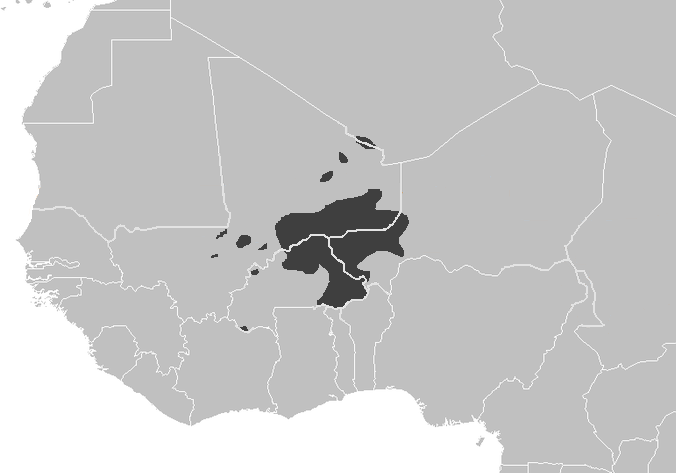
The useful map is not one of administrative borders. It follows the roads, markets, and mobility corridors. In central Sahel, the Support Group for Islam and Muslims, or JNIM, maintains an advantage in several areas of Mali and Burkina Faso. The Islamic State in the Sahel remains particularly aggressive in western Niger. Between the two, populations shift their loyalties based on the protection offered, the cost of convoys, and the ability to move.
On April 25, a coordinated offensive by JNIM and the Azawad Liberation Front struck Bamako, Kati, Gao, Kidal, and Mopti. According to the UN and reports from The Guardian, the attack combined ambushes, car bombs, drones, and raids. The death of the Malian Minister of Defense in a suicide attack in Kati, about 15 kilometers northwest of Bamako, reminded that the strategic depth around the capital is no longer guaranteed.
The capture of Kidal by the rebels, following the withdrawal of Malian soldiers and the surrender of Russian auxiliaries, also has operational significance. Kidal is not just a Tuareg symbol. It is a hub on the routes connecting northern Mali to Algeria and Niger. When a group controls water points and tracks, it does not need to hold every town to impose its tempo.
JNIM advances through pressure, the Islamic State through rupture
In Burkina Faso, JNIM claimed more than 130 attacks in 2026 and has moved closer to Ouagadougou. This does not mean that the organization is necessarily preparing for a frontal conquest of the capital. Its method is more cost-effective: isolating garrisons, taxing routes, intimidating local leaders, and making military movements expensive.
In Niger, the situation is different. JNIM is reported to have claimed at least 17 attacks there, while the Islamic State in the Greater Sahara remains the most active player, particularly in the western regions. The attack on Niamey airport and on a base in Tahoua show that pressure can alternate between sabotaging sensitive sites and harassing units deployed far from the capital.
This distinction between the two organizations is essential. JNIM often seeks to administer, negotiate, and extract. The Islamic State is more inclined towards absolute coercion and armed competition with other jihadist groups. On the ground, however, the boundaries between their areas of influence remain porous. Information on alliances, fighter transfers, and casualty figures is incomplete; thus, claim numbers are not independent confirmations.
The Western withdrawal has not eliminated the logistical problem
The departure of Barkhane has removed an intelligence, surveillance, and strike capability that the Sahelian armies have not replaced on the same scale. The Malian, Burkinabè, and Nigerien forces have drones and Russian support, but a drone does not resupply an encircled garrison and does not secure a road throughout a rainy season.
The report from UNOWAS precisely describes this transformation: drones, sophisticated communications, cryptocurrencies, and growing links with criminal networks. The problem is therefore no longer just the capacity to kill fighters. It is about maintaining an open corridor between a base and a town, protecting fuel trucks, and convincing a village that the state will return tomorrow.
ACLED statistics must also be read with caution. An increase in events may reflect better documentation in certain areas, but the gap between 63 incidents in 2016 and 2,845 in 2025 is too significant to be reduced to a simple collection effect. The more than 9,000 deaths recorded by the United Nations in Mali, Burkina Faso, and Niger in 2025 confirm the general trend.
The next breaking point
The most immediate threat is not necessarily found in a new spectacular attack against Bamako. It lies on the secondary routes connecting northern Burkina Faso to Benin, Tillabéri to Nigerien markets, and central Mali to the roads of Gao. When civilian convoys cease, garrisons become islands, and armed groups gain practical authority without raising a flag.
In the short term, exceeding 3,000 events in 2026 will not change the doctrine of the juntas. However, it will change the daily cost of their strategy. They can announce the recapture of a town; they cannot announce the reopening of every track. This is where the reality of the operational theater is measured: in the distance a truck travels before it has to turn back.
Sources: ACLED, regional conflict data in the Sahel, consulted on September 17, 2026; The Guardian, September 16, 2026; UNOWAS and UN, presentation to the Security Council, July 2026.
JNIM and the Islamic State are expected to escalate violence in Mali, Burkina Faso, and Niger, with over 3,000 incidents projected for 2026. Significant attacks have occurred, including a coordinated offensive on April 25 targeting multiple cities. The security situation has worsened, highlighted by the death of the Malian Defense Minister in a suicide attack, reflecting the growing influence of jihadist groups in the region.
- Over 3,000 violent incidents expected in Mali, Burkina Faso, and Niger in 2026.
- JNIM and the Islamic State are the primary actors involved in the violence.
- The report highlights a significant increase in violence from 63 incidents in 2016 to 2,845 in 2025.
- The death of the Malian Defense Minister in a suicide attack underscores the deteriorating security situation.
- The withdrawal of Western forces has impacted local military capabilities.