
JNIM controls rural Mali in 2026 — the soft tactic traps Bamako
 Marie Dubois
JNIM controls rural Mali in 2026 — the soft tactic traps Bamako
In the villages between Ségou, Mopti, and the paths leading to Timbuktu, the Malian war does not always resemble a mortar attack. It sometimes begins with a meeting under a tree, a tax on a truck of supplies, a land dispute settled by an armed man who knows the families in the area. It is less spectacular than a raid on Kati. It is often more sustainable.
On June 10, Reuters broadcast a segment in which former Human Rights Watch official Corinne Dufka summarizes a development that has been observed for months on the ground: the Malian junta is pursuing a logic of military reconquest, while the Support Group for Islam and Muslims, JNIM, is building a logic of social and religious control. This statement may seem theoretical. It is not. In central Mali, it is measured by the ability to move between two markets without paying twice, the possibility of bringing in a mechanic, the choice to sleep in a village or push on to the next military post.
An offensive that does not stop at the front
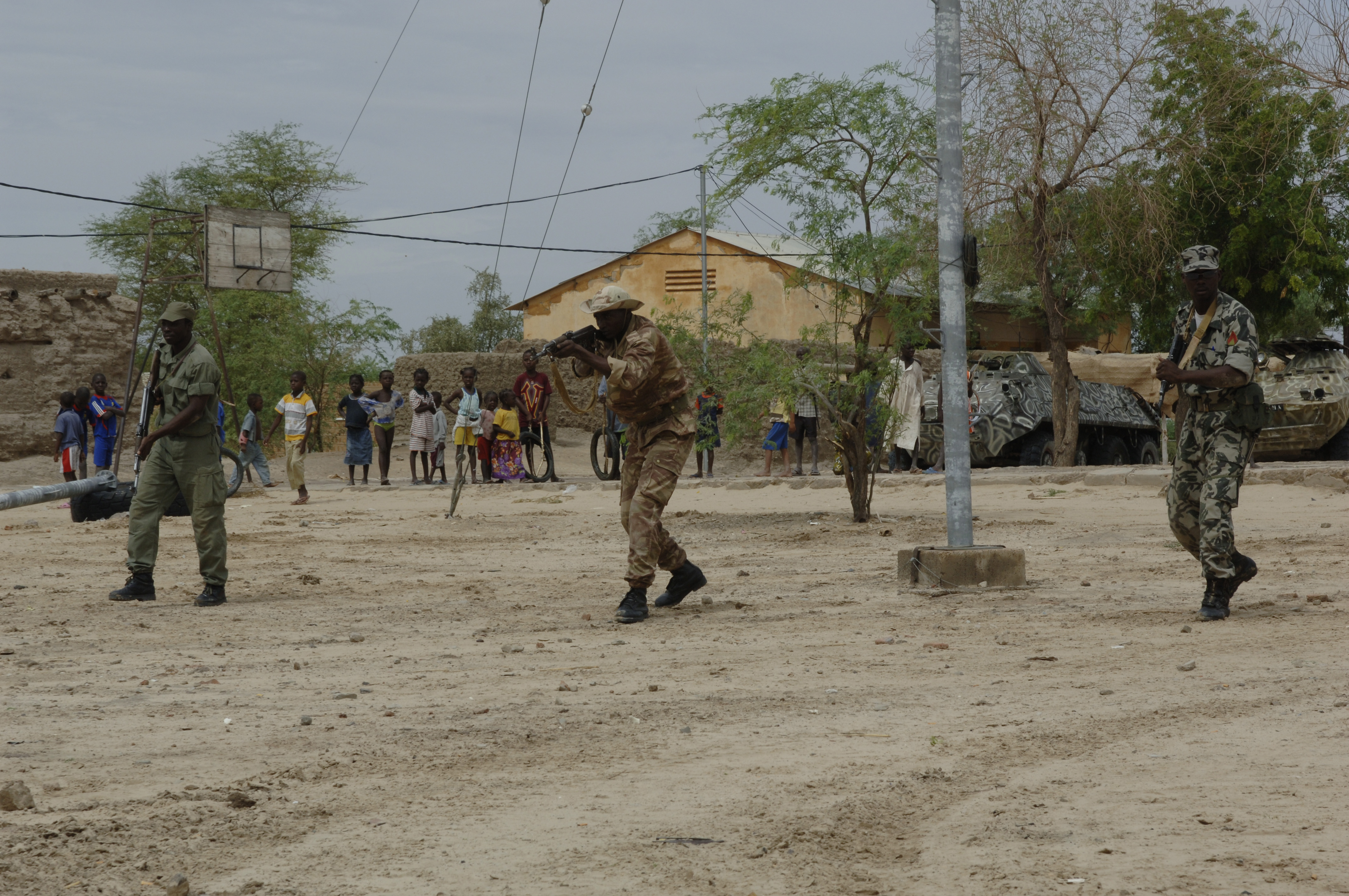
The coordinated attack on April 25 provided a visible image of this crisis. Fighters linked to JNIM and Azawad separatists simultaneously struck Bamako, Kati, Kidal, Sévaré, Mopti, and Gao. The Associated Press described the operation as the largest coordinated attack in Mali in over a decade, resulting in the death of Defense Minister Sadio Camara and the capture of Kidal by the Azawad Liberation Front. For Bamako, it was a political shock. For the armed groups, it was primarily a demonstration of depth.
But it would be a mistake to read April as just a simple episode of fighting. An armed column can enter a city and leave. A network that imposes its rules on the routes, pastures, and water points remains after the pick-ups depart. JNIM is not just looking to win a battle. It seeks to make the state intermittent.
This difference matters. A base can be reinforced. A road can be reopened for forty-eight hours. But if the armed group decides who transports fuel, who crosses a bridge, who sells livestock, and which notable can negotiate, then the garrison retains the flag but loses the environment.
The method is less brutal because it is more political
In rural areas, JNIM has learned to modulate violence. It executes, kidnaps, and intimidates, but it also knows how to suspend a punishment, arbitrate a debt, or guarantee the passage of a trader who pays. This is not moderation. It is a technique of insurgent governance. The katibas have understood that pure terror produces massive flight, self-defense militias, and calls for help. Daily control produces something else: resignation.
From experience, this is where regular armies lose time. They seek the enemy in the form of a position to destroy. The enemy, however, has often become a market schedule, a zakat collector, a family relay, a preacher, an informant on a satellite phone. When a patrol arrives, there is sometimes nothing to seize, except silences.
The Malian authorities and their Russian partners have responded with heavier air and ground pressure. RFI, quoted by AllAfrica on May 20, reported the alleged use of Russian RBK-500 cluster munitions in northern Mali, near Oubder and Tadjmart, according to local sources and specialists. Bamako claimed anti-terrorist strikes without specifying the weaponry used. The information remains contested in its details, but it indicates a trend: the more the junta loses fine control of the ground, the more it compensates with means that strike broadly.
Bamako under pressure without being surrounded
The blockade of Bamako announced by JNIM in the spring is revealing. It is not a classic siege with trenches and artillery around the capital. The fighters target the roads, transporters, fuels, fruits from the south, and buses stopped in the wrong places. The capital is not taken. It is made nervous.
ISS Africa had already noted that these tactics threaten West African trade corridors. Here again, the road map matters more than the political map. The Bamako-Sikasso axis towards Côte d'Ivoire, the links to Ségou and Mopti, the crossings to Senegal and Mauritania: these are arteries. When they become uncertain, the military effect transforms into inflation, shortages, rumors, and doubt about the state's ability to protect ordinary life.
This point is essential to understand JNIM's strategy. The group does not need to enter Bamako to weigh on Bamako. It only needs to make the cost of normalcy too high. In an enclosed capital, fuel and trust are two munitions.
The Russian trap
The presence of the Africa Corps gives the junta a firepower that the Malian army did not possess alone. It also provides JNIM with a convenient narrative: that of a power that has replaced the French with other foreigners without restoring security. This rhetoric is effective because it relies on visible facts. Kidal has changed hands. Roads remain vulnerable. Attacks now target both symbolic and rural locations.
This is not a nostalgic plea for Barkhane. France left Mali because it no longer had an acceptable political mandate, and because it never succeeded in converting tactical superiority into stable local order. But replacing a contested partner with a more brutal partner does not solve the main equation: who holds the village after the armored vehicles pass?
On this point, JNIM advances with unsettling patience. It sometimes accepts to retreat before a strike, then returns through families, secondary paths, and trade networks. The junta announces victories. The inhabitants mainly assess whether the road is safe tomorrow morning.
What to watch for now
The next signals will not only be the large attacks. One must look at fuel prices in Bamako, the convoys that decide not to depart, the relocated markets, the closed schools in the center, the notables negotiating without the administration, the garrisons resupplied only by air. These are more reliable indicators of control than triumphant press releases.
The most fragile point remains the hinge between central Mali and the southern routes. If JNIM manages to make access to Bamako sustainably uncertain while maintaining its relays in Mopti, Ségou, and the north, it will not need a decisive battle. It will have created a capital dependent on windows of movement.
The Malian war then enters a less visible and more dangerous phase. The April raid showed that the state could be surprised. The current method of JNIM shows something else: the state can also be bypassed, village by village, until it becomes just another checkpoint.
Main sources: Reuters Connect, Associated Press, AllAfrica/RFI, ISS Africa, Centre4S.
JNIM exerts control over rural Mali through social governance, while the Malian junta attempts military reconquest. A coordinated attack on April 25 involved JNIM and Azawad separatists targeting Bamako and other cities. The junta responds with increased military pressure, but JNIM's tactics create a state of uncertainty in supply routes and daily life in Bamako. The presence of Russian forces adds complexity to the security dynamics.
- JNIM controls rural areas of Mali through social governance tactics.
- A coordinated attack on April 25 involved JNIM fighters and Azawad separatists targeting multiple cities.
- The Malian junta is using heavier air and ground pressure in response to JNIM's tactics.
- Bamako is under pressure from JNIM's blockade strategy, affecting supply routes and normalcy.
- The presence of Russian forces complicates the security situation in Mali.