
JNIM Strangles Bamako in 2026 — 120 Containers per Day Blocked to Mali
 Marie Dubois
JNIM Strangles Bamako in 2026 — 120 Containers Per Day Blocked to Mali
On the road to Kita, west of Bamako, the war no longer resembles just a column of armed pick-ups. It resembles stationary trucks, drivers sleeping next to their cargo, bags of rice that do not arrive, and fuel cans that suddenly take on the value of ammunition. Since the coordinated attacks on April 25 against Kati, Mopti, Sévaré, Gao, and Bamako, Jama’at Nusrat al-Islam wal-Muslimin (JNIM) has shifted its main effort to a slower but more dangerous weapon: logistical asphyxiation.
According to the Institute for Security Studies, the blockade imposed five days after this offensive primarily targets the western axes of the Malian capital, notably the Kita-Bamako road and the Kayes-Bamako corridor. The detail is important. Kita is not an abstraction on a map; it is a gateway to Bamako from the west, one of the points where flows coming from Senegal, Guinea, and, indirectly, from Atlantic ports can still breathe. When this door closes, the capital does not fall immediately. It begins to count its liters.
A War of Roads More Than a War of Cities
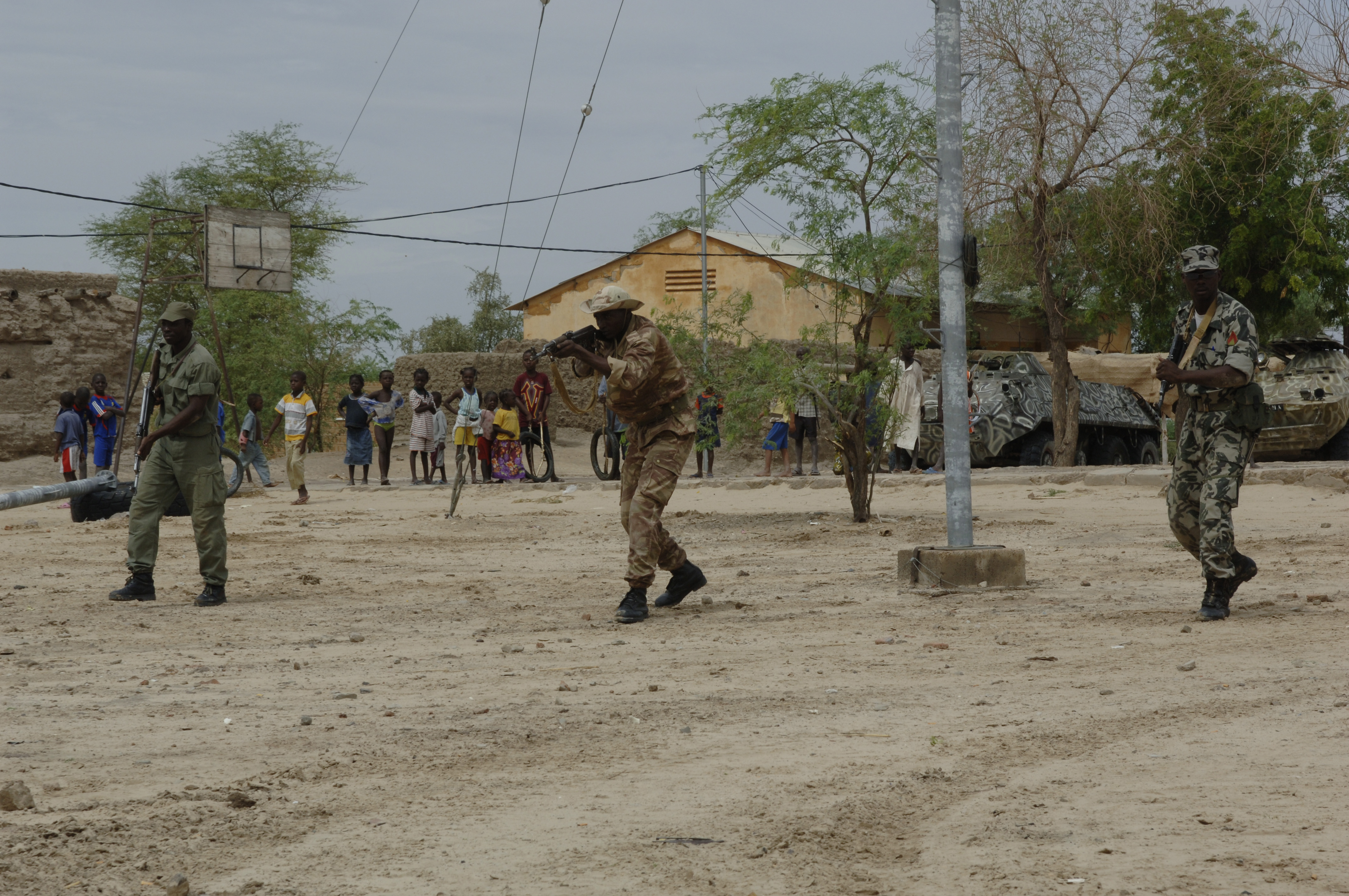
JNIM does not need to hold Bamako to produce a strategic effect on Bamako. This is a difference that is quickly understood on the ground. A Sahelian capital depends on its road axes more than its political weight suggests. Fuel, spare parts, flour, medicines, tires, and agricultural inputs do not move by sovereignist discourse. They move on asphalt, then on laterite, with escorts that consume fuel themselves.
The ISS reminds us that JNIM's asphyxiation strategy has intensified since September 2025, with attacks on fuel convoys in southern and western Mali. The April 2026 offensive has therefore not so much opened a new phase as it has accelerated a method already tested. The group is no longer just seeking to harass isolated garrisons. It seeks to fix the Malian state in an impossible equation: to protect the roads everywhere, supply the cities, secure the convoys, and maintain an offensive capability against the katibas.
It is expensive. It is slow. And it is exactly the terrain that an insurgent organization prefers.
Dakar, Conakry, Abidjan — Ports Become Indirect Targets
The most serious point is not only Malian. The ports of Dakar, Conakry, and Abidjan are the economic lungs of central Sahel. The corridors that run from these coasts to Bamako, and then inland, now pass near or through areas where JNIM can set an ambush, set fire to a fuel truck, or simply create enough fear to stop traffic.
The figures cited by the ISS provide the scale. Mali accounted for 26.5% of Senegal's exports in 2024, or about 802.8 billion FCFA. In the first nine months of 2025, cumulative Senegalese exports to Mali still reached 662 billion FCFA. Between September and November 2025, the port of Dakar reportedly recorded the daily blockage of about 120 containers destined for Mali, with an estimated monthly loss of 15 billion FCFA for Senegal.
For a general staff, these figures translate simply: JNIM strikes at the economic depth of its adversaries. The group does not need to defeat the Senegalese army or directly threaten Dakar to impose a cost on Dakar. It is enough to make the road to Bamako too risky, too expensive, too unpredictable.
The Abidjan-Bamako axis is equally sensitive. It transports vital petroleum and food products for Mali. By the end of 2025, about 1.47 million tons of goods would have passed through this corridor, now exposed to attacks in the Sikasso region. Again, the choice of the area is not neutral. Sikasso is to the south, near the interfaces with Côte d'Ivoire and Burkina Faso. It is a transit area, not just a combat zone.
The False Comfort of the Unified AES Force
The juntas of Mali, Burkina Faso, and Niger have presented the Alliance of Sahel States (AES) as a sovereign response to the failure of the Barkhane-MINUSMA-G5 Sahel model. Politically, the argument resonates with part of public opinion. Militarily, it remains to be demonstrated. A unified force can announce 5,000, 10,000, or 15,000 men; if it does not control the bridges, depots, crossroads, and telecom relays, it does not control the theater.
The difficulty is that the AES must fight on multiple fronts at once. In western Mali, JNIM is testing the corridors. In the center, ACLED reported in early June a deadly campaign against dozo militias, a sign that pressure on self-defense networks remains strong. In Niger, Human Rights Watch noted on June 3 that American and Italian military aid is returning in an environment where security forces are themselves accused of abuses against civilians. In Nigeria, the June 5 attack on the Mandaragirau base in Borno reminds us that the Lake Chad basin continues to absorb considerable military resources.
These theaters are not identical, but they communicate through men, weapons, trafficking, and narratives. JNIM understands this continuity very well. The states, on the other hand, remain prisoners of administrative borders that the insurgents primarily use as escape routes.
The Blockade as a Political Message
It would be too easy to reduce this campaign to an operation of armed banditry. The blockade also serves as political communication. It tells traders that the state cannot guarantee their goods. It tells drivers that the official escort sometimes attracts fire instead of deterring it. It tells the people of Bamako that proclamations of victory do not fill the markets.
I have seen, during the time of Barkhane, villages where the decisive question was not "who controls the region?" but "who can bring in the next truck?". It is less spectacular than taking a base. It is often more decisive. A katiba that can interrupt traffic for a week does not need to administer a city for a month to impose its authority.
One must also remain cautious. The tolls from the April attacks, the exact losses in the convoys, and the actual level of coordination between JNIM and certain armed actors in northern Mali remain partially opaque. The statements from the juntas, jihadist claims, and narratives from local networks must be read with distance. But the operational effect is visible: the western roads of Mali are no longer safe rear areas.
The Next Weak Point
The next battle may not be fought in Bamako, but between Bamako and its ports. If JNIM maintains pressure on Kita, Kayes, and Sikasso, the Malian authorities will have to choose between concentrating their units on economic axes or accepting rising prices, local shortages, and increasing urban fatigue. In either case, the initiative remains partly with the insurgents.
The immediate danger is a heavy militarization of convoys without solid local intelligence. An armored convoy that moves without reliable information is not a solution; it is a more expensive target. AES forces will need to rebuild human intelligence along the corridors, protect transporters without turning them into forced auxiliaries, and reopen roads in realistic sequences rather than through political announcements.
In this theater, the fuel truck has become almost as strategic as the tank. This is what JNIM has understood. As long as Bamako has to fight for every road, the capital will remain standing, but under constraint. And in a Sahelian war, logistical constraint always ends up becoming a political constraint.
Sources
- Institute for Security Studies — JNIM’s blockade tactics threaten West Africa’s trade corridors, June 4, 2026
- ACLED — Conflict in the Sahel, Africa Overview June 2026
- Human Rights Watch via AllAfrica — Security Cooperation With Niger Overlooks Rights Violations, June 3, 2026
- Associated Press — Attack by Islamic militants kills 5 Nigerian soldiers in northeast Nigeria, June 5, 2026
JNIM has established a logistical blockade affecting supply routes to Bamako, significantly disrupting the flow of goods and resources. This blockade, which began after coordinated attacks in April 2026, targets key routes from Dakar, Conakry, and Abidjan, leading to shortages and increased prices in the capital. The group aims to exert pressure on the Malian state by making transportation too risky and costly.
- JNIM has blocked 120 containers per day destined for Mali, significantly impacting trade.
- The blockade targets key supply routes from Dakar, Conakry, and Abidjan to Bamako.
- The blockade has led to increased prices and shortages in Bamako, affecting the local population.