
JNIM strikes Niamey a second time — 13 dead and a warning about Niger's drones
 Marie Dubois
JNIM strikes Niamey for the second time — 13 dead and a warning about Niger's drones
Niamey, June 18. Armed men approached the Diori Hamani international airport not as a visible column of fighters from afar, but as possible civilians, using ordinary vehicles, taxis, and minibuses according to testimonies reported by RFI. A few hours later, the official toll is heavy: thirteen dead, including eleven Nigerien soldiers and two civilians. The Support Group for Islam and Muslims, JNIM, linked to al-Qaeda, claims responsibility for the attack on the airport and the nearby airbase.
This is not a simple repetition of January. This is precisely what should worry the Nigerien general staff.
The targeted site counts more than the toll
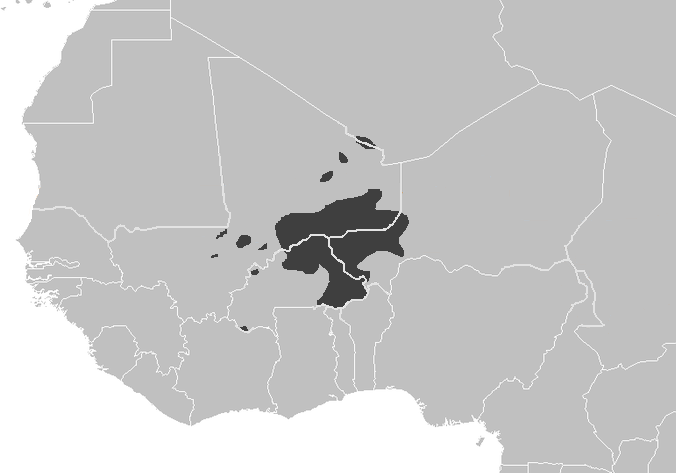
The Diori Hamani airport is not just a civilian infrastructure. The adjacent airbase 101 houses sensitive aerial assets, including drones, and serves as a nerve center for Niamey's security apparatus. RFI also reminds us that the site is linked to the joint military headquarters of the Sahel States Alliance, formed by Niger, Mali, and Burkina Faso, to coordinate the fight against jihadist groups.
On the ground, a capital airport is often worth more than an isolated garrison. It concentrates connections, evacuations, command rotations, surveillance drones, and the symbol of sovereignty. When a jihadist group attempts to strike it twice in less than six months, it is not just seeking media shock. It is testing the system's pulse.
The Nigerien Ministry of Defense claims that security forces repelled the assault, killing twenty-two attackers and arresting about twenty suspects. These figures come from the authorities and should be treated as such. But the most solid fact remains this: despite the measures taken after January, a second group was able to approach the most sensitive perimeter of the capital.
From motorcycle to minibus, the change in method
In January, the attack on the same area was claimed by the Islamic State in the Sahel, with attackers arriving by motorcycle. In June, according to Brimaka Abdoul Azizou Garba, a Nigerien researcher interviewed by RFI, the attackers attempted to exploit a more discreet approach by blending in with civilian flows. This evolution is classic in asymmetric warfare: when the first method becomes too visible, the signature changes.
Niamey has destroyed or cleared several neighborhoods near the airport to decongest the surroundings and reduce blind spots. Such a measure can improve the field of vision for sentinels. It can also force the adversary to prepare longer, to observe posts, schedules, secondary access points, and then to attempt a less military entry. One should not imagine columns of pick-ups everywhere. Sometimes, the threat arrives in a vehicle that looks like those that guards see every day.
This adaptation indicates at least one thing: jihadist networks have relays or reconnaissance capabilities around the capital. We cannot yet assert how far this infiltration goes. Public information remains incomplete. But an assault of this type requires more than a simple order from the bush.
JNIM and Islamic State strike the same nerve
The January-June succession is politically embarrassing for the junta of General Abdourahamane Tiani. In January, the authorities highlighted the role of Russian partners in defending the site. In June, Garba believes that the response mainly came from the Nigerien soldiers themselves, which would show that the national army retains real capabilities. The two readings are not contradictory. They mainly indicate that Niamey wants to prove that its security does not solely depend on Moscow.
The central point remains the target. The Islamic State in the Sahel in January, JNIM in June: two rival organizations, two different claims, but a shared interest in drones and the airbase. Drones reduce the freedom of movement of katibas in Tillabéri, along the routes to Mali and Burkina Faso, and further towards the transit areas of the Lake Chad basin. When groups cannot neutralize a capability on sandy tracks, they seek its center of gravity.
RFI also cites analyst Heni Nsaibia, who states that this attack signals the parallel expansion of JNIM and the Islamic State in the Sahel and their competition for symbolic targets. I would be cautious about the word competition. Jihadist groups do not need to coordinate to arrive at the same tactical conclusion: if drones hinder movements, they must strike the airfield.
The Tillabéri border remains the true depth
The day before the Niamey attack, the Banibangou base in Tillabéri had already been targeted. No direct operational link is confirmed between the two episodes. But geography speaks. Banibangou is northwest of Niamey, in that contact zone where Niger touches the most unstable Malian and Burkinabe areas. The capital is not cut off from the front; it is only a few hours' drive away, with checkpoints and a lot of trust.
Niger remains more difficult to control for jihadists than certain areas of central Mali or northern Burkina Faso. This is an important difference. The country has maintained institutional continuity longer, with better-established units and more monitored routes. But this relative solidity can become a goal in itself. Weakening Niger is to open a seam between Liptako-Gourma, Lake Chad, and northern Nigeria.
This is where Niamey's anti-French discourse becomes a trap. General Tiani has again accused France of being behind the attack, as after January. Paris rejects these accusations. Operationally, this rhetoric does not plug any fence holes, does not search any minibuses, and does not provide any intelligence rewards to peripheral neighborhoods. It can even divert attention from the more mundane, and therefore more dangerous, problem: the close security of the capital.
What Niamey must now fear
The next threat will not necessarily be a third raid against the same gate. After two attacks, the assailants know that defenses will be hardened. They may seek an equivalent effect elsewhere: fuel depot, maintenance convoy, personnel housing, road between the base and military neighborhoods, or logistical relay related to drones. In a harassment war, the objective is rarely to permanently take the site. Sometimes it is enough to make those who work there doubt.
My assessment is therefore nuanced. The Nigerien defense on June 18 seems to have prevented a greater catastrophe. It is a tactical success. But the fact that JNIM was able to bring the threat to the heart of Niamey's airspace is a strategic warning. Niger has not lost control of its territory like certain areas of Mali or Burkina Faso. Precisely: this is what its adversaries want to test.
The most fragile line now is not just the one running through Tillabéri. It also passes around the civilian access points of Niamey, where a tired soldier must decide in a few seconds whether the vehicle in front of him carries passengers, informants, or a suicide team. It is less spectacular than a map of the Sahel. It is often there that the protection of a capital is won or lost.
JNIM attacked Niamey on June 18, targeting the Diori Hamani International Airport and a nearby military base, resulting in 13 deaths, including 11 Nigerien soldiers. Nigerien security forces repelled the assault, killing 22 attackers. This incident marks a significant tactical evolution, as assailants disguised themselves as civilians to approach the sensitive site.
- JNIM claimed responsibility for the attack on Niamey.
- 13 people were killed, including 11 Nigerien soldiers and 2 civilians.
- The attack targeted the Diori Hamani International Airport and a nearby military base.
- 22 assailants were reportedly killed by Nigerien security forces during the response.
- The attack indicates a shift in tactics by jihadist groups, using civilian vehicles to approach the target.