
JNIM strikes Niamey a second time — 13 dead and a warning for the Nigerien state
 Marie Dubois
JNIM strikes Niamey a second time — 13 dead and a warning for the Nigerien state
On June 18, around the Diori Hamani International Airport in Niamey, the attackers did not arrive as they did in January. They did not simply rush in on motorcycles from the outskirts. According to reports from RFI, they attempted to enter by deception, posing as passengers and using more ordinary vehicles, including taxis and minibuses. The toll communicated by the authorities is heavy: eleven soldiers and two civilians killed, four injured, twenty-two attackers shot dead, and about twenty suspects arrested.
The Group for Support of Islam and Muslims (JNIM), the Sahelian branch of al-Qaeda, claimed responsibility for the operation against the airport and the nearby airbase. This point is essential. In January, the attack on the same complex was claimed by the Islamic State in the Sahel. In less than six months, the two major jihadist families have thus struck or attempted to strike the same operational hub, at the heart of the Nigerien capital.
The site that concentrates vulnerabilities
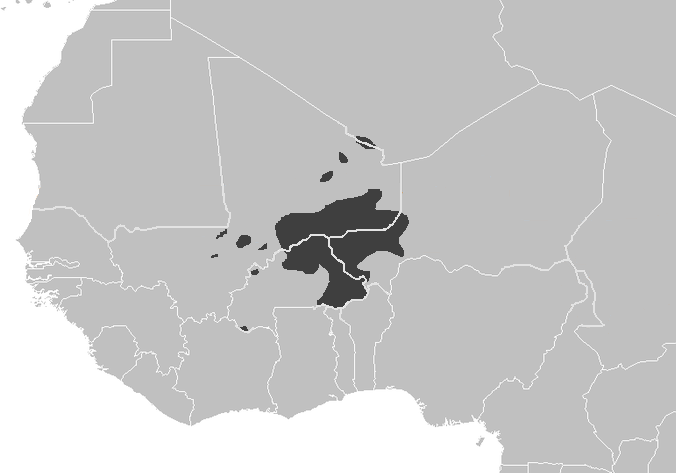
Diori Hamani is not just a civilian airport. The complex includes Air Base 101, drone infrastructure, and an increasingly sensitive role in military coordination between Niger, Mali, and Burkina Faso within the Sahel States Alliance (AES). When a jihadist group chooses this target, it is not just seeking media impact. It aims to strike at the eye and long arm of the Nigerien army.
On the ground, drones change the freedom of movement. A pickup can hide under trees, disappear into a village, cut through a dry wadi. But it does so less easily when an aerial sensor follows it for several kilometers. Armed groups know this. Mohamed Bazoum's former advisor, Brimaka Abdoul Azizou Garba, made it clear to RFI: the repeated attacks on the airport are linked to the presence of drones that limit the mobility of terrorist groups.
The operational reading is therefore more precise than the simple formula of an "attack on the capital." It is an attempt to reduce the Nigerien capacity for surveillance and response, at a time when the fronts of Tillabéri, the Malian border, and the Burkinabe area remain open. A destroyed aircraft on the ground, a runway neutralized for a few hours, a terminal paralyzed, even briefly, can weigh on the maneuver.
The ruse after the charge
The difference between January and June may be more significant than the toll. In January, the motorcycle assault resembled a classic Sahelian modus operandi: speed, surprise, saturation. In June, the attempt to infiltrate using civilian vehicles indicates something else. The attackers likely observed the security adaptations made after the first attack. They sought the gaps, the habits, the moments when control becomes routine.
This is the grammar of asymmetric conflicts. An army reinforces a door, the adversary tests the queue. A junta destroys neighborhoods near the airport to clear the surroundings, the adversary shifts its approach to civilian flows. It is not spectacular on a staff map, but it is often there that the security of a capital is at stake.
One must remain cautious: the available information does not allow for a complete description of the logistical chain of the attack. It is still unclear how long the attackers or their accomplices spent in Niamey, nor whether the announced arrests involve a structured local network or merely opportunistic supporters. But the hypothesis of infiltration is credible. An operation of this nature is not improvised at the exit of a desert track.
JNIM and Islamic State — competition or parallel pressure
There is a strong temptation to see in the succession of January and June a coordination between the Islamic State in the Sahel and JNIM. Nothing proves this for now. Garba even dismisses the idea of direct coordination between the two organizations regarding these attacks. On the other hand, parallel pressure is evident. Two rival groups understand the same potential weakness: Niger remains stronger than Mali and Burkina Faso in territorial holding, but its central apparatus depends on a few extremely visible nodes.
Niger has not experienced the territorial collapse observed in certain areas of Burkina Faso or central Mali. For more than a decade, Niamey has maintained state continuity, relatively structured forces, and numerous external partnerships. This is precisely why the airport becomes a target. If one cannot yet sustainably hold a portion of Nigerien territory, one can try to demonstrate that the power does not fully control its own capital.
JNIM gains a perceptual advantage here. It shows that it can reach a site that the state presents as protected after the January attack. The Islamic State retains the memory of the first strike and its own narrative of penetration. Even without coordination, the two movements push Niamey in the same direction: to disperse its forces, multiply checkpoints, and transform every strategic access into a permanent combat post.
The Nigerien response and the Russian question
The junta can present the response of June 18 as a military success. The airport remained open, the assault was repelled, and the announced figures give a tactical advantage to Nigerien forces. Compared to January, the political nuance is important: this time, according to Garba, the response was primarily Nigerien, without decisive staging of Russian partners.
This is a useful message for Niamey. Since the departure of the French and the rapprochement with Moscow, the junta must prove that security sovereignty is not just about changing external protectors. It must also prove that its own units can hold a critical objective. In a capital, this matters as much as the press releases.
But a successful defense is not enough to close the issue. If the enemy returns twice to the same site in six months, the subject is no longer just the bravery of the men on duty. The subject becomes counter-infiltration, local intelligence, access control, surveillance of displaced neighborhoods, and the ability to detect preparation before the first shot is fired.
The political cost of anti-French rhetoric
General Abdourahamane Tiani has again accused France of being behind the attack. This line has existed for two and a half years in the official Nigerien discourse. It resonates with part of public opinion, but it does not close the gaps around an airport. For an army, the useful enemy is one that can be mapped, infiltrated, intercepted. Not one that is designated to keep a crowd in suspense.
There is a contradiction here that Niamey will have to resolve. If the state claims that foreign powers manipulate every attack, it risks underestimating the real adaptation of local jihadist groups. However, the evolution of the modus operandi, the use of civilian vehicles, the interest in drones, and the choice to strike after security measures indicate a Sahelian tactical intelligence. It does not need an external scenario to be dangerous.
The next breach will be less visible
In the short term, the risk is not necessarily an airport takeover. That would be difficult, costly, and probably untenable. The most likely risk is a series of peripheral attacks: depots, checkpoints, supply convoys, road access to Base 101, or personnel linked to drones. Armed groups do not need to conquer the site to reduce its output. They can wear it down.
From experience, an isolated airbase in a fragile urban environment defends itself as much by its intelligence as by its walls. Niamey won the battle on June 18. It has not yet won the battle of observation, the one that takes place in taxis, markets, garages, and the small roads leading to the airport.
The next alert may not come from an armed pickup in the dust. It may come from an ordinary vehicle, a credible badge, or a movement too normal to attract attention. This is where Niger will truly be tested.
JNIM launched an attack on Niamey on June 18, targeting the Diori Hamani Airport and a nearby military base, resulting in 13 fatalities, including 11 military personnel. The attackers employed civilian vehicles to infiltrate the area, leading to the deaths of 22 assailants and the arrest of 20 suspects. This incident reflects ongoing jihadist efforts to undermine Niger's military operations and control.
- JNIM attacked Niamey on June 18, resulting in 13 deaths and 4 injuries.
- The attackers used civilian vehicles to infiltrate the area.
- 22 attackers were killed and 20 suspects were arrested during the operation.
- This attack is part of a pattern of jihadist activity targeting Niger's military capabilities.
- The operation aimed to disrupt Niger's surveillance and response capabilities.