
JNIM strikes Niamey in 2026 — 13 dead and the Sahel HQ exposed
 Marie Dubois
JNIM strikes Niamey in 2026 — 13 dead and the Sahelian HQ exposed
On June 18, at dawn, the first gunshots erupted around the Diori Hamani International Airport in Niamey. This is not an isolated runway at the end of the desert. It is the air hub of the Nigerien capital, adjacent to a military base, just a few kilometers from the ministries, command quarters, and routes leading to the Niger River.
According to the Nigerien Ministry of Defense, the attack killed eleven soldiers and two civilians. Twenty-two assailants are reported to have been shot dead and about twenty suspects arrested. The toll remains that of the authorities, so it should be handled with caution, but one fact is already clear: the Support Group for Islam and Muslims, Jama’at Nusrat al-Islam wal-Muslimin (JNIM), has claimed responsibility for the operation against the airport and the neighboring base.
This is new in its political form, but not in its operational logic. In January, the Islamic State had already struck the same complex, specifically targeting air assets and drones. In June, it is the other major jihadist pole in the Sahel that returns to hit the same symbol. For a capital that has been asserting for months that security is being rebuilt around the Alliance of Sahel States (AES), the message is brutal.
A site too strategic to be just an airport
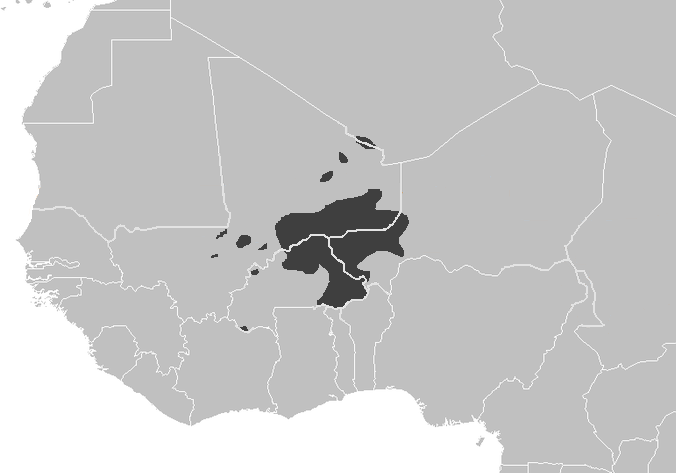
Diori Hamani is not just a civilian entry point. The complex houses a Nigerien air base, units linked to strikes against armed groups, and, according to several regional sources, Russian elements. It is also presented as a central point of the joint military arrangement between Niger, Mali, and Burkina Faso. In other words, it is not a peripheral target: it is a command, mobility, and prestige target.
On the ground, an airport is difficult to defend when it is embedded in a rapidly expanding capital. The approaches do not resemble a classic front line. They pass through roads, peripheral neighborhoods, areas of small constructions, and checkpoints that must filter civilians every day. According to Al Jazeera, assailants reportedly arrived near a security post by taxi before being engaged by Nigerien forces. If this information is confirmed, it indicates less a massive military breakthrough than a prepared urban infiltration.
Niamey, however, reinforced the perimeter after the January attack: extending fences, demolishing illegal constructions near the airport, installing hundreds of cameras. These measures complicate an operation, but they do not replace human intelligence. A fence stops a pickup; it does not detect a cell that observes schedules, shifts, and habits of posts for weeks.
Why JNIM chooses Niamey now
JNIM has a different operational culture than that of the Islamic State in the Sahel. It seeks less the immediate effect of terror than the demonstration of political penetration. Striking Niamey, after the coordinated offensives in Mali in the spring, allows the organization to assert that it is not confined to central Mali or northern Burkina Faso. It can exert influence on a capital, reach a protected site, and compete with the Islamic State in the symbolic arena.
The timing matters. Since the coup in 2023, the Nigerien power has built part of its legitimacy on breaking with France, expelling the former Western apparatus, and moving closer to Russian and Sahelian partners. This rhetoric has real political force. It speaks to a population weary from ten years of unfulfilled security promises. But it also creates an obligation: to prove that the new system protects better than the old one.
However, a second assault on the same complex in less than six months undermines this promise. Authorities can announce that the attack was repelled, that the assailants suffered heavy losses, and that air traffic has resumed. This is true tactically. But at the strategic level, the question becomes more awkward: how can a site already struck, already reinforced, and presented as central to regional defense become accessible again to an armed cell?
A visible jihadist competition through a single runway
The January attack was claimed by the Islamic State. The June attack is claimed by JNIM. This succession is likely not a coincidence. In the Sahel, the two organizations fight each other, monitor each other, and each seeks to show that it can impose its tempo. The Niamey airport becomes, from this perspective, a military billboard: whoever can strike it proves that they have networks, means, and a capacity for audacity.
One should not too quickly conclude a coordination between the two camps. The available information does not allow for that. But the repetition of attacks signals that armed groups share the same reading of Niger's vulnerability. They know that Sahelian capitals are no longer out of reach. They also know that security apparatuses, focused on large rural offensives, struggle to maintain close surveillance around critical infrastructures.
In my experience, an air base in this type of environment becomes vulnerable when it relies too much on external depth. As long as villages, secondary routes, and peripheral neighborhoods produce reliable intelligence, the danger is kept far from the fencing. When this social network deteriorates, the threat comes into contact. In Niamey, the cameras may have been useful during the assault. They clearly were not sufficient before the assault.
The Russian problem and the AES problem
The Russian presence adds a layer of meaning. Moscow and its African partners present themselves as more direct, less moralizing, and more effective than the former Western apparatuses. In some theaters, this approach appeals to the juntas because it promises strength without political conditions. But imported strength does not solve the central problem of the Sahel: holding vast territory with limited armies, weak administrations, and rural populations often caught between state abuses and jihadist pressure.
The AES aimed to address this weakness through regional pooling. On paper, the idea is logical. Armed groups do not respect borders between Mali, Niger, and Burkina Faso; therefore, armies should not confine themselves to them. But a coalition is judged by its ability to protect its own nerve centers. If the headquarters or hub of a common force can be attacked twice in a few months, distant patrols in the Liptako-Gourma become harder to sell as proof of control.
There is also a political risk. After the January attack, Niamey accused external actors, notably France and coastal neighbors, of fueling the threat. This line can mobilize the streets, but it diverts attention from concrete flaws: monitoring approaches, controlling local complicities, discipline of posts, coordination between police, gendarmerie, air force, and territorial intelligence. An imaginary enemy can be useful in discourse. It does not secure a barrier at five in the morning.
What to watch for now
Three indicators will tell if this attack remains a flash in the pan or opens a new phase. The first is the reaction around Niamey: targeted arrests based on real intelligence, or broad sweeps that fuel new grievances. The second is the protection of other infrastructures: fuel depots, bridges over the Niger, telecom antennas, drone bases. The third is jihadist propaganda. If JNIM disseminates internal images of the site, even limited ones, the psychological effect will far exceed the human toll.
The Nigerien capital is not on the verge of falling. One must avoid excessive scenarios. But it has just received a very precise operational warning: armed groups are no longer just seeking to wear down distant garrisons; they are testing the nerves of power at the very heart of its air defense.
The next fragile point is probably not the runway itself. It will be one of the roads that feeds it, a depot that supports it, or a neighborhood where someone will have observed for too long a shift that is too predictable. In the Sahel, battles are rarely lost at the moment the shots begin. They are lost beforehand, in the margins that no one wanted to look at.
Sources
- Associated Press, June 18, 2026, attack on Niamey airport and official Nigerien toll.
- Al Jazeera, June 18, 2026, JNIM claim and details on the Diori Hamani complex.
- Council on Foreign Relations, Global Conflict Tracker, context on violent extremism in the Sahel.
- International Centre for Counter-Terrorism, analysis by Wassim Nasr on JNIM offensives in Mali in 2026.
JNIM launched an attack on the Diori Hamani International Airport in Niamey on June 18, 2026, resulting in 13 fatalities, including 11 soldiers and 2 civilians. The assault also led to the deaths of 22 attackers and the arrest of 20 suspects. This operation highlights the group's capability to strike significant military and civilian targets, following a similar attack by ISIS earlier in the year.
- JNIM claimed responsibility for the attack on Niamey.
- The attack resulted in 13 deaths, including 11 soldiers and 2 civilians.
- 22 attackers were reportedly killed, and 20 suspects were arrested.
- The attack targeted a key military and civilian airport complex.
- This incident follows a previous attack on the same location by ISIS in January.