
Jordan intercepts 18 Iranian missiles in September 2026 and reveals the gap in Gulf air defense.
 Ahmed Al-Rashid
Jordan Intercepts 18 Iranian Missiles in September 2026 and Reveals Gulf Air Defense Gap
On September 9, 2026, media reports indicated that Jordan intercepted 18 Iranian missiles amid escalating confrontation between Tehran and Washington. The number is significant, but its military implication does not lie solely in the number of targets that were shot down. More importantly, the Hashemite Kingdom found itself at the center of a cross-border air battle, and the air defense that has long been viewed as a mission to protect facilities has become a condition for the state's survival outside of war.
Intercepting Missiles Does Not Mean Closing the Sky
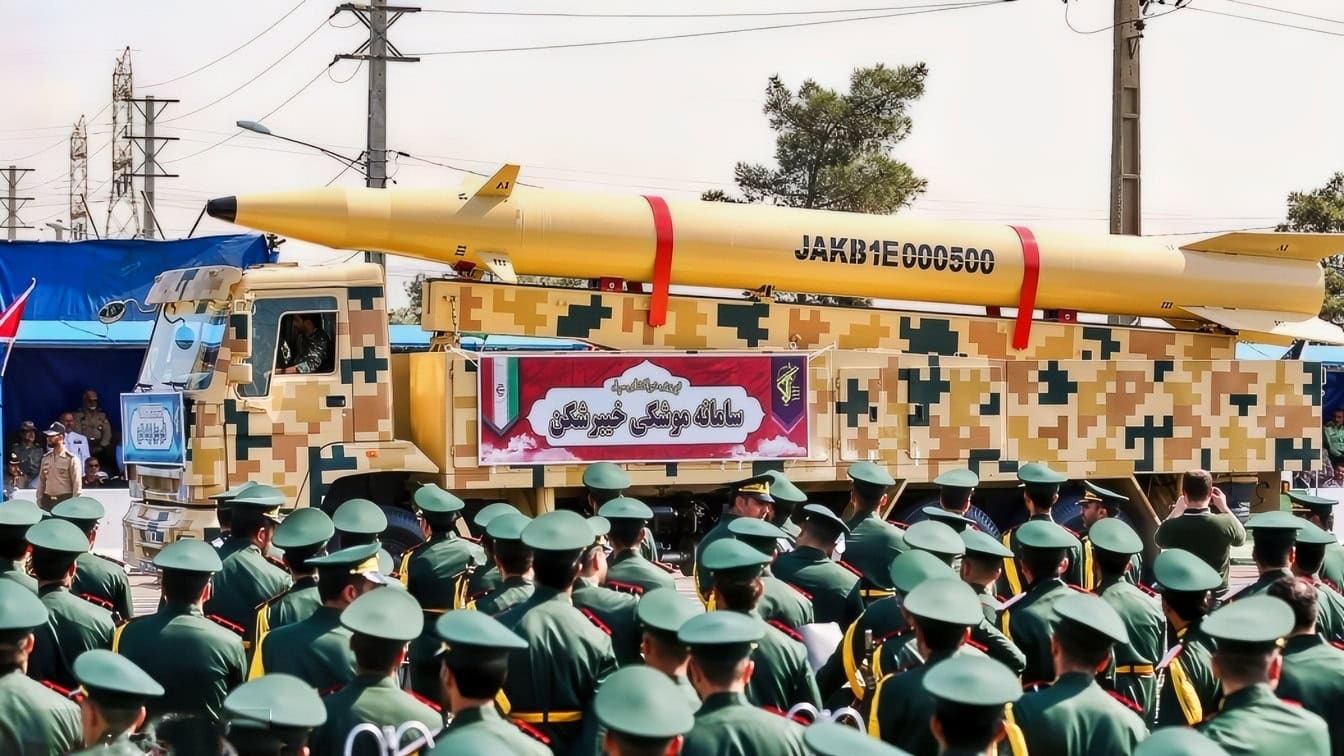
The key information, published by Yeni Şafak, requires a clear distinction between what is confirmed and what is inferred. So far, independent details about the type of missiles, the trajectory of each interception, or the batteries that carried out the operation have not been published. Therefore, it is incorrect to turn the number 18 into an automatic proof that Jordan possesses a self-sufficient missile umbrella. The interceptions may be a mix of national capabilities, early warning, coordination with U.S. forces present in the kingdom, and possibly contributions from a broader regional network.
Practically, intercepting a ballistic missile is a chain that does not start with the interceptor missile. The state needs radar that sees the target in time, a command system that distinguishes between the warhead and debris, a quick engagement decision, a sufficient stock of missiles, and then the ability to resupply and maintain. If any link in this chain fails, the advanced battery turns into an expensive piece waiting for its turn. Any military personnel who has served in the region knows that owning the platform is much easier than operating it under real pressure.
Why Jordan and Not Just the Gulf
Jordan is not an announced party in all the details of the war, but geographically it lies between its theaters. The Jordanian airspace borders Iraq, Syria, Israel, and Saudi Arabia, so a missile aimed at an American base or an Israeli target can pass over the kingdom or close to it. This places Amman in a harsh equation: not responding may endanger the population and facilities, while a strong response may make it a direct party in a war it does not want.
Here, the value of the eighteen interceptions emerges as a political signal as much as an operational result. Jordan wants to say that it is capable of protecting its airspace, but it does not want to say that its territory has become an offensive platform. This formula serves the kingdom diplomatically, but it does not address the root of the problem. Geographical neutrality does not protect against a ballistic missile, and announcing an interception does not prove that the next round will be managed under the same conditions.
Iran Tests the Weakest Link
Iran possesses a vast arsenal of ballistic missiles, ranging from short and medium-range families to more maneuverable missiles. This does not mean that every launch achieves a hit, but it gives Tehran the option to overwhelm, change trajectories, and distribute attacks on bases, facilities, and maritime corridors. Reuters reports on Iran's announcement of seizing an American submarine drone in the Strait of Hormuz, and Anadolu Agency reports on Tehran justifying strikes against commercial ships as self-defense, show the widening battle from the air to the sea and beneath the surface.
The implication is that Iran does not need to penetrate every air defense battery to impose a cost. It is enough for it to make the defender consume an expensive missile on a low-value target, or to force it to keep radars on alert, or to push bases to evacuate their aircraft and stock. In contrast, ABC News reported that the United States is adapting its operations to a wide drone war. This American adaptation is important for Jordan, but it also reminds that external protection is not a substitute for sustainable national capability.
The Gulf Lesson from Jordan's Battle
Gulf countries spend billions of dollars on Patriot and THAAD systems, adding radars and command networks and trying to link them with regional data exchange. However, the equation of triad capability remains the same: equipment, training, and institutions. Equipment is the part that appears in exhibitions and is announced in contracts; training and institutions determine whether the battery will work when the attack comes at night and from multiple axes.
Saudi Arabia, the UAE, Qatar, and Bahrain have greater resources than Jordan, but a multitude of systems does not guarantee a single network. Different suppliers, data-sharing restrictions, varying rules of engagement, and a lack of maintenance specialists may leave gaps between one battery and another. Even new alliances do not solve the problem simply by being signed. War on the Rocks' analysis of the credibility gap of the Mecca Agreement reminds us that political commitment does not automatically translate into unified leadership, a shared stockpile, or an executable defense plan.
What This Means for Deterrence
- A successful interception raises the cost of an attack but does not eliminate the need for shelters, distribution of bases, and protection of infrastructure.
- Missile defense requires a large stockpile and a resupply plan, not just a shiny battery in an official picture.
- Early warning and data exchange may be more important than purchasing an additional platform if networks remain separate.
- Jordan and Gulf countries need to clearly define the limits of U.S. support, as complete reliance creates a gap when priorities shift in Washington.
The sky is not protected by the number of intercepted missiles alone; it is protected by a system that knows who decides, who owns the ammunition, and who repairs the radar after the strike.
In my view, intercepting 18 missiles is significant military news, but it is not a definitive testament to the success of Jordan's air defense. It is a preliminary test of a regional system that relies more on external cooperation than on its shared institutions. The paradox is that countries in the region want deterrence without engaging in war, and they want independence without bearing the cost of building an independent system. Between these two desires remains the old truth: those who buy weapons can own the equipment, but possessing capability requires years of training, discipline, and political decision-making.
Sources Yeni Şafak English, Reuters, Anadolu Agency, ABC News, War on the Rocks, reports published on September 8 and 9, 2026. Some details regarding the number of interceptions and the types of systems used still need independent official confirmation.
Jordan intercepted 18 Iranian missiles on September 9, 2026, amid rising tensions between Tehran and Washington. This action underscores Jordan's strategic position and the challenges of air defense in the Gulf region. The interceptions indicate a significant military capability but also reveal vulnerabilities in regional defense systems.
- Jordan intercepted 18 Iranian missiles on September 9, 2026.
- The interceptions highlight a gap in Gulf air defense capabilities.
- Jordan's airspace is strategically located near conflict zones.
- Iran possesses a wide range of ballistic missiles.
- The interceptions serve as a political signal from Jordan.