
Jordan Shoots Down 4 Iranian Missiles in 2026 and Reveals the Cost of the American Bases War
 Ahmed Al-Rashid
Jordan Shoots Down 4 Iranian Missiles in 2026 and Reveals the Cost of the American Bases War
In the early hours of July 13, 2026, the General Command of the Jordanian Armed Forces stated that the Jordanian air defense intercepted and shot down 4 missiles that entered the airspace from the direction of Iran, with no injuries or material damage. This is not just a passing news item on a busy day filled with missiles over the Gulf, but a moment that reveals how Jordan, which is not a direct party in the American-Iranian war, has become part of a fire network extending from Hormuz to Bahrain, Kuwait, and Qatar.
The Jordanian Event is Not Marginal in the Battle
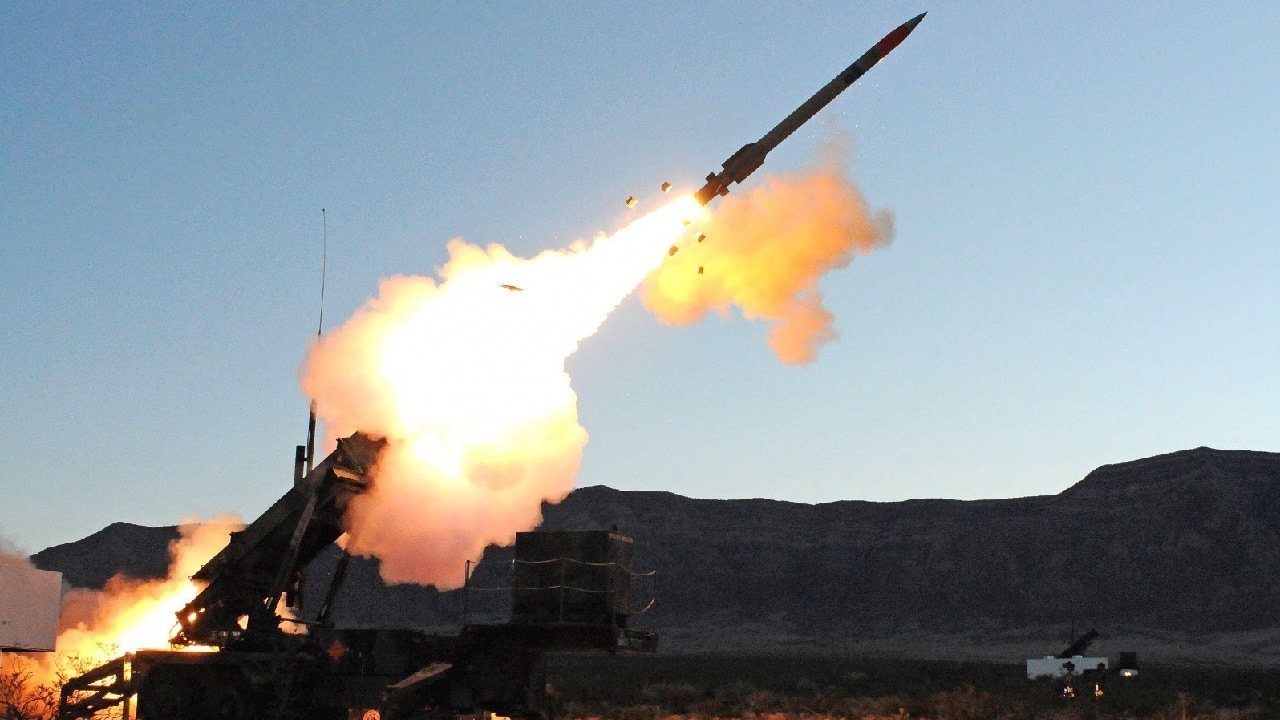
The official Jordanian narrative is important because it is precise and limited: 4 missiles, coming from the direction of Iran, were shot down within Jordanian airspace, and then the Royal Engineering Corps dealt with the debris at multiple sites. In military language, this means that Amman wanted to assert sovereignty and efficiency at the same time, but it avoided a broad announcement of participation in the war. Jordan knows that every word at this moment could turn into a political signal.
In contrast, Iranian media and the Revolutionary Guard stated that the strikes targeted American facilities at Prince Hassan Air Base inside Jordan, as part of a broader wave that included Bahrain, Kuwait, Qatar, and Oman. Al Jazeera's report on the July 12 attacks indicated that Tehran claimed it struck American military facilities in 5 Gulf or surrounding countries, and that Qatar announced it intercepted Iranian fire near Al Udeid Air Base with minor injuries due to shrapnel. Task & Purpose reported from the U.S. Central Command that Washington carried out more than 300 strikes over several days against Iranian maritime, missile, and drone sites, and that the latest round aimed to reduce Iran's ability to threaten navigation in the Strait of Hormuz.
Why Jordan was Chosen in the Iranian Response
Practically, Iran does not need to destroy an entire base to send its message. It is enough to place an American base in Jordan on the public targeting map. Prince Hassan, like other bases in the region, serves a more complex function than just an airstrip. It is part of an American monitoring, support, and deployment system that allows for linking Iraq, Syria, the Gulf, and the Eastern Mediterranean into a single operational theater.
Here lies the Jordanian paradox. Amman relies on the security relationship with Washington to protect long and sensitive borders and to manage threats coming from Syria, Iraq, and the West Bank. Yet at the same time, it does not want to appear as if it is opening its land for an American war against Iran. Any military officer who has served in the region knows that a foreign base brings with it a protective umbrella, but it also brings a target address on the list.
That is why the Jordanian statement came in a defensive rather than offensive formulation. It did not say that Jordan participated in repelling a strike on an American target, but rather stated that air defense protected the airspace and the people. The difference is small in text, but significant in politics. The state wants to tell its citizens that it is not an open arena, and at the same time tell Tehran that crossing Jordanian skies will not be free.
Interception Capability and Its Limits
Shooting down 4 missiles is a positive outcome, but it is not enough to judge the readiness of Jordanian air defense in a long war. True capability is not measured by the number of missiles shot down in one night, but by three elements: the density of radars and early warning, the stockpile of intercepting missiles, and the speed of decision-making between political and military leadership. This is the triangle of capability that is often absent from discussions in the region when weapons turn into images in a defense exhibition.
Jordan is neither Saudi Arabia nor Qatar in terms of budget size. It cannot purchase expensive defensive layers without consideration. Therefore, it has historically relied on a mix of good training, American coordination, and a geographical location that makes it a passage and source of warning. This approach is more realistic than spending billions on systems that the state cannot operate and sustain. However, it becomes costly when the airspace turns into a route for regional missiles.
If the missiles that entered from the direction of Iran are short or medium-range ballistic missiles, then the interception window is short and the pressure on air defense crews is high. If they are part of mixed salvos with drones, then the challenge is tougher: the missile demands quick decision-making, while the drone consumes time and ammunition. Therefore, the question is not whether Jordan succeeded that night, but whether it can repeat the success if the salvos are repeated for 3 or 4 consecutive nights.
The Message to the Gulf and to Washington
In the Gulf, capitals will read this incident with greater concern than Western capitals. Kuwait stated that it is dealing with hostile aerial targets. Bahrain activated its sirens. Qatar spoke of interceptions and shrapnel. And Oman, which was trying to manage the safe passage file in the Strait of Hormuz, found itself at the heart of accusations and strikes. All of this indicates that hosting American forces is no longer a pure insurance policy; it has also become a gateway for bringing war inside.
Washington, for its part, will view the incident from a deterrence perspective. If Iran is expanding its target bank to include Jordan, Kuwait, and Bahrain, then the United States will need to deploy more air defenses, and perhaps more aircraft and ships. But this is precisely what makes its Arab allies more anxious. Every additional defense battery reassures them militarily, but entangles them politically.
Most importantly, this round comes while the Strait of Hormuz is nearly closed or restricted, and according to international reports, about one-fifth of global energy supplies usually pass through it. Iran linking Hormuz with American bases in the region means that it does not separate between sea and land. It is saying that the security of navigation will not be addressed only in the water, but across the entire map of American presence.
Conclusion
Shooting down 4 missiles in one morning does not make Jordan a victorious party, but it proves that it is no longer far from the center of fire. Jordan tried to remain a buffer state, only to discover that the geographical buffer in the Middle East requires real air defense, precise diplomacy, and the ability to say no when the foreign base becomes a burden on sovereignty.
In my opinion, the Jordanian lesson is not just that air defense succeeded, but that small and medium-sized countries pay the price of the wars of the great even when they do not fire the first shot.
The inescapable paradox remains: Jordan needs the United States to protect its skies and borders, but the closer it gets to the American umbrella, the closer it becomes to the Iranian target list. This is not a technical problem that can be solved with a new missile, but a political knot at the heart of the security of the Levant.
Jordanian air defense intercepted and shot down 4 Iranian missiles entering its airspace on July 13, 2026. The incident occurred without injuries or damage, emphasizing Jordan's defensive capabilities amid regional tensions. Iranian sources claimed the missiles were aimed at US facilities in Jordan, indicating the broader implications of the conflict in the region.
- Jordan intercepted and shot down 4 Iranian missiles on July 13, 2026.
- The missiles entered Jordanian airspace from Iran without causing injuries or material damage.
- The incident highlights Jordan's role in the regional conflict despite not being a direct participant.
- Iranian media claimed the strikes targeted US facilities in Jordan.