
Keen Sword 2027 Cannot Stop China's Maritime Gray Zone
 Marcus Chen
Keen Sword 2027 Cannot Stop China's Maritime Gray Zone
Japan and the United States have put roughly 56,000 personnel into Keen Sword 2027, while the USS Theodore Roosevelt carrier strike group is operating in the Philippine Sea. That is a serious demonstration of alliance capacity. It is also aimed at the wrong layer of a Taiwan contingency if Washington and Tokyo measure success only in ships, aircraft, and amphibious landings.
On October 23, Reuters reported that Taiwan believes Beijing is using maritime militia and fishing boats to expand what Taipei calls “battlefield preparation” into the western Pacific. The juxtaposition is the point. Keen Sword rehearses a visible, high-end war. China is building options that can begin below the threshold at which either government wants to fire.
The Exercise Shows What the Alliance Can Mass
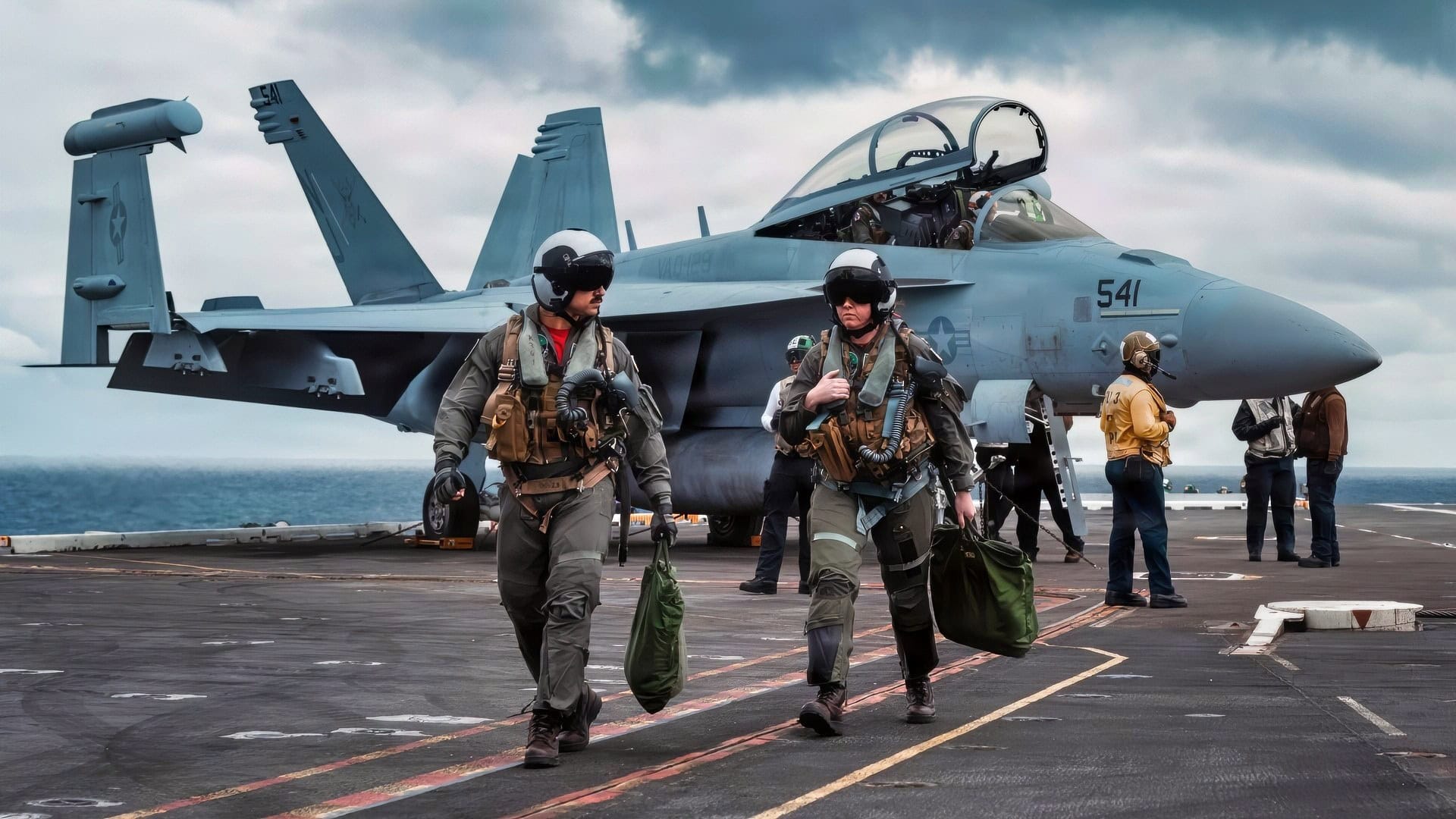
USNI News reported that the Theodore Roosevelt carrier strike group sailed in the Philippine Sea for the drills. A carrier strike group brings a mobile airfield, layered air defense, long-range strike, and command-and-control capacity. Japan adds bases, maritime patrol aircraft, destroyers, and access to the southwestern islands. In a conventional fight, that combination matters because distance is the first constraint in the Western Pacific.
But the force count can mislead. Fifty-six thousand personnel do not create 56,000 available combat troops at the point where a blockade, quarantine, or collision occurs. Much of the number consists of headquarters, support, aircrew, maintainers, and forces distributed across a large exercise area. The carrier is powerful, but it cannot be everywhere at once. Nor can it legally or politically treat every Chinese fishing vessel as a hostile combatant.
That is the seam Beijing is testing.
Fishing Boats Create a Harder Targeting Problem
Maritime militia vessels are not a magic weapon. They are vulnerable at sea, difficult to sustain in a prolonged fight, and dependent on commercial networks. They also do not replace the People's Liberation Army Navy. Their value is different: they can provide presence, observation, obstruction, and signaling while preserving ambiguity about who is responsible for an incident.
For a Taiwan blockade scenario, that ambiguity has operational consequences. A militia flotilla can crowd a shipping lane, shadow a merchant ship, report movements, or force Taiwan and its supporters to decide whether to escort, board, disperse, or wait. Each response carries escalation risk. A destroyer firing on a naval frigate creates one kind of crisis; a collision involving a fishing boat creates another, especially when Beijing can claim that civilians were attacked.
Reuters’ account should therefore be read as an indicator of force design, not merely another accusation in the gray-zone debate. If China can use nominally civilian hulls to extend surveillance and pressure beyond the Taiwan Strait, it complicates the geographic assumptions behind allied reinforcement. The problem is not only whether the United States can defeat the PLA in a fleet engagement. It is whether allied commanders can identify the beginning of that engagement.
Why Keen Sword Still Matters
The answer is not to dismiss the exercise. Keen Sword improves the alliance’s ability to move aircraft, protect bases, exchange data, and coordinate maritime forces around Japan’s southwestern islands. Those are practical advantages. A carrier strike group operating with Japanese forces also forces China to account for a larger and more complicated battlespace.
The drills may deter a rapid, overt attack. They do less against a campaign designed to accumulate control in small increments. The United States and Japan can rehearse a sortie schedule, but they cannot rehearse away the legal questions surrounding inspection of civilian vessels. They can practice air defense, but a radar picture does not automatically identify the intent of every trawler. They can surge warships, but a blockade conducted through maritime law enforcement, militia, and commercial shipping will be measured in weeks and months rather than the first 72 hours of a missile exchange.
This is where Taiwan’s own resilience becomes decisive. Taipei needs rules of engagement, maritime domain awareness, reserve crews, protected communications, and a plan for keeping ports and commercial traffic functioning under pressure. Washington and Tokyo need a common answer to a basic question: what action by a militia vessel triggers collective military response? If that answer is left until the first crisis, China will write it through repeated encounters.
The Alliance Needs a Gray-Zone Force Package
A credible response would combine coast guards, naval forces, intelligence agencies, and commercial shipping operators. It would include persistent unmanned surveillance, shared vessel tracking, escort procedures, evidence collection, and pre-agreed public attribution. The objective is not to militarize every fishing boat. It is to make it difficult for Beijing to gain operational information or coercive leverage at low risk.
That package also requires endurance. A carrier can dominate a crisis window, but it cannot provide continuous coverage across the approaches to Taiwan, the Philippine Sea, and Japan’s southwestern islands. Smaller surface combatants, maritime patrol aircraft, unmanned systems, and coast guard cutters are less glamorous and more useful for the daily contest. The alliance should spend accordingly.
There is a second danger. If allied planners treat gray-zone activity as an annoying prelude to “the real war,” they may miss the way it shapes the real war’s opening conditions. A fishing fleet that maps patrol patterns today can support targeting tomorrow. A commercial obstruction that goes unanswered can establish a precedent. A collision that produces no coordinated response teaches Beijing that ambiguity works.
Conclusion
Keen Sword 2027 demonstrates that Japan and the United States can assemble formidable forces for a conventional fight. The militia-boat reporting demonstrates why that may not be enough. China is not required to challenge the Theodore Roosevelt with a carrier battle group to pressure Taiwan or test alliance credibility. It can begin with vessels that are hard to classify, hard to stop, and easy to replace.
The carrier is the visible edge of allied power. The gray zone is where access will be contested first. Unless Washington, Tokyo, and Taipei build a force package for that layer, Keen Sword will remain an impressive rehearsal for a war that Beijing may choose not to start in recognizable form.
Sources
- Reuters, “Taiwan says China using militia boats to expand ‘battlefield preparation’ in western Pacific,” October 23, 2026.
- USNI News, “Theodore Roosevelt Carrier Strike Group Sails in the Philippine Sea for Keen Sword Drills,” October 22, 2026.
- Financial Times, reporting on China’s expanded gray-zone pressure against Taiwan and its partners, October 22, 2026.
The U.S. Navy and Japan Self-Defense Forces conducted the Keen Sword 2027 exercise with 56,000 personnel, featuring the USS Theodore Roosevelt carrier strike group in the Philippine Sea. Taiwan reported that China is utilizing maritime militia to enhance its presence in the Western Pacific, complicating military responses. The exercise showcases alliance capabilities but may not effectively counter China's gray-zone tactics.
- 56,000 personnel involved in Keen Sword 2027 exercise
- USS Theodore Roosevelt carrier strike group operating in the Philippine Sea
- Taiwan reports China's use of maritime militia for battlefield preparation
- Keen Sword 2027 demonstrates alliance capacity but may not address gray-zone tactics
- China's maritime militia complicates military responses in the Taiwan Strait