
Kevin Admirals Three-Star Nomination 2026 Shows NATO's European Leadership Limit
 Dr. Klaus Weber
Kevin Admiral's Three-Star Nomination 2026 Shows NATO's European Leadership Limit
A three-star general is set to lead the most important American land war theater in Europe. This is the small but uncomfortable news behind the nomination of Lt. Gen. Kevin D. Admiral as the next commander of U.S. Army Europe and Africa. Admiral would, if confirmed by the Senate, also lead the NATO Allied Land Command; Defense News points to a responsibility area of 104 countries and the fact that this position was previously held by a four-star general. It is precisely at this rank difference that the real European analysis begins.
Europe is discussing Readiness 2030, SAFE loans, ammunition production, and strengthening the eastern flank in 2026. However, the operational land architecture of deterrence remains anchored in an American personnel process. A personnel change in Washington automatically becomes a strategic signal for Warsaw, Berlin, Brussels, and Kyiv. This is not a footnote of alliance bureaucracy. It is a test of how much European defense capability is institutionally present.
The Rank is the Signal
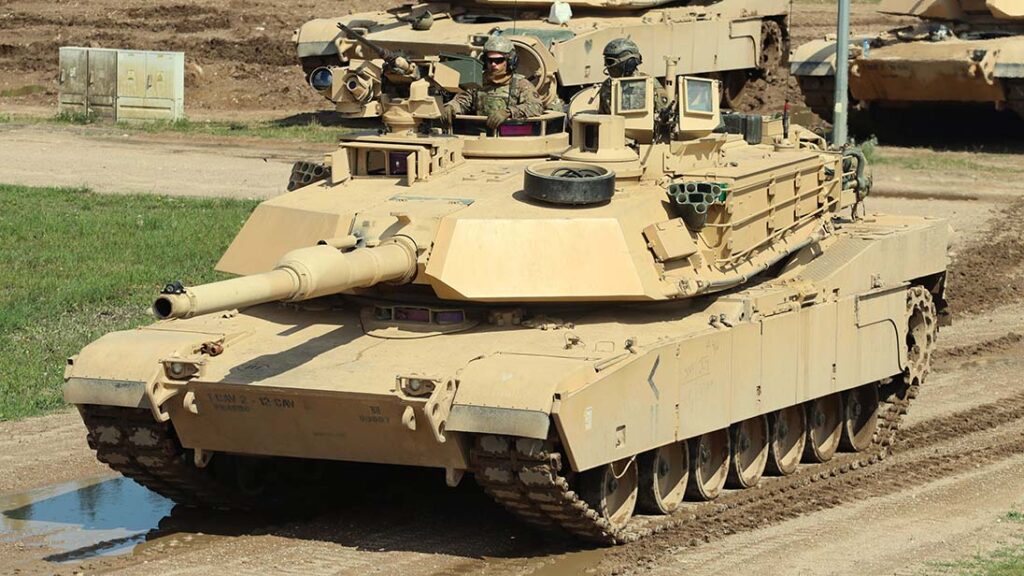
The nomination itself is factually unremarkable. Admiral has been leading the III Corps and Fort Hood since August 2024. Before that, he commanded the 1st Cavalry Division in Texas and Poland; his official Army biography also mentions a role in the G-3/5/7 staff for Force Management. This is a classic resume for an American large unit leader: heavy forces, European experience, personnel and structure planning.
Politically more interesting is what is not happening. The European Command is apparently not sending a demonstrative four-star message. Christopher Donahue, Admiral's predecessor, relinquished command in early July after only 18 months; since then, Maj. Gen. Christopher Norrie has been serving in an acting capacity. Defense News places this change within the broader personnel decisions under Defense Secretary Pete Hegseth, who has replaced more than a dozen high military leaders since taking office. For Europeans, it is not Washington's domestic politics that matter, but the vulnerability of a core NATO function to American personnel cycles.
A three-star commander can certainly be competent. The point is not Admiral's quality. The point is that rank, access, and institutional weight count in Washington. Anyone operating in a theater of war between the Baltic, Black Sea, Balkans, Mediterranean, and Africa needs not only operational art but also assertiveness in the American system. If Europe designates the eastern flank as a priority, but the U.S. ranks the position lower than before, a perception gap arises. Deterrence lives on perception.
European Spending Does Not Replace Command Structure
The European Union can mobilize billions; NATO states can promise 3.5 percent core defense spending and an additional 1.5 percent for resilience. But money does not automatically buy leadership. This distinction is often blurred in European debates. A new fund finances artillery ammunition, air defense, or armored vehicles. However, it does not create a common European land commander with political authority, permanent planning staffs, integrated communication systems, and access to American intelligence, air transport, and missile defense.
It is particularly clear how the land forces illustrate European fragmentation. Germany is forming a brigade for Lithuania, Poland is massively rearming, Finland is bringing a credible reserve culture into NATO, and Romania and the Baltic states are demanding a permanent presence. Yet these national efforts continue to run through NATO procedures, whose crucial operational hinges remain American. Europe provides troops and territory; America provides the framework within which a coherent deterrence architecture is built.
This is not an argument against NATO. It is an argument against illusions. When European governments promise strategic autonomy but must nervously look to Washington with every American command change, then autonomy is not institutionally grounded. It is rhetoric with a budgetary appendix.
The Polish Factor
Admiral's experience in Poland is therefore relevant. Poland is no longer just a frontline state but the most important continental hub for Ukraine aid, U.S. presence, and NATO reinforcement. The 1st Cavalry Division was there not as a symbol but as part of a rotation-based deterrence logic. Those who understand this logic also understand European weakness: the eastern flank works as long as American units, American logistics, and American command pathways remain available as a backbone.
Germany has a dual role in this architecture. It wants to be a European leading power, but its own land forces cannot fill the gap. The Lithuania brigade is politically important, but militarily it is only one building block. The Bundeswehr continues to struggle with personnel, ammunition stocks, maintenance, and digitization. Berlin cannot credibly demand that America dominate less as long as it does not provide more operational substance itself.
What Europe Should Learn from the Nomination
The nomination of Kevin Admiral is not a crisis signal. It is a sober indication of the hierarchy of reality. Washington decides who leads the central American land component in Europe; Europe reacts. This will remain the case as long as European states predominantly plan their defense policy nationally and only subsequently label it as European.
The consequence would not be to immediately build an EU headquarters against NATO. That would be institutional vanity. A more sensible approach would be a European land capability plan that answers three questions: What heavy units are permanently ready for the eastern flank? What ammunition and spare parts stocks are sufficient for more than the first weeks of war? Which European staffs can lead a large unit without American improvisation?
Until these questions are answered, every American personnel change remains a European security message. The paradox is simple: Europe spends more money, but the strategic temperature of its defense continues to be measured in Washington.
Sources
- Defense News, July 24, 2026, Pentagon nominates Lt. Gen. Admiral to command US Army Europe and Africa.
- U.S. Army General Officer Management Office, official biography of Lt. Gen. Kevin D. Admiral.
- U.S. Army Europe and Africa, public statements on the command change from July 2026.
Lt. Gen. Kevin D. Admiral was nominated to command U.S. Army Europe and Africa in 2026, reflecting a significant shift in NATO's leadership structure. This change indicates a move from a four-star to a three-star general, raising concerns about European defense capabilities and reliance on U.S. military leadership. Admiral's previous experience includes commanding the III Corps and the 1st Cavalry Division, underscoring the importance of U.S. presence in Europe, particularly in Poland as a logistical hub for NATO operations.
- Lt. Gen. Kevin D. Admiral nominated to lead U.S. Army Europe and Africa in 2026.
- The nomination reflects a shift from a four-star to a three-star general in NATO's command structure.
- Admiral has prior experience commanding the III Corps and the 1st Cavalry Division.
- The report highlights concerns about European defense capabilities and reliance on U.S. leadership.
- Poland's role as a key logistical hub for NATO and U.S. presence is emphasized.