
US Japan Philippines 5 Day Drill Shows China Deterrence Math Is Thin
 Marcus Chen
US Japan Philippines 5 Day Drill Shows China Deterrence Math Is Thin
Five days, one U.S. littoral combat ship, one Japanese destroyer, one Philippine frigate, two Philippine FA-50s, and a P-8A Poseidon. That is the useful way to read the latest U.S.-Japan-Philippines maritime exercise in the South China Sea. The communiques call it interoperability. In operational terms, it was a small but deliberate rehearsal for keeping eyes, ships, and aircraft in the same piece of contested water while China applies coast guard pressure below the threshold of war.
U.S. Indo-Pacific Command said the Armed Forces of the Philippines, the Japan Maritime Self-Defense Force, and the U.S. Navy conducted the Multilateral Maritime Cooperative Activity inside the Philippine Exclusive Economic Zone from July 21 to 25, 2026. The force package included the Independence-class littoral combat ship USS Santa Barbara, a U.S. Navy P-8A from Patrol Squadron 26, Japan Maritime Self-Defense Force destroyer JS Yudachi, Philippine frigate BRP Antonio Luna, Philippine Coast Guard vessel BRP Malabrigo, FA-50 light fighters, A-29B Super Tucanos, a C-208B intelligence, surveillance, and reconnaissance aircraft, and helicopters.
That inventory matters more than the usual diplomatic language. It shows Manila, Tokyo, and Washington are building a habit of operating together in the exact waters where China Coast Guard vessels are trying to make Philippine access expensive, unpredictable, and politically exhausting. It also shows the limit of the current model. A five-day exercise demonstrates alignment. It does not create sea control.
The Drill Was Built Around The Right Problems
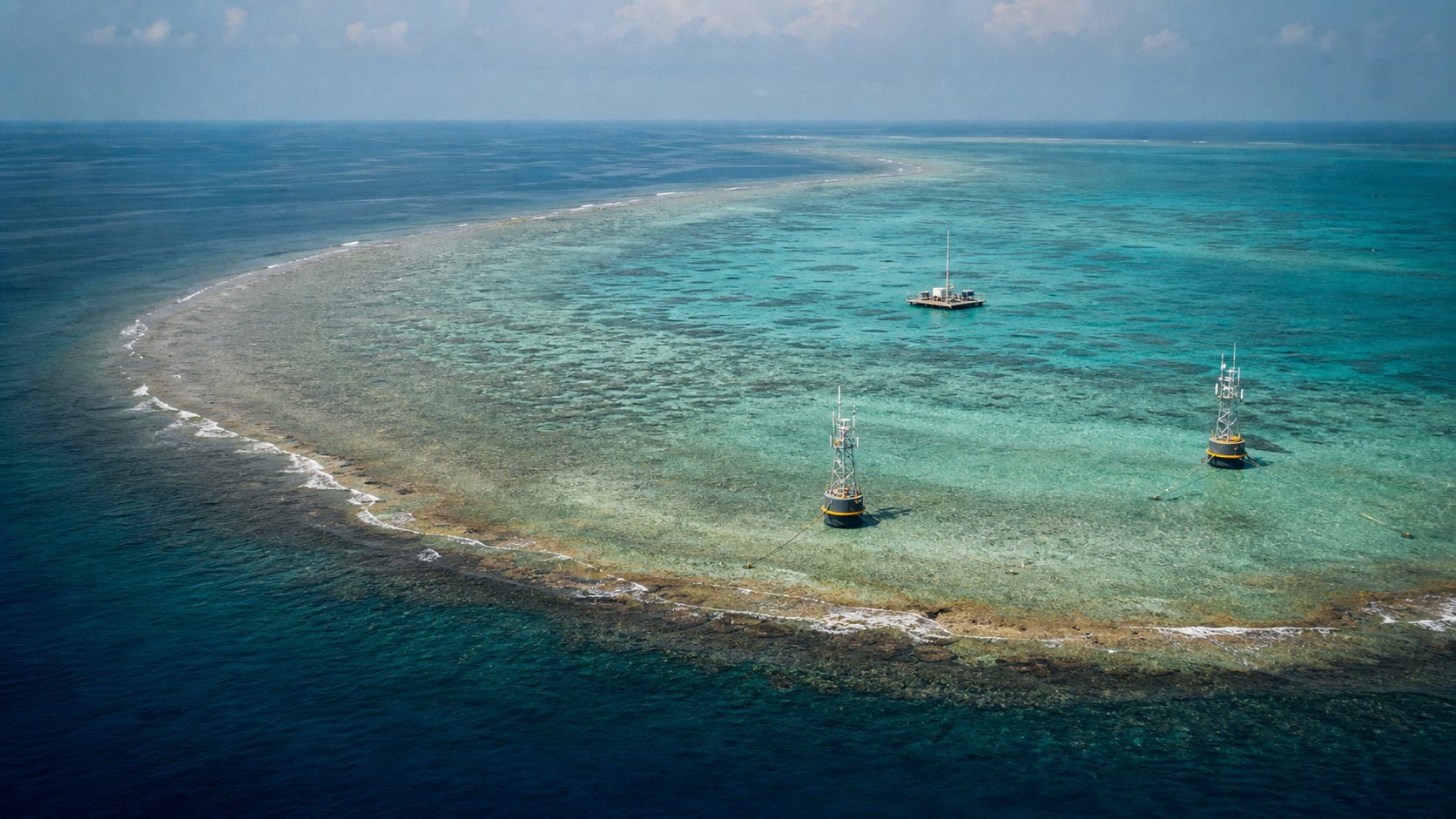
PACOM said the activity incorporated anti-submarine warfare training, standard operating procedures, replenishment at sea, vertical replenishment, maritime domain awareness operations, and division tactics. The Armed Forces of the Philippines also listed communications drills, officer of the watch maneuvers, deck landing qualification, photo exercises, cross-deck landing, and fly-by operations.
Those are not ceremonial skills. Anyone who has stood watch on a destroyer knows that multinational naval cooperation usually fails first at the mundane level: radios, fuel, helicopter deck procedures, tactical signals, and the ability to maintain formation without turning a simple maneuver into a collision-risk event. The Chinese coast guard does not need to sink anything to win a day at Scarborough Shoal. It needs to crowd, delay, separate, intimidate, and force Manila to choose between backing down or escalating.
That is why communications and replenishment matter. If the Philippines wants to keep ships near Scarborough Shoal, Second Thomas Shoal, Thitu Island, and the Palawan approaches, the problem is endurance. Scarborough lies roughly 200 kilometers west of Luzon. Second Thomas is far deeper in the Spratly chain, roughly 650 kilometers from Scarborough by recent reporting. Those distances are not impossible, but they stretch a small navy and coast guard when China can keep larger numbers of maritime militia, coast guard, and navy ships rotating through the area.
The Crisis Was Already Underway
The timing was not accidental. Reuters reported that the drills began a day after the Philippines said China Coast Guard personnel struck a Filipino sailor with a baton at Second Thomas Shoal. Beijing accused Philippine vessels of attacking first and ramming Chinese boats. The Diplomat reported that the incident involved a China Coast Guard rigid-hull inflatable boat approaching the BRP Sierra Madre, the grounded Philippine warship that serves as Manila's outpost at the shoal. A Philippine marine reportedly suffered a head injury, while China released its own video and rejected Manila's account.
Then came Scarborough. The Philippine Coast Guard said Chinese vessels used water cannon against Philippine government vessels near the shoal on Thursday and Friday while Manila was supporting Filipino fishing boats. The Diplomat reported that one China Coast Guard vessel came within about seven meters of a Philippine fisheries vessel, creating what Manila called a serious collision risk. China said it was taking lawful measures against vessels that had intruded near Huangyan Dao, Beijing's name for Scarborough Shoal.
Put the two incidents next to the five-day exercise and the picture becomes clearer. China is not testing whether the United States, Japan, and the Philippines can issue aligned statements. It is testing whether they can maintain presence when the daily contest is ugly, crowded, and legally ambiguous to the public even when the operational facts are not ambiguous to the crews involved.
The Force Package Still Leaves A Gap
The U.S. contribution was useful but modest. USS Santa Barbara is an Independence-class littoral combat ship, fast and suitable for presence missions, but not a substitute for a destroyer-based air and missile defense umbrella. The P-8A Poseidon is the more valuable piece in a South China Sea scenario because it can map surface and subsurface activity over large distances. But one P-8 sortie pattern does not solve the persistence problem. Aircraft have to leave. Ships have to refuel. Crews have to rest. China can choose the hour and the pressure point.
Japan's JS Yudachi adds a serious surface combatant to the exercise and signals that Tokyo is willing to operate farther south in support of Philippine maritime security. That is politically important. It also carries operational meaning: Japan brings a navy that understands anti-submarine warfare, disciplined formation operations, and sustained fleet procedures. But Japan is still calibrating how far it wants to go in a Philippine-China confrontation that is not a direct attack on Japan.
For Manila, the BRP Antonio Luna and FA-50s are credible assets, but the numbers are thin. A single Jose Rizal-class frigate cannot be everywhere. FA-50s can show presence and complicate Chinese planning, but they are light fighters with limited payload and range compared with the larger combat aircraft that would dominate a high-end fight. The Philippine Coast Guard is carrying much of the political burden at sea, yet coast guard cutters facing Chinese water cannon and blocking maneuvers need naval overwatch that is predictable, not episodic.
What Beijing Learns From This
Beijing will read the exercise in two ways. First, it will see that the triangle is real. The United States is no longer the only outside actor willing to show up with Manila; Japan is becoming a regular participant, and that changes the political cost of Chinese coercion. Second, Beijing will see the tempo problem. If allied ships appear for five days after a crisis and then disperse, China can absorb the signaling and return to pressure operations after the cameras leave.
The harder requirement is a standing operating rhythm: maritime patrol aircraft coverage, coast guard coordination, shared radar and AIS pictures, fuel planning, and pre-agreed responses when a Chinese vessel closes to seven meters or a boarding team swings batons near a Philippine outpost. Deterrence in the South China Sea is not a speech. It is a schedule.
The July exercise was the right kind of rehearsal. The danger is mistaking rehearsal for coverage.
The Bottom Line
The 17th Multilateral Maritime Cooperative Activity is a step in the correct direction because it practiced the unglamorous work that keeps ships useful in contested water. Anti-submarine warfare, replenishment, deck landing, and communications drills are the plumbing of deterrence. Without them, allied presence is just flags on hulls.
But the arithmetic remains thin. China is applying pressure through persistence, not a single decisive naval battle. A five-day drill answers that pressure for five days. Unless Washington, Tokyo, and Manila can turn episodic exercises into a continuous operating pattern around the Philippine EEZ, Beijing will keep finding empty days on the calendar. That is where gray-zone coercion lives.
The U.S. Navy, Japan Maritime Self-Defense Force, and Armed Forces of the Philippines conducted a multilateral maritime exercise in the South China Sea from July 21 to 25, 2026. The exercise focused on interoperability and included anti-submarine warfare training, involving various naval assets such as the USS Santa Barbara and P-8A Poseidon. This drill aimed to enhance operational readiness amid increasing pressure from the Chinese coast guard.
- The exercise involved U.S., Japanese, and Philippine naval forces in the South China Sea.
- It included anti-submarine warfare training and various operational drills.
- The exercise was conducted from July 21 to 25, 2026, in the Philippine Exclusive Economic Zone.
- China's coast guard has been applying pressure in the region, complicating Philippine access.
- The U.S. contribution included a P-8A Poseidon and an Independence-class littoral combat ship.