
KNDS 2026 IPO Delay Exposes Europe's Rearmament Math
 Alexandra Reeves
KNDS 2026 IPO Delay Exposes Europe's Rearmament Math
Europe keeps talking as if defence demand has become a straight line upward. KNDS just reminded everyone that money, politics and markets still move in crooked lines.
The Franco-German maker of Leopard tanks and Caesar self-propelled howitzers has delayed its planned Paris and Frankfurt stock-market listing only a week after presenting the deal as the next step in its growth story. According to Defense News, KNDS said it had completed substantially all preparations for the IPO and engaged extensively with investors, but would wait for more favourable conditions after volatility hit European defence shares.
That sounds like a financial-market footnote. It is not. KNDS sits at the centre of the European land-warfare problem: tanks, artillery, armoured vehicles, industrial capacity and the awkward politics of French-German control. If this company cannot get a clean market debut during Europe's largest rearmament cycle in decades, the problem is not lack of demand. The problem is that investors are starting to ask whether European governments can turn wartime urgency into predictable orders.
The Numbers Look Strong Until They Do Not
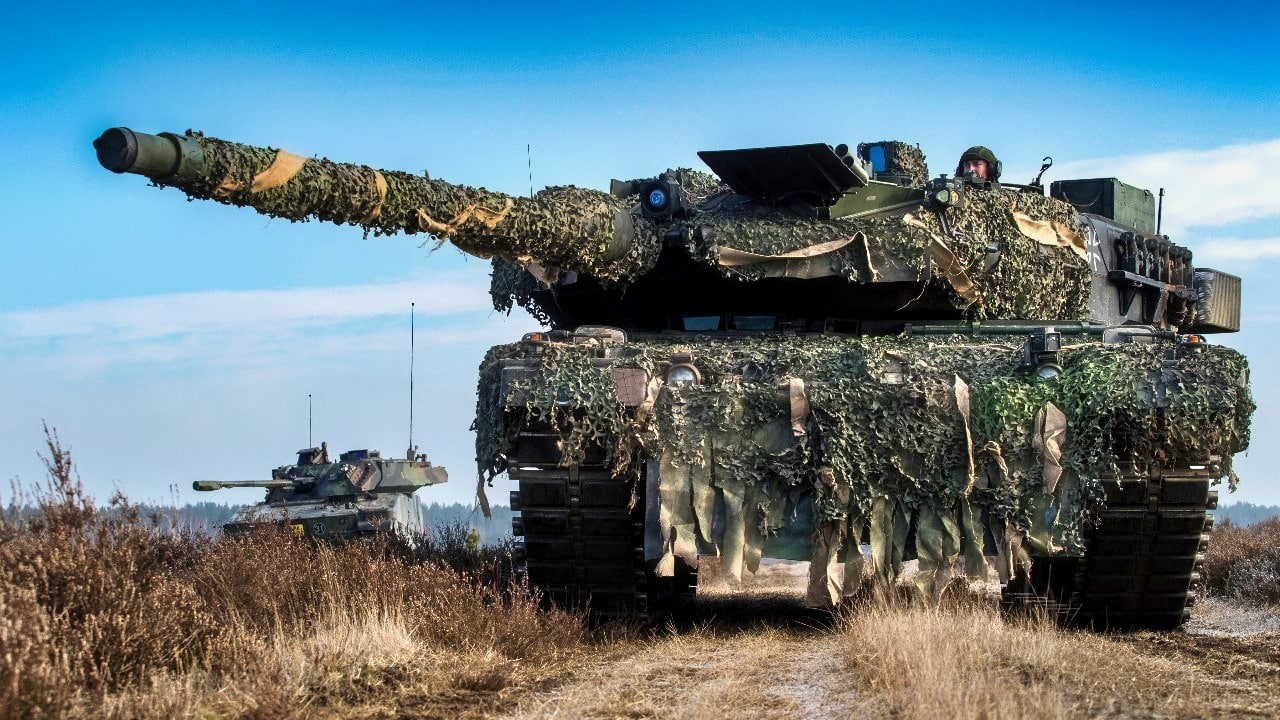
The surface case for KNDS is almost embarrassingly good. Defense News reported last week that the company posted 2025 sales of 4.4 billion euros, operating profit of 661 million euros and a record order backlog of 33.1 billion euros. KNDS was targeting revenue growth of around 30 percent in 2026. Its products are not speculative future concepts. They are exactly the things European armies say they need after watching Russia burn through armour, artillery barrels and ammunition in Ukraine.
The planned ownership structure also looked politically tidy. French state-owned Giat Industries and German family-owned Wegmann & Co would together sell about 20 percent to institutional investors. Germany, through Kreditanstalt fuer Wiederaufbau, would buy Wegmann's remaining 40 percent stake. France would keep 40 percent through Giat. In theory, this solved several problems at once: German heirs could cash out, Berlin would gain a strategic stake, Paris would preserve parity and the market would give KNDS more visibility.
Then came the pause.
Defense News reported that Rheinmetall and Czechoslovak Group both fell sharply last week before recovering some ground, with Rheinmetall still down 13 percent and CSG down 17 percent over the past month. The Financial Times, cited by Defense News, reported that KNDS had struggled to convince investors to support a valuation above 12 billion euros, or about 13.7 billion dollars. CSG, which listed in Amsterdam in January, has fallen about 44 percent from its IPO price.
That is not a collapse in the defence thesis. It is a warning that the thesis has become more complicated.
Europe's Demand Signal Is Still Political
Here is the part policymakers dislike saying out loud: European defence companies do not sell into a normal market. They sell into budgets, coalitions, procurement cycles and ministries that can take years to convert alarm into contracts. Russia's war created demand, but demand is not the same as bankable revenue on a specific production line in a specific year.
KNDS is a good example because its portfolio is almost too relevant. The Leopard 2 remains one of Europe's key main battle tanks. The Caesar howitzer has become a battlefield symbol in Ukraine and a commercial success abroad. KNDS is also tied to the future Main Ground Combat System, the Franco-German programme intended to replace France's Leclerc and Germany's Leopard. At Eurosatory, KNDS showed an interim tank concept using a French turret and gun on a German Leopard 2 chassis, a practical answer to the fact that Leclerc timelines and next-generation tank timelines do not line up neatly.
But relevance does not remove political risk. France and Germany have different industrial instincts. Berlin wants scale and NATO credibility. Paris wants sovereign control and European strategic weight. Both want jobs. Both want influence over future ground combat architecture. Investors can read a backlog, but they can also read a governance structure.
The Real Bottleneck Is Trust
Everyone in Brussels can recite the new spending targets. NATO allies have been pushed toward much higher defence outlays, and European governments are announcing ammunition plants, drone initiatives, air-defence buys and armoured-vehicle programmes at a pace that would have sounded fanciful before 2022. The lazy conclusion is that defence primes can simply ride the wave.
That is the assumption KNDS just punctured.
Markets want to know whether budgets survive elections, whether orders arrive on time, whether governments pay for capacity before crises, and whether joint programmes avoid the usual Franco-German habit of turning technical specifications into diplomatic theatre. A tank factory cannot expand on summit language. It expands on signed contracts, cash flow, supplier commitments and labour it can hire without wondering whether the political mood changes next quarter.
This is where the comparison with the United States matters. American defence procurement is often wasteful, slow and maddening, but it has a deep capital-market ecosystem around primes, subcontractors and long-term programmes. Europe is trying to build something similar while still treating many defence decisions as national exceptions. That makes investors cautious. They are not questioning whether Europe needs tanks. They are questioning whether Europe can buy them like it means it.
What To Watch Next
The KNDS delay does not mean European rearmament is failing. That would be too dramatic. The company said it is ready to resume the IPO process when market conditions allow, and its shareholders remain aligned on customers, European expansion and new mission solutions. The underlying need for armour, artillery and industrial depth has not disappeared.
But the delay does strip away some of the easy triumphalism around the European defence boom. A backlog is not a magic shield against valuation pressure. State ownership is not automatically a comfort to private investors. A war next door does not automatically make every defence listing work.
The next signals are simple. Watch whether Germany completes its 40 percent stake without political friction. Watch whether KNDS converts its 33.1 billion euro backlog into faster deliveries rather than longer waiting lists. Watch whether CSG's weak post-IPO performance remains an isolated case or becomes a warning label for defence listings. And watch whether France and Germany can keep KNDS focused on production instead of governance theatre.
The uncomfortable conclusion is this: Europe has finally remembered that land warfare consumes metal at scale. It has not yet proved that its politics, markets and factories can move at the same speed. KNDS did not cancel the rearmament story. It made the bill look more honest.
KNDS delayed its IPO in Paris and Frankfurt due to unfavorable market conditions, raising concerns about the ability of European governments to convert wartime urgency into predictable defense orders. The company reported strong sales and a significant order backlog, but political risks and market volatility have made investors cautious about the European defense sector's future.
- KNDS delayed its IPO due to market volatility.
- The company reported 2025 sales of 4.4 billion euros and a record order backlog of 33.1 billion euros.
- European defense companies face challenges in converting demand into bankable revenue.
- Political dynamics between France and Germany affect defense procurement.
- Investors are cautious about the European defense market's ability to deliver on contracts.