
Kouakourou 2026 empties after the JNIM assault — the center of Mali loses its river lock
 Marie Dubois
Kouakourou 2026 empties after the JNIM assault — the center of Mali loses its river lock
In Kouakourou, in the Mopti region, July 18, 2026, was not just another attack on an isolated garrison. According to RFI, the Support Group for Islam and Muslims (JNIM, or GSIM in Francophone usage) took control of the local military camp, and then the locality emptied of its inhabitants in the following days. The next day, according to the same sequence reported by open sources and corroborated by GlobalMilitary.net, a Malian Mi-24/35 helicopter was reportedly shot down near Kouakourou while a formation of three aircraft was operating in the area.
One must remain cautious about the tolls. Liveuamap reports human and material losses without specifying them precisely. RFI speaks of a rout of the Malian army and a massive departure of civilians. What can be asserted, however, is more significant than a provisional figure: the JNIM managed to impose its tempo for at least forty-eight hours on a sensitive point of the inner Niger delta.
A lost post in a geography that matters
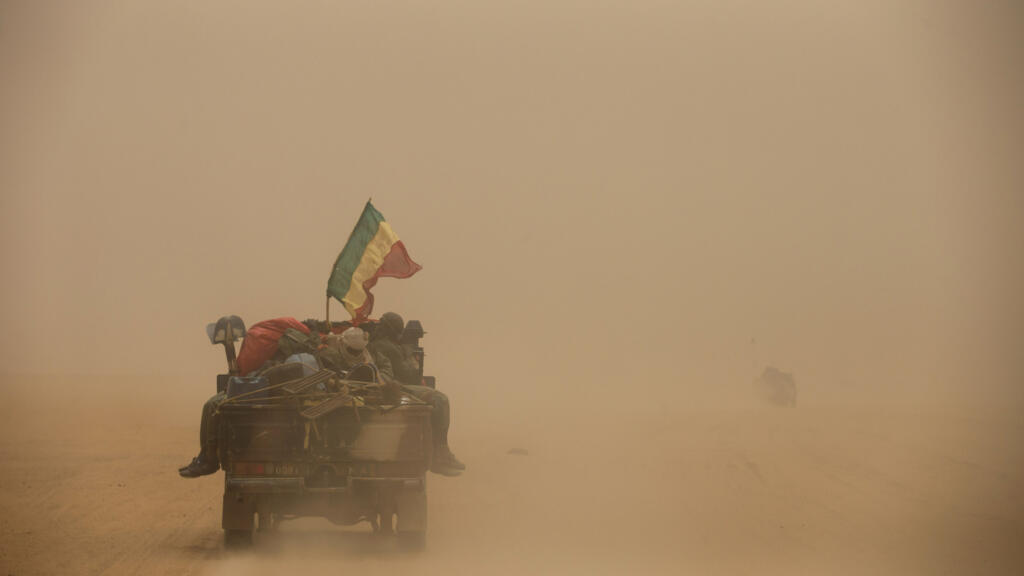
Kouakourou is not Gao, nor Timbuktu, nor Menaka. It is precisely for this reason that the matter deserves attention. The locality is located in the Mopti area, near the river axis and the paths that connect central Mali to the Peul, Dogon, and Bozo villages of the delta. On the ground, these secondary points often determine freedom of movement. Whoever controls the road, the ferry, the weekly market, and the telephone network also controls the information.
Since 2018, central Mali has become the operational heart of Sahelian jihad, even more so than the desert north. JNIM fighters conduct a close-range war there: intimidation of village chiefs, forced taxes, control of pastures, movement restrictions, and targeted attacks against garrisons. In Kouakourou, the military interest is therefore not just the camp taken or abandoned. It is the vacuum effect that follows.
When an entire population leaves, even partially, the army loses its eyes. The jihadists, on the other hand, gain a space without witnesses, ideal for placing improvised explosive devices, storing fuel, moving ammunition, or preparing the next attack. From experience, a garrison can always return to occupy a building. Rebuilding civilian trust takes months, sometimes years.
The downed helicopter changes the reading of the assault
The most worrying signal is not the temporary capture of the camp. It is the aerial episode of July 19. GlobalMilitary.net identifies the lost aircraft as a Malian Mi-24/35 shot down near Kouakourou after the camp was overrun. If this identification is officially confirmed, it is a serious tactical indicator: the JNIM is no longer content to fix ground forces; it seeks to contest airborne reactions.
Mali heavily relies on its attack and transport helicopters to compensate for the weakness of the roads. Between Ségou, Mopti, Douentza, and the rural areas of the delta, ground columns advance slowly, exposed to mines and ambushes. The helicopter, in this theater of operations, serves three purposes: to reassure a garrison, to strike a group that is dispersing, and to evacuate the wounded before nightfall. When this option becomes risky, the isolated garrison knows it can remain alone longer.
The JNIM does not need sophisticated air defense to achieve this effect. A well-placed heavy machine gun, a coordinated shot at the moment of a low pass, or a portable missile acquired through capture or trafficking is sometimes enough to impose caution. The problem is less technological than psychological: after a lost aircraft, each pilot flies higher, each mission requires more preparation, and each isolated village waits longer.
The Malian junta faces the trap of narrative
This attack comes as Bamako regularly presents the reconquest of territory as proof that the Russian choice and the break with France have changed the war. The recent fighting in Anéfis had already cast doubt on this narrative in the north. Kouakourou weakens it in the center, where daily security is most visible to civilians.
The point is politically sensitive. The junta can lose a remote base and speak of a tactical withdrawal. It can lose a convoy and insist on the losses inflicted on the enemy. But when residents leave an entire locality after the passage of the JNIM, the official narrative is no longer sufficient. Civilians vote with their feet. They leave when they believe that the local balance of power has shifted, or that the state can no longer protect them from reprisals.
Bamako's Russian partners, now at the center of the apparatus after the French withdrawal, face the same problem that Barkhane encountered before them: one can conduct raids, kill leaders, retake a camp, but one cannot sustainably hold a delta with punitive columns and announcements of victory. It requires held posts, minimal justice, local intelligence, and the ability to return quickly without indiscriminately punishing villages. It is less spectacular than a strike video. Yet it is the real war.
The Malian center becomes the JNIM's laboratory
The JNIM is testing in Kouakourou a method already observed elsewhere: attacking a local lock, forcing the army to react, striking or threatening the reaction, and then exploiting civilian displacement. This pattern creates cumulative pressure. It does not necessarily give the group immediate administrative control, but it transforms the state's presence into an intermittent one.
The distinction is crucial. In many villages in central Mali, residents do not ask who officially controls the map. They ask who can enter at night, who can stop a trader on the path, who can ban a fair, who can kill a notable without being prosecuted. If the answer is the JNIM, even two days a week, then the state retreats.
The available sources do not yet allow us to know whether Kouakourou will remain under direct pressure or if the jihadists will retreat to rural areas after their demonstration. But the sequence is consistent with a strategy of attrition: multiplying visible micro-defeats, forcing the army to escort everywhere, stretching helicopters, and then letting civilians conclude that staying becomes too dangerous.
What to watch for now
The next indicators will be concrete. First, the return or not of residents to the market and the banks of the river. Then, the capacity of the Malian army to re-establish a permanent presence without relying solely on air rotations. Finally, the possible reprisals from the JNIM against those who may have assisted government forces.
The immediate danger lies on the paths between Kouakourou, Djenné, Sofara, and the secondary axes towards Mopti. If explosive devices appear in this area in the coming weeks, it will mean that the assault was not an isolated blow but the beginning of a lockdown. In the Sahel, a lost base makes noise. A population that does not return causes much more damage.
Main sources: RFI, Sahel Liveuamap, GlobalMilitary.net. Loss tolls remain to be confirmed by independent official sources.
JNIM attacked and seized control of the military camp in Kouakourou on July 18, 2026, prompting a mass evacuation of civilians. The following day, a Malian Mi-24/35 helicopter was reportedly shot down in the area. This incident highlights a tactical shift for JNIM, indicating increased operational capabilities and ongoing instability in central Mali.
- JNIM took control of the military camp in Kouakourou.
- A Malian Mi-24/35 helicopter was reportedly shot down near Kouakourou.
- Civilians evacuated the area following the attack.
- The attack represents a significant tactical shift for JNIM in the region.
- The situation reflects ongoing instability in central Mali.