
Kuwait Signs Defense Protocol 2026 with Pakistan and Tests Gulf Security After Iran War
 Ahmed Al-Rashid
Kuwait Signs Defense Protocol 2026 with Pakistan and Tests Gulf Security After Iran War
In Islamabad on August 27, Kuwait and Pakistan signed the "2026 Protocol" to expand the defense cooperation agreement signed between them in 2023. According to the official Pakistan News Agency, the new text includes training, capacity building, border management, and other areas agreed upon by both parties. The news appears to be an ordinary bilateral protocol, but its timing this summer is anything but ordinary. Kuwait has emerged from heavy months of threats related to the Iran war and the subsequent risks to infrastructure and internal security, while Pakistan is simultaneously trying to establish itself not just as a political mediator, but as a security provider that Gulf countries can rely on when the American umbrella becomes less certain and more costly.
Here, we must stop using comfortable diplomatic language. Any military personnel who has served in the region knows that defense agreements are not measured by the number of words that talk about "peace and stability," but by whether they add real capability in times of crisis. The real question is not whether Kuwait has politically approached Pakistan, but whether Kuwait has begun to seek an additional security layer above the traditional Western partnership because the Gulf environment after the Iran war no longer allows for reliance on the old formula.
What Kuwait Actually Signed with Pakistan
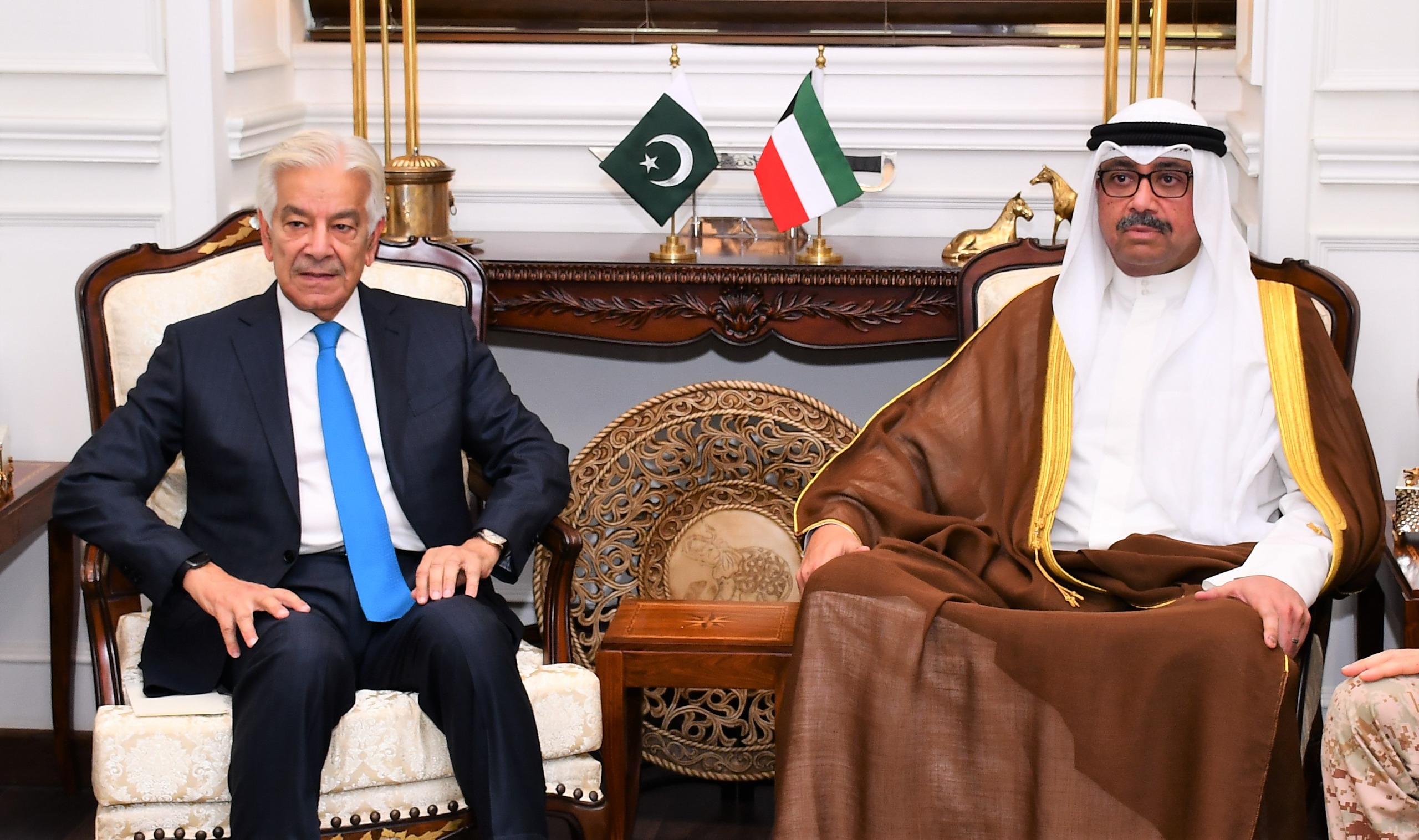
According to APP's account, the 2026 Protocol does not start from scratch, but builds on the 2023 agreement and gives it a broader executive dimension. This is important because when countries want just to take a picture, they suffice with a memorandum of understanding. However, when they enter into training files, operational frameworks, capability development, and institutional assistance, they implicitly state that the relationship has moved from political niceties to practical use. The National added another dimension by linking the step to the reshaping of regional alliances in the post-Iran war context, noting that Kuwaiti Defense Minister Sheikh Abdullah Ali Abdullah Al-Salem Al-Sabah discussed security and stability issues and the expansion of military cooperation with his Pakistani counterpart.
Practically speaking, the most noteworthy item is "capacity building." This phrase is often used to embellish texts, but in the Gulf, it usually means specialized training, preparing personnel, developing leadership pathways, and linking units to more stable operating and maintenance systems. The "border management" item may seem strange at first glance for a small country like Kuwait, but it becomes understandable if we read it in the context of protecting land and maritime ports, sensitive facilities, and monitoring any infiltration or network activity related to regional proxies or cross-border smuggling.
Why Kuwait Needs Pakistan Now
Kuwait is neither Saudi Arabia nor the UAE in terms of size, spending, and ability to absorb shocks, but it is located in the same geography and faces almost the same threats when the heat rises in the Gulf. Over the past months, the country has lived to the rhythm of security warnings, tracking cells, and fears of targeting vital facilities, while the question of actual protection hangs over all Gulf capitals: who will respond first if the real test occurs?
The American answer is still present, but it is no longer sufficient on its own to reassure Gulf decision-makers. American weaponry provides deterrence, yes, but it does not automatically build daily resilience within national institutions. Here, Pakistan enters as an attractive option for Kuwait for a simple reason: Islamabad does not just sell equipment or political promises, but has a large army, extensive training experience, and deep human and professional relationships with Gulf environments. In this case, Kuwait is not looking for a complete alternative to Washington, but for a partner that can bridge the gap between purchasing systems and operating them within a more cohesive structure.
Having a defense system does not mean having the ability to use it under pressure, and this is the gap that Kuwait is trying to narrow through Pakistan more than it is trying to purchase a new political title.
And Why Pakistan Also Needs Kuwait
The Arab reading of the news usually suffices to say that Kuwait needs Pakistan, but the equation is broader. Pakistan itself wants to expand its security presence in the Gulf after the defensive agreement in Mecca with Saudi Arabia and Turkey earlier this month. It is true that Kuwait did not join that tripartite agreement, but signing a new protocol with Islamabad immediately afterward indicates that Pakistan is trying to build a network of overlapping circles that does not rely solely on one closed alliance.
This is a smart approach on its part. Instead of proposing a rigid formula that might alarm some capitals or directly provoke Tehran, Pakistan is opting for functional agreements: training here, coordination there, institutional support in a third place. In this way, it transforms from a political mediator in the Iran file to a relatively accepted security player in the Gulf. Additionally, its relationship with Kuwait provides it with an additional outlet to a Gulf military institution that needs human expertise more than it needs more promotional titles.
The Capability Triangle Says the Agreement is Important but Not Decisive Alone
I view any defense news in the Gulf through a simple triangle: weaponry, training, institution. Gulf countries spend heavily on the first side, are gradually improving on the second, but still stumble on the third when it comes to sustainability, self-reliance, and the speed of field decision-making. For this reason, I see that the Kuwait-Pakistan protocol is important news, but it is not a decisive shift in itself.
If the agreement translates into actual programs for officers, joint exercises, building an operational doctrine, and raising the readiness of protection units, facilities, and borders, it will carry weight beyond its paper size. However, if it remains within the framework of visits and statements, it will end up on the same shelf that the region has filled for decades. The problem in the Gulf is not a lack of agreements, but an excess of agreements that the camera loves more than the field.
The Regional Impact on Gulf Security
The most important impact here is not a direct military one, but a political operational one. Kuwait sends a signal that it does not want to remain the link waiting for others to protect its roof. Pakistan sends a parallel signal that it is ready to transform its Gulf relations from political sympathy to a structure of tangible defense cooperation. This does not mean the establishment of a complete new axis, nor does it mean that Kuwait has automatically entered into the same collective deterrence arrangements that Saudi Arabia, Turkey, and Pakistan are discussing, but it does mean that the security mood in the Gulf is shifting towards diversifying partners without announcing a break with the United States.
In my estimation, this is the deeper meaning of the news. The aftermath of the Iran war did not produce true Gulf independence, but it produced a conviction that reliance on a single security provider is no longer a comfortable policy. Kuwait is moving here with the caution of a small state that knows geography is unforgiving, and Pakistan is taking advantage of the moment to offer what many Western suppliers cannot easily provide: military human resources at a lower political cost.
Summary of the Scene
The Defense Protocol 2026 between Kuwait and Pakistan is not secondary news, as it reveals what is happening beneath the surface in the Gulf more than it announces on paper. Kuwait is not just looking for cooperation with a friendly country, but for securing a gap between the fear of threat and the slow building of self-capacity. Pakistan is not just looking for a new partnership, but for establishing itself as part of the upcoming Gulf security architecture.
However, the structural contradiction remains. The Gulf wants to diversify protection without paying the cost of complete independence, and it wants more effective armies without sufficiently rebuilding the military institution from within. For this reason, the agreement with Pakistan may be a correct step for Kuwait, but it remains a partial remedy for a deeper problem: the region is still buying time more than it is building capability.
Kuwait signed the 2026 Defense Protocol with Pakistan in Islamabad on August 27, 2023, to enhance defense cooperation, including training and border management. This agreement follows security concerns in the Gulf after the Iran War, indicating Kuwait's search for additional security partnerships. Pakistan is also looking to strengthen its security role in the region.
- Kuwait signed the 2026 Defense Protocol with Pakistan on August 27, 2023.
- The protocol expands on a previous defense cooperation agreement from 2023.
- The agreement includes training, capacity building, and border management.
- Kuwait seeks additional security partnerships following threats from the Iran War.
- Pakistan aims to enhance its security presence in the Gulf region.