
Lai's T.12 Trillion Defense Budget Won't Make Kinmen Secure in 2027
 Marcus Chen
Lai's T.12 Trillion Defense Budget Won't Make Kinmen Secure in 2027
T.1225 trillion is a serious number. It is also the wrong number to start with if the question is whether Taiwan can actually hold Kinmen in a crisis next year.
At the Aug. 23 ceremony marking the 68th anniversary of the 823 Artillery Battle, President Lai Ching-te went to the front line in Kinmen and said next year's total defense budget, including special appropriations, would exceed T trillion for the first time and reach T.1225 trillion, or more than 3% of GDP. He paired that political signal with a harder line: Taiwan would keep the spirit of “not yielding an inch” while investing in defense, drones, artificial intelligence, and a broader civil defense system.
That is the right message for deterrence. It is not yet the right answer for Kinmen.
Kinmen Is Not a Budget Problem First
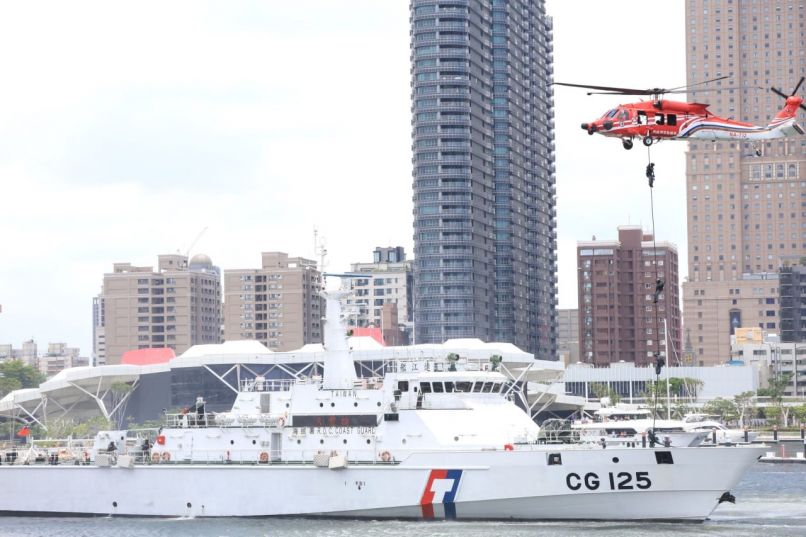
Kinmen is a geography problem before it is a spending problem. Anyone who has stood on that island knows the math immediately. Kinmen sits just off the Chinese coast, inside the reach of everything from maritime militia and coast guard harassment to tube artillery, short-range rockets, attack helicopters, and massed drones. That compresses warning time and makes reinforcement much harder than speeches in Taipei often imply.
Lai's speech acknowledged part of that reality. He warned that Beijing has not given up its expansionist ambitions for a single day and said Chinese coast guard activity around Kinmen has become more aggressive. That matters because gray-zone pressure is how Beijing can probe readiness without firing the first large salvo. If Taiwan cannot keep persistence in Kinmen's waters and airspace during the gray-zone phase, it will enter the shooting phase already behind.
That is why a record topline alone can mislead. Money measured at the national level does not automatically become combat power at the island edge. Kinmen does not need another abstract promise. It needs ready magazines, protected fuel, reliable communications, short-range air defense, counter-drone capacity, engineering resilience, and lift that can survive the first 48 hours.
What the New Money Actually Signals
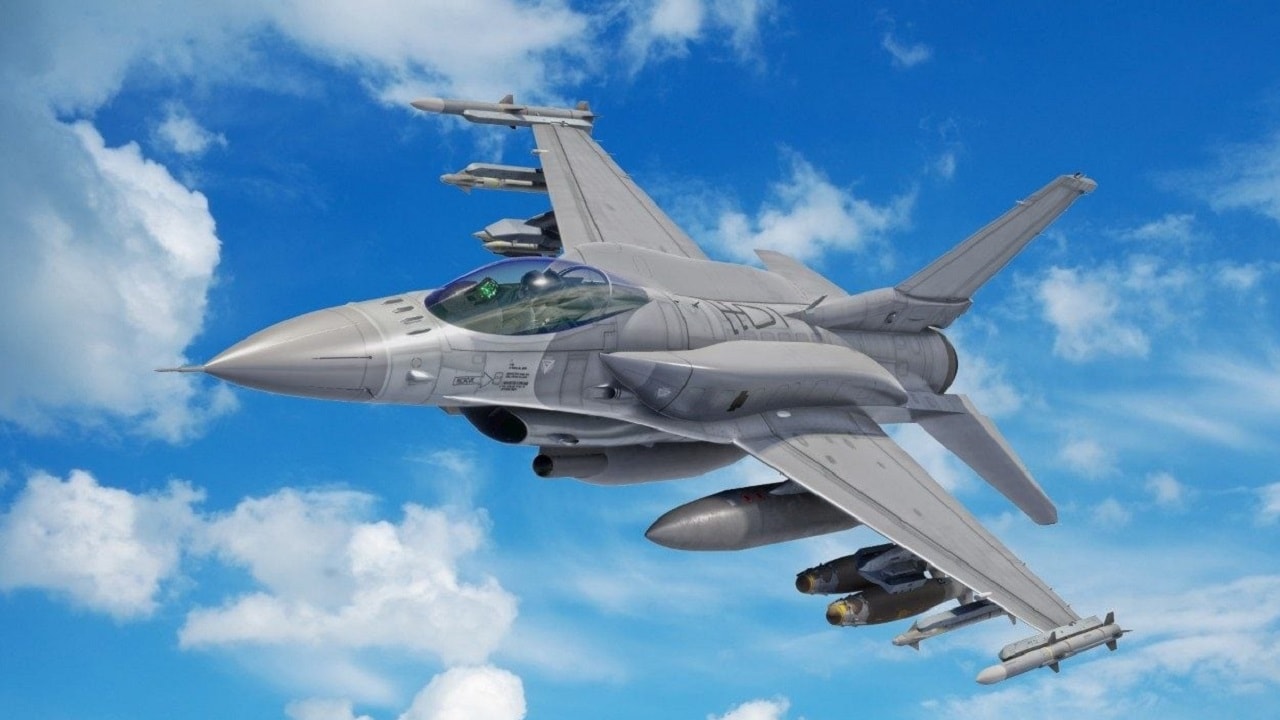
There is still a reason the budget matters. Reuters reported this week that Taiwan's proposed 2027 defense spending would rise 18% to a record level, with additional emphasis on drones and missiles. Combined with Lai's own numbers from Kinmen, the message is clear: Taipei is trying to show both Washington and Beijing that it is willing to pay more for self-defense.
That helps politically. It may even help strategically over time. But the word doing the work there is time.
New missile stocks, unmanned systems, hardened facilities, and trained operators do not appear because a legislature approves a bigger line item. Procurement cycles, production bottlenecks, testing, training, dispersal, and sustainment still apply. Marcus Chen's favorite rule is simple: firepower is not what you buy; it is what you can deliver on time, in sequence, and for long enough to matter. Kinmen punishes any gap between those three things.
If Taipei spends more on long-lead prestige items while underfunding munitions depth, mobile air defense, reserve call-up efficiency, and infrastructure repair, then the budget will improve optics faster than survivability. That is the danger in frontier defense debates. Governments like round numbers. Front-line commanders care about ready rounds, generator uptime, runway repair kits, and whether a drone feed stays alive after the first jamming burst.
The Operational Gap Is Still Short-Range and Immediate
The real Kinmen problem is not whether Taiwan can buy more advanced systems over the next decade. It is whether Taiwan can deny Beijing a quick local fait accompli before outside help can shape the fight.
That requires sea denial and local air denial at very short range. It means mobile anti-ship missiles that can keep firing after relocation. It means layered short-range air defense against drones, helicopters, and low-end strike aircraft. It means decoys, hardened command posts, pre-positioned engineering assets, and enough small craft and logistics redundancy to keep the garrison supplied even under constant harassment.
Lai's speech pointed to AI, drones, and all-of-society defense. Those are sensible priorities. But Kinmen is where those concepts have to become something brutally concrete. How many interceptors per day? How many drone crews per sector? How many hours until damaged communications nodes are restored? How many resupply runs can survive if civilian ports come under pressure? That is the math that decides whether “not yielding an inch” is policy or slogan.
The uncomfortable conclusion is that Taiwan's bigger budget probably strengthens long-run deterrence more than near-term Kinmen security. Beijing will notice the resolve. But geography gives the PLA a clock advantage around offshore islands, and budget growth alone does not erase that.
The Number Beijing Will Actually Watch
Beijing will read the trillion-dollar headline, but it will watch a different number: the amount of usable combat power Taiwan can keep on Kinmen after the first shock.
If the extra money turns into dispersed magazines, more mobile launchers, better counter-drone coverage, harder communications, deeper stocks, and units that can keep operating while cut up and jammed, then the budget increase will matter. If it mostly turns into future programs whose combat effect arrives after 2027, then Kinmen remains exposed at the moment Taipei is trying hardest to prove otherwise.
That is the gap. Taiwan's leadership is finally sending the right political signal. The island's front line still needs the kind of ugly, unglamorous, short-range resilience that budgets often underdeliver. Until that changes, a T.1225 trillion defense budget is a message of intent, not proof that Kinmen is secure.
Taiwan plans to increase its defense budget to T.1225 trillion for 2027, aiming to enhance military readiness in Kinmen amid rising Chinese aggression. President Lai highlighted the need for immediate operational capabilities, including drones and short-range air defense, to deter potential threats. The budget increase signals Taiwan's commitment to self-defense, but concerns remain about its effectiveness in securing Kinmen against rapid Chinese advances.
- Taiwan's defense budget for 2027 is projected to exceed T.1225 trillion, over 3% of GDP.
- President Lai emphasized the need for readiness in Kinmen against Chinese aggression.
- Taiwan's military needs to focus on short-range resilience and immediate operational capabilities.
- The budget increase aims to enhance deterrence but may not immediately secure Kinmen.
- Beijing will monitor Taiwan's actual combat power rather than just budget figures.