
Latest footage released! First disclosure of unmanned boat fleet's practical area duty exercise.

The speedboat has no driver, yet it can autonomously form formations, maneuver around obstacles, and intercept targets at sea. Such a sci-fi scene recently played out in the waters of Zhuhai. The L30 unmanned boat patrol formation autonomously proceeded to the mission area according to the route planned by the Zhuhai Public Security Water Command Center. Follow the reporter as we unveil the mystery of this maritime unmanned boat formation.
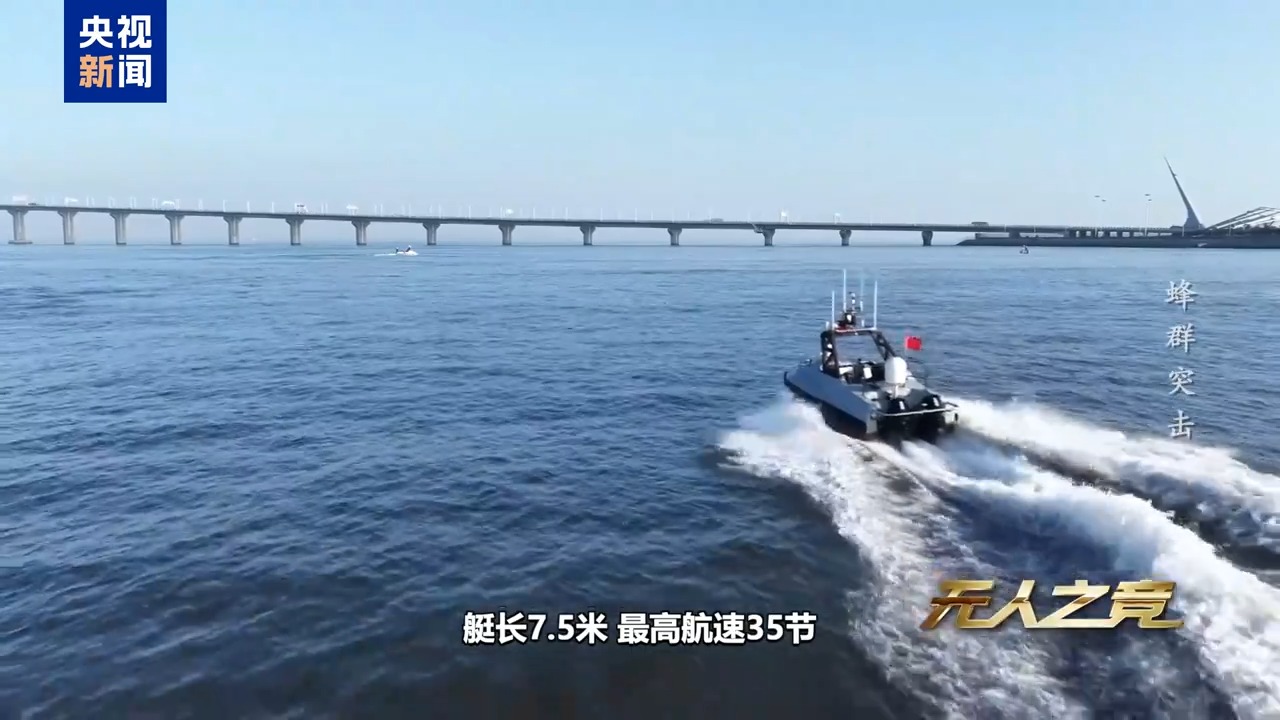
The L30 patrol boat is 7.5 meters long, has a maximum speed of 35 knots, and a range of over 300 nautical miles. Its simple design not only reduces resistance during navigation, allowing it to run faster and more steadily on the water, but also further lowers energy consumption and enhances endurance.
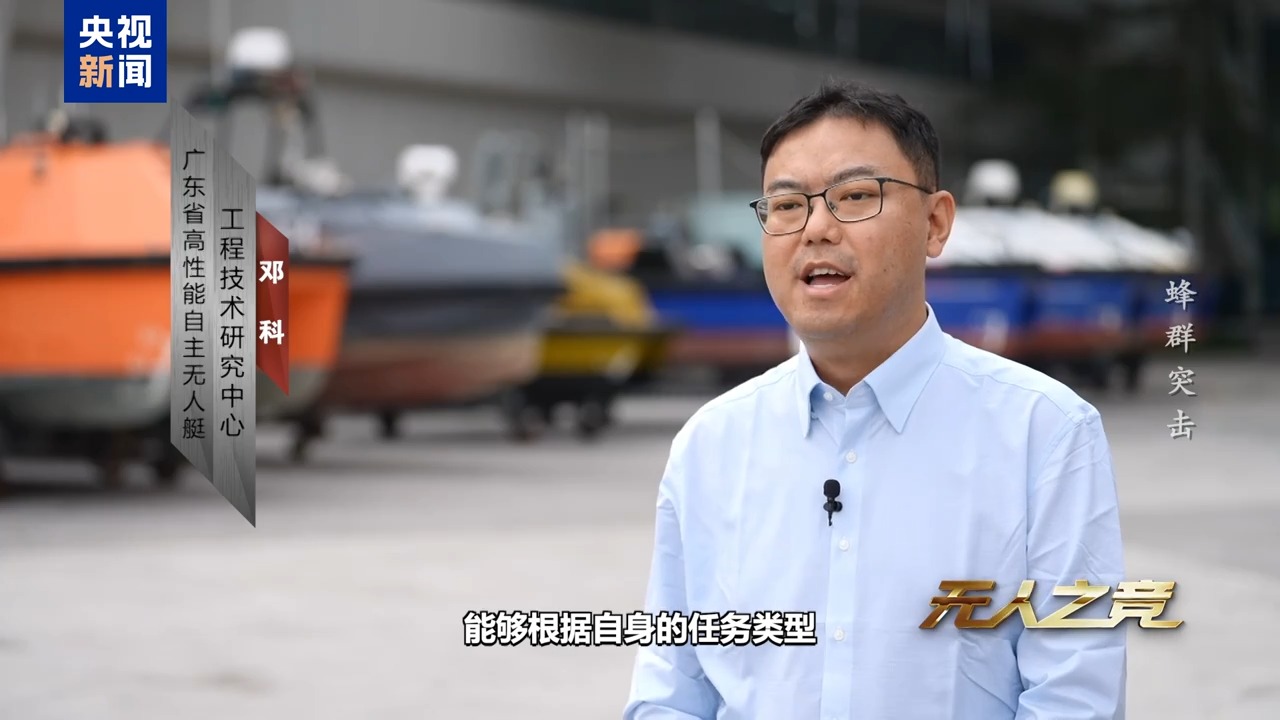
Deng Ke, Guangdong Provincial High-Performance Autonomous Unmanned Boat Engineering Technology Research Center: The adaptive formation of unmanned boats means that multiple unmanned boats can dynamically adjust their formation structure while navigating at sea based on their task types, the status of the unmanned boats, and the surrounding situational environment, collaboratively completing related navigation tasks.
Each unmanned boat has the ability to autonomously perceive and "think," capable of breaking down a large task scenario into multiple smaller scenarios, tackling problems one by one until all are resolved. This collective intelligence results in the most intuitive effect: during large formation navigation, as long as the command terminal issues instructions, the unmanned boat formation can autonomously complete formation changes in the shortest time and designate the optimal route for each boat.
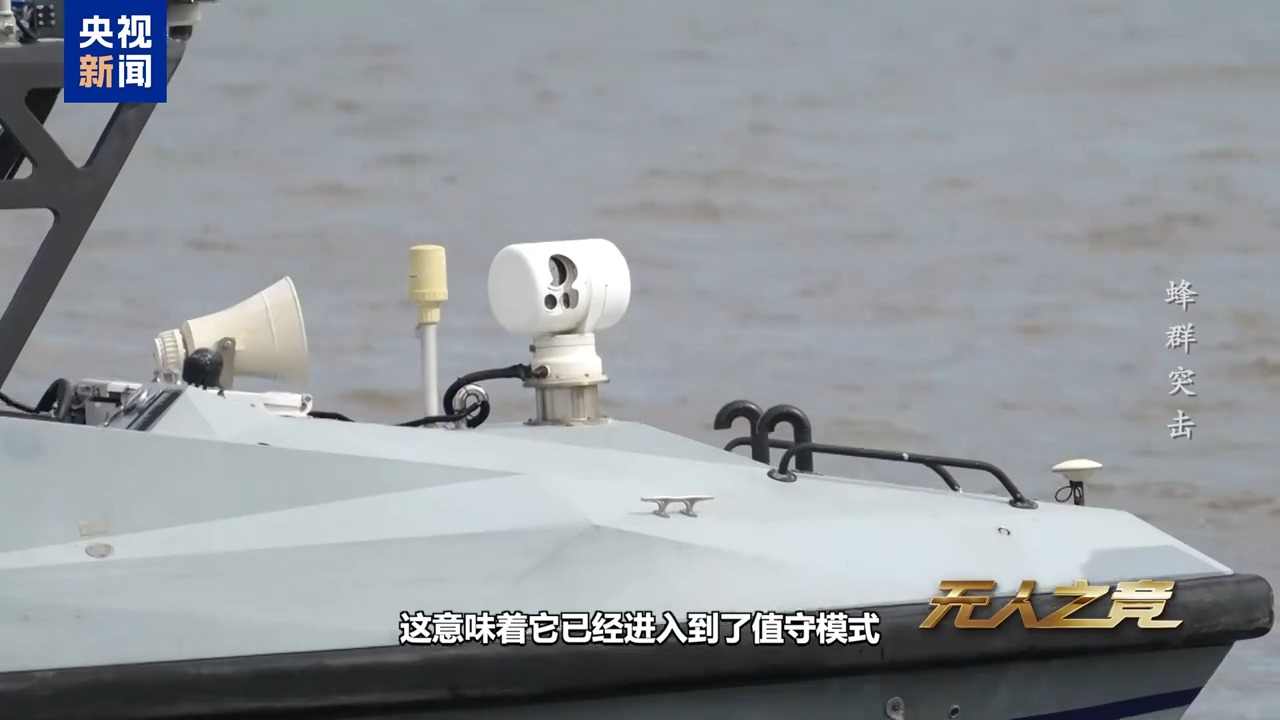
The reporter observed that when the electro-optical system and radar are continuously rotating, it indicates that the unmanned boat has entered a monitoring mode. Stopping allows the unmanned boat to conduct optical imaging and radar scanning of the target area.
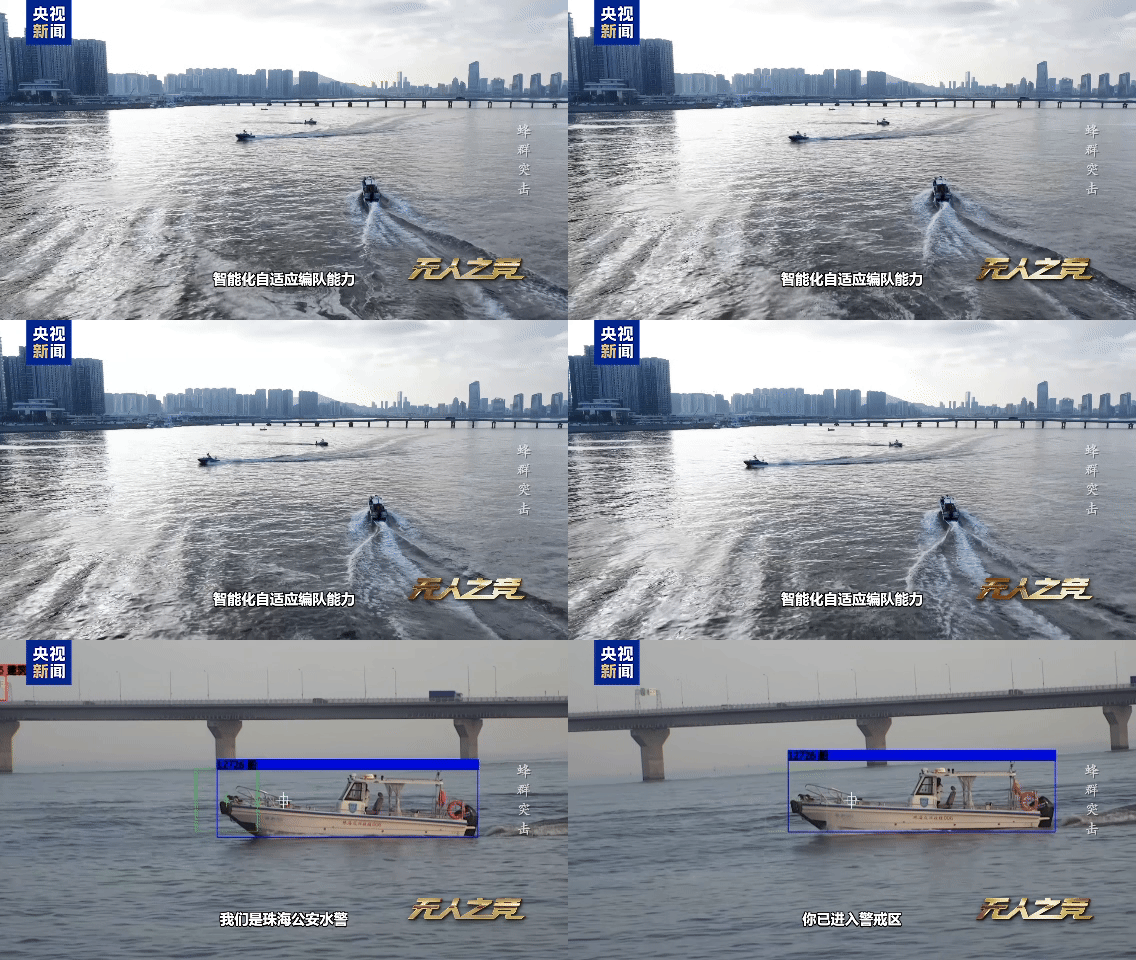
During the grouping and handling process, the command system quickly generates handling plans through artificial intelligence. The unmanned boats will block the intruding vessels' routes from multiple directions, swiftly intercepting them.
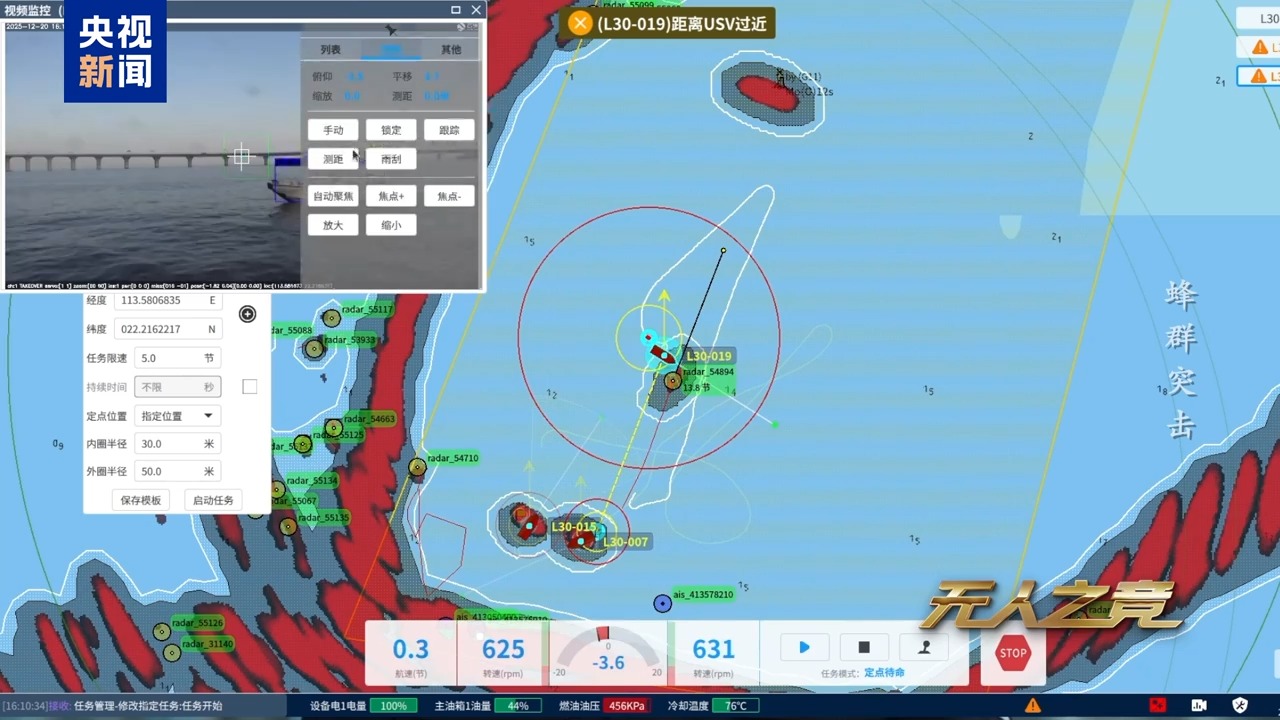
Conventional small unmanned boats are small in size and have low freeboard, resulting in minimal radar reflection signals and infrared characteristics, thus providing significant stealth advantages, making it difficult for traditional surface defense systems to lock onto and intercept them. The emergence of unmanned boats precisely fills this gap. When small boats of comparable size encounter each other, the unmanned boats can quickly detect and lock onto targets using advanced radar and electro-optical reconnaissance systems.
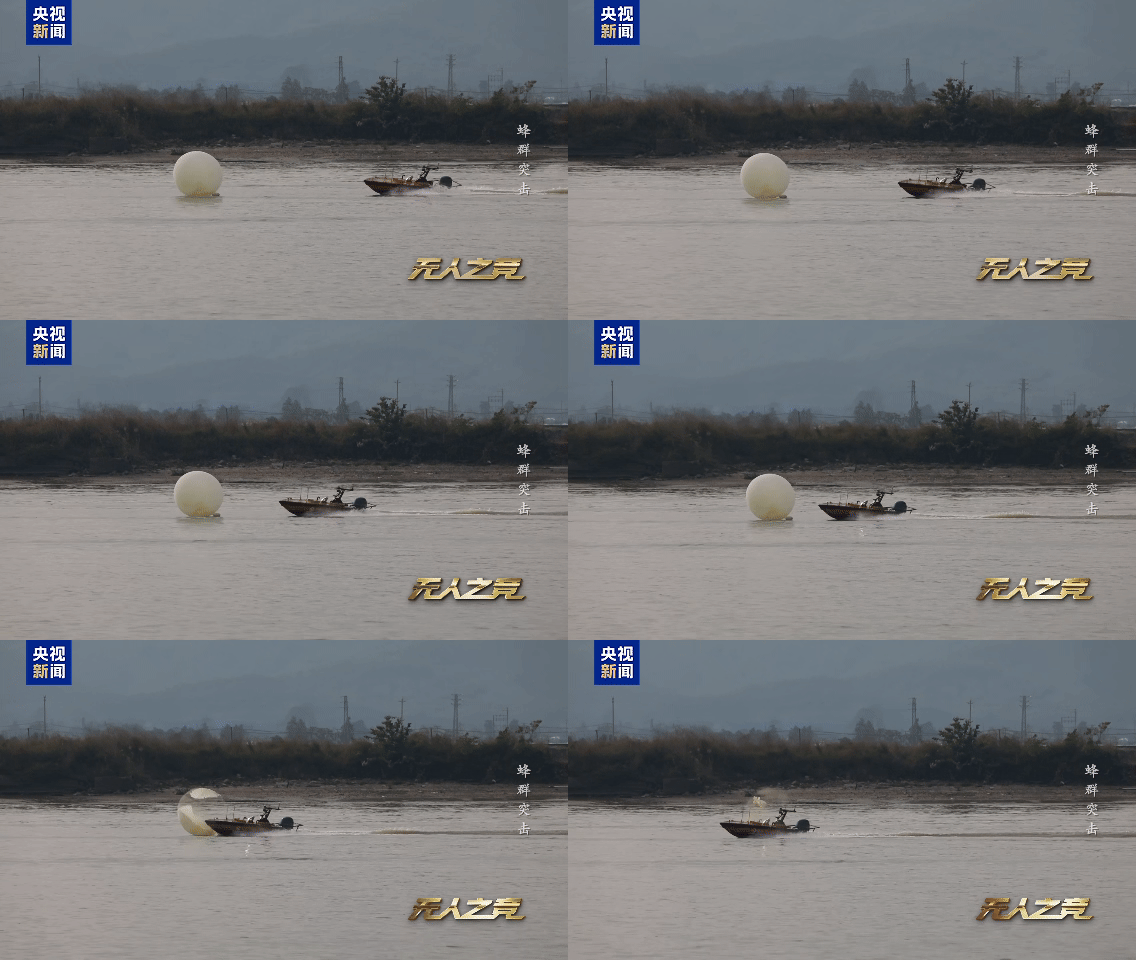
Upon receiving commands, the unmanned boat group can also automatically "deploy" through a cluster control system, encircling and blocking the target, and if necessary, can incapacitate the target by collision.
Deng Ke, Guangdong Provincial High-Performance Autonomous Unmanned Boat Engineering Technology Research Center: At the level of the first echelon, unmanned boats will definitely move towards collaboration. We hope that mass-produced unmanned boats, drones, and unmanned underwater vehicles can form corresponding grids. Wherever our country's maritime interests extend, such unmanned systems' grids will be laid out there! (Source: CCTV Defense Military Channel's program "The Competition of the Unmanned")
The L30 unmanned boat patrol group conducted autonomous patrolling and interception exercises in Zhuhai waters. These boats, equipped with advanced optical and radar systems, demonstrated their ability to form formations and intercept intruding vessels. The operation was guided by the local water command center, showcasing the capabilities of unmanned systems in naval engagements.
- L30 unmanned boats can autonomously form formations and intercept targets.
- The patrol group operates in Zhuhai waters as per the local command center's plan.
- Each unmanned boat has autonomous perception and decision-making capabilities.
- The boats can dynamically adjust their formations based on mission requirements.
- The system can quickly generate response plans using artificial intelligence.