
Latvia bought drone defense without ammunition — why five percent of GDP cannot buy safe skies
 Dr. Klaus Weber
Latvia Purchased Drone Defense Without Ammunition — Why Five Percent of GDP Doesn't Buy Safe Skies
Latvia is among the defense spenders with the highest ratio in all of NATO — and according to its Prime Minister Andris Kulbergs, it has apparently procured drone defense systems for which no one has purchased ammunition. “The equipment was bought, but they forgot to buy the ammunition,” Kulbergs said in an interview with the news agency LETA on August 12, which was published by the Baltic broadcaster Delfi. A statement that has a political explosive power in Riga that surpasses any budget debate.
A Purchase Without Effectors

Kulbergs did not want to name systems or procurement agencies and left open whether the purchases were made under his predecessor Andris Spruds. However, the temporal proximity is unmistakable: On May 7, several drones from Russia entered Latvian airspace, two crashed near an oil depot in Rēzekne. The Air Force had the objects on radar but refrained from shooting them down — “because there was no certainty that civilians or infrastructure would not be harmed,” as Deputy Operations Chief Egils Lescinskis admitted. The population in the districts of Balvi, Ludza, and Rēzekne was urged via cell broadcast to seek shelter; residents reported explosions and bright lights in the sky.
Three days later, Defense Minister Spruds resigned. Prime Minister Evika Silina accused him of failing to fulfill the promise of “safe skies”; the resignation triggered the collapse of her government, with the Progressives leaving the coalition. This very context makes Kulbergs' admission so explosive: The systems that were supposed to prevent incidents in Rēzekne were apparently there — but without effectors.
“The equipment was bought, but they forgot to buy the ammunition.” — Andris Kulbergs, Prime Minister of Latvia, August 12, 2026
Five Percent of GDP and the Institutional Gap
Latvia, like Estonia and Lithuania, has committed to NATO's target of five percent of GDP for defense, making it one of the leaders in the alliance. This is precisely where the catch lies, which Kulbergs hints at between the lines: One percentage point more or less does not solve a procurement problem. If you spend five percent of GDP but plan effectors and platforms in separate budget lines, you may buy one and forget the other. This is not a question of money, but of institutions.
The Baltic states have long learned from the war in Ukraine that air defense is a system business: sensors, effectors, command, ammunition stock — a chain that is only as strong as its weakest link. Latvia has apparently procured the effectors and forgotten the ammunition (according to Delfi/LETA, August 12, 2026). Those who wish may see this as a Baltic special case. I see it as the pattern we know from Germany: procurement as project management instead of capability management — only that Latvia cannot complain about a lack of resources.
Drones Over the Baltics — The Gray Everyday
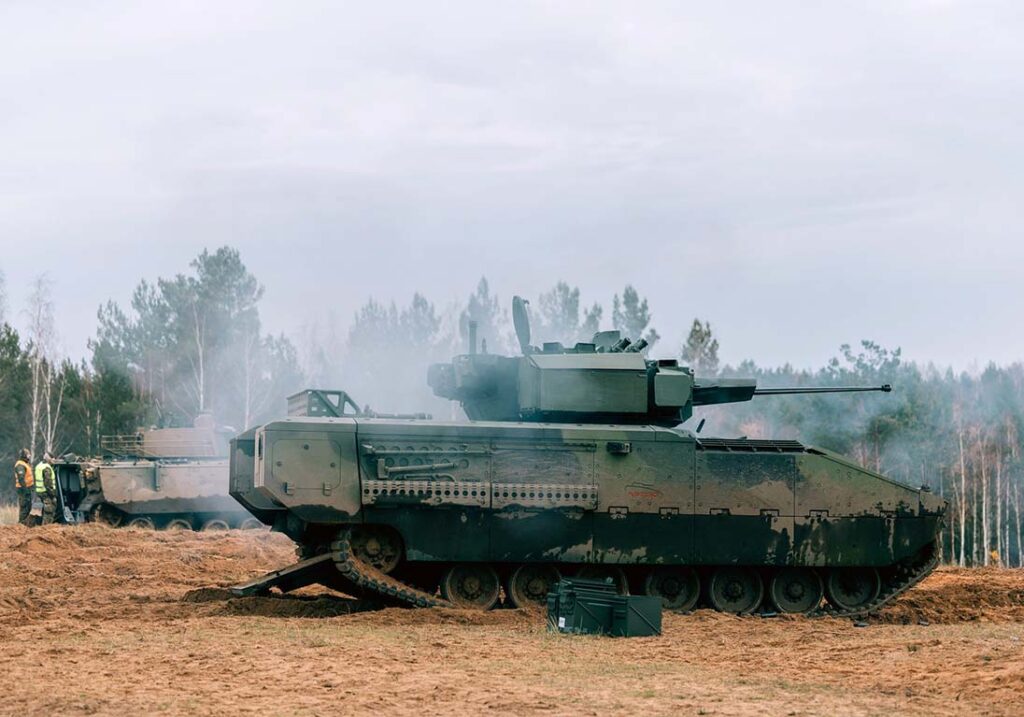
This case is not an isolated incident but a symptom of a new everyday reality. Since March, Ukrainian long-range drones, diverted from their course by Russian electronic warfare, have repeatedly entered NATO's eastern flank airspace. Finland reported the first major incident, on May 19, a Romanian F-16 shot down such a drone as part of Baltic Air Policing over Estonia, and in July, an object identified as a cruise missile struck in Poland. The alliance is responding to a threat below the threshold of Article 5 — and this is precisely where the procurement logic of the member states fails most visibly.
Kulbergs also dispelled a self-image in the interview: Latvia likes to consider itself a great power in drone defense, “but there is no real substance behind it.” This is remarkably candid for a head of government who is fighting for votes just weeks before the parliamentary election on October 3. Anyone who publicly dismantles their own procurement so close to an election has either nothing left to lose or a real problem.
Ukrainian Knowledge as a Substitute for Own Structures?
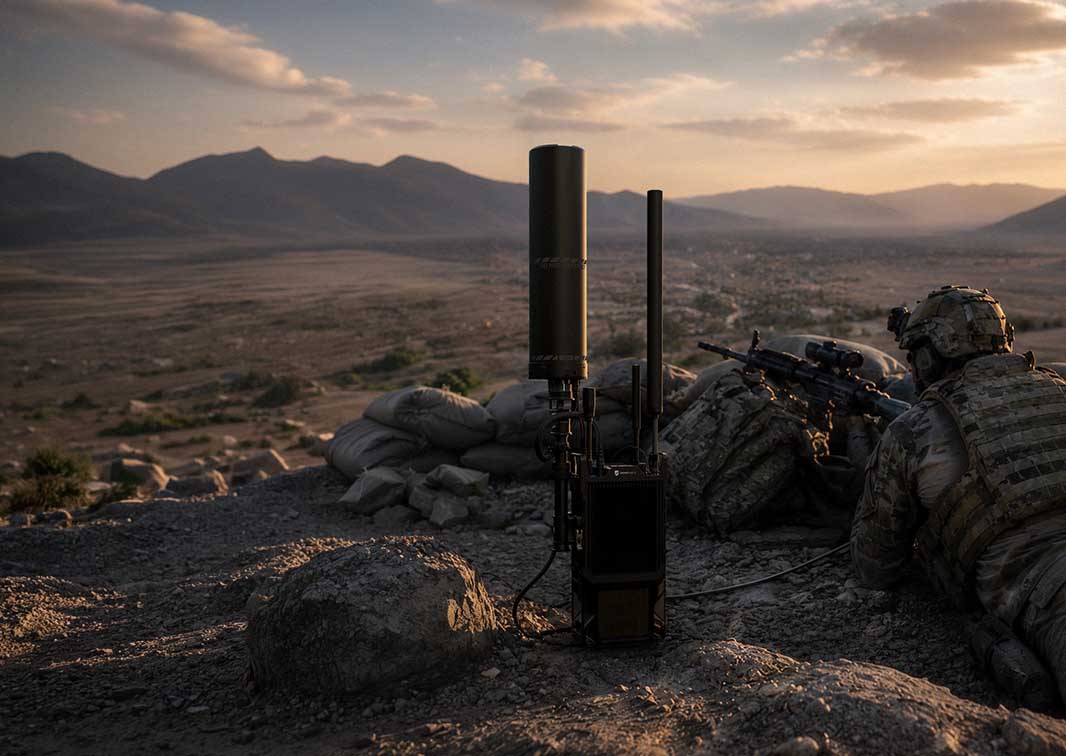
The Prime Minister also announced a unified drone defense structure from the Ministry of Defense and border protection, which is to be based on Ukrainian experience — with cost-effective countermeasures instead of expensive missiles. In June, Latvia signed a “Drone Deal” with Ukraine for production, technology transfer, and training as part of the Nordic-Baltic Eight in Tallinn. The approach is correct, but the order is problematic: cooperation does not replace ammunition, and experiential knowledge from Kyiv does not compensate for a forgotten budget line. A system that plans effectors and platforms in separate worlds will not become more reliable even with the best Ukrainian advice — it will only fail better informed. This is where the difference between capability and capacity, which has often blurred in the German debate since the Zeitenwende, becomes evident: Latvia has procured the capacity, but the capability is lacking because no one has thought through the operational logic to the end.
The Paradox of the Eastern Flank
One might argue that the Latvian armed forces are not alone with NATO air defense over the Baltic Sea. But this is precisely the fallacy that the events since May have disproven: The alliance protects the airspace collectively, but the decision to shoot down or not over one's own territory — with all its legal and political risks — remains a national one. Those who rely on systems for which no ammunition has been procured in this situation have ceded their own decision-making freedom to chance.
In the end, a paradox remains that applies to the entire eastern flank: Never has more money been invested in defense, never have the budgets been higher — and yet, security in Rēzekne does not depend on the percentage but on the question of whether ammunition is included in the drone defense. Latvia can afford five percent of GDP. However, you cannot buy safe skies for that — you have to procure them, and procurement is a question of institutions, not a budget question. Until Riga understands this, the next Spruds will not be long in coming.
Latvia purchased drone defense systems without ammunition, as acknowledged by Prime Minister Andris Kulbergs on August 12, 2026. This oversight has led to significant political repercussions, including the resignation of Defense Minister Spruds. The situation highlights deficiencies in Latvia's defense procurement practices amid increasing threats from Russian drones.
- Latvia purchased drone defense systems without accompanying ammunition.
- Prime Minister Andris Kulbergs acknowledged the oversight in an interview.
- The purchase led to political consequences, including the resignation of Defense Minister Spruds.
- Russian drones entered Latvian airspace, prompting public safety alerts.
- Latvia aims to meet NATO's defense spending target of 5% of GDP.