
Launch of the 7th Ship of the JMSDF Taigei Class, Shougei: Submarine Warfare Capabilities Questioned in the 2026 Nuclear Submarine Debate
 Tanaka Takashi
Launch of the 7th Taigei-class Submarine "Shougei" by the Japan Maritime Self-Defense Force: The Debate on Nuclear Submarines in 2026 Questions Submarine Capability
On October 8, the Japan Maritime Self-Defense Force's 7th Taigei-class submarine "Shougei" (SS-519) was launched at Mitsubishi Heavy Industries' Kobe Shipyard. The standard displacement is approximately 3,000 tons, the total length is 84 meters, and the construction cost is about 80.5 billion yen, with delivery scheduled for March 2028. While the construction of conventional submarines is steadily progressing, discussions are emerging domestically about not ruling out nuclear submarines. Although these two aspects may seem contradictory, they actually reflect the expanding range of missions that Japan requires from its submarines.
The Current Capabilities of the JMSDF as Demonstrated by Shougei
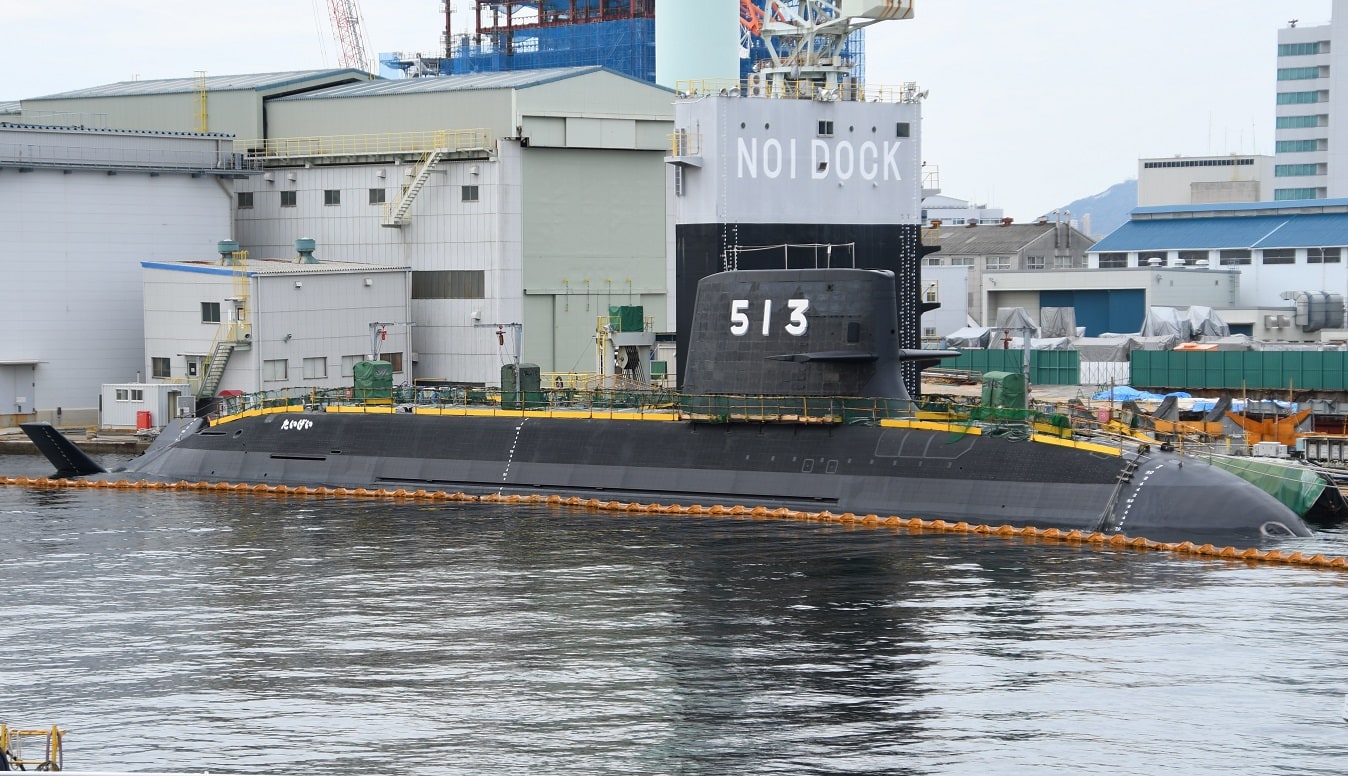
According to Naval News, Shougei is equipped with the enhanced Kawasaki 12V25/31 diesel engine, similar to the 4th ship "Raigei." The Taigei-class employs large-capacity lithium-ion batteries, improving underwater endurance compared to conventional types. It can also operate the latest Type 18 torpedoes and the UGM-84L Harpoon Block II anti-ship missile, which has a range of approximately 248 kilometers.
- Standard displacement: Approximately 3,000 tons
- Total length: 84 meters, total width: 9.1 meters
- Scheduled delivery: March 2028
- Main armament: Type 18 torpedoes, UGM-84L Harpoon Block II
This is not equipment designed solely for coastal defense. It is a vessel responsible for information gathering and maritime denial, leveraging stealth capabilities from the Nansei Islands to the East China Sea, and around Japan's SLOC (Sea Lines of Communication).
Intersection of VLS Submarines and Nuclear Propulsion
In July 2026, the Ministry of Defense commissioned Mitsubishi Heavy Industries to conduct research on the optimal design of the entire hull for next-generation vertical launch system (VLS) equipped submarines. The research period will be from fiscal year 2026 to fiscal year 2029. If long-range stand-off missiles, larger sonars, and unmanned underwater vehicles are to be accommodated within a single hull, power supply and underwater endurance will become even more critical issues than before.
On September 11, Defense Minister Kihara stated that nuclear submarines would not be excluded from the options in the revisions of three documents, including the national security strategy, scheduled for the end of the year. Nuclear submarines can operate at high speeds and remain submerged for long periods, potentially increasing Japan's freedom of deployment against the activities of the Chinese Navy in the Western Pacific. However, significant barriers exist, including reactor maintenance, specialized personnel, nuclear fuel management, hull enlargement, costs, and legal frameworks. Furthermore, stealth is not always an advantage for nuclear submarines, and in some operational areas, conventional submarines may be more practical.
Implications for the Japan-U.S. Alliance
The reported understanding of the U.S. Navy regarding Japan's consideration of nuclear submarines is not merely a matter of equipment selection. What the U.S. expects is for Japan to continue long-range underwater surveillance and anti-submarine warfare around Taiwan and the first island chain. However, if Japan introduces nuclear submarines, it will necessitate sharing information on nuclear safety, ports, training, and maintenance between Japan and the U.S., increasing the operational burden on the alliance.
In the author's view, the launch of Shougei should be seen not as a transition to nuclear submarines, but as Japan first maintaining its existing conventional forces while assessing the upper limits of future missions. The actual constraints are not limited to the propulsion method. Ensuring crew availability, maintaining shipyard construction capacity, and quickly connecting the underwater information obtained to Japan-U.S. decision-making will influence the effectiveness of deterrence. If the nuclear submarine debate tilts solely towards performance competition, even the introduction of the most expensive components will not strengthen the defense of SLOCs.
Reference Information
The Japan Maritime Self-Defense Force launched the Taigei-class submarine 'Shougei' in Kobe on October 8, 2023. This submarine features advanced Kawasaki diesel engines and lithium-ion batteries, enhancing its underwater capabilities. It is armed with 18-type torpedoes and UGM-84L Harpoon Block II missiles. Concurrently, discussions regarding the potential development of nuclear submarines are emerging, reflecting Japan's evolving defense strategy.
- The Taigei-class submarine 'Shougei' was launched on October 8, 2023.
- The submarine has a standard displacement of approximately 3,000 tons and a length of 84 meters.
- It is equipped with advanced Kawasaki diesel engines and lithium-ion batteries for improved underwater endurance.
- The submarine can operate the latest 18-type torpedoes and UGM-84L Harpoon Block II missiles.
- Discussions about nuclear submarines are ongoing in Japan, indicating a shift in defense strategy.