
Lebanon Ceasefire Becomes Focus, First Round of Talks Concluded, US-Iran Discussions Center on Five Key Issues
[Global Times Comprehensive Report] Delegations from the United States and Iran began negotiations on the 21st in the Swiss city of Birgen Mountain. This is the first round of talks following the signing of a memorandum of understanding between the U.S. and Iran. U.S. Vice President Vance, who is leading the U.S. delegation, described the meeting as "historic." The situation in Lebanon is undoubtedly one of the focal points of the negotiations. Before departing for Switzerland, Vance expressed hope for progress on nuclear issues and the ceasefire in Lebanon. On the 21st, U.S. President Trump threatened that "Iran must immediately stop its 'proxies' causing trouble in Lebanon. Otherwise, the U.S. will launch a fierce strike against Iran again." An Iranian Foreign Ministry spokesperson stated that Tehran's participation in the new round of talks in Switzerland aims to ensure the implementation of the Islamabad memorandum, and that negotiations for a final agreement cannot commence unless key terms, including the cessation of hostilities on all fronts, including Lebanon, are fulfilled. Earlier on the 20th, Iran stated that it had closed the Strait of Hormuz due to ongoing Israeli attacks on Lebanon. Al Jazeera reported on the 21st that the U.S.-Iran memorandum of understanding is already facing tests just after being signed. The developments in the situation may complicate the negotiations further. According to multiple media reports, the first round of U.S.-Iran negotiations concluded on the 21st.
Vance: Negotiations "will not resolve all differences"
U.S. Vice President Vance arrived at the Emmen Air Force Base near Lucerne, Switzerland, in the early hours of the 21st local time. Before leaving the U.S., he told reporters, "I can only stay there for a day or two at most. I hope we can make progress on nuclear issues and the ceasefire in Lebanon. These are the two major issues that I believe need to be focused on right now." Vance stated that he believes the Iranian side also has other topics they wish to discuss. He also informed the U.S. Fox News Channel that U.S. negotiating representatives, presidential envoy Witkoff, and President Trump's son-in-law Kushner have arrived in Switzerland.
According to a report by Iran's Mehr News Agency on the 21st, the Iranian delegation led by Islamic Consultative Assembly Speaker Ghalibaf arrived in Zurich, Switzerland, late on the 20th local time. The delegation is named "Minab 168" in memory of the 168 children from the Minab Primary School who were killed in the U.S.-Israeli airstrikes on February 28. The delegation members include Iranian Foreign Minister Araqchi, Deputy Foreign Minister Garibabadi, Foreign Ministry spokesperson Baghai, Deputy Secretary of the Supreme National Security Council Ali Bagheri, Central Bank Governor Abdolnaser Hemmati, a deputy minister from the Ministry of Oil, and other officials.
According to Iranian media reports on the 21st, a trilateral meeting between Iran, the U.S., and Qatar was held in Birgen Mountain, Switzerland, discussing the situation in Lebanon and frozen Iranian assets. Following this, the U.S. and Iranian delegations held negotiations, with Pakistan and Qatar participating as mediators.
Vance stated that the U.S.-Iran negotiations have made "great progress in the past few hours," and he expects "we will achieve more progress in relevant areas," but the negotiations "will not resolve all differences." Vance mentioned that political leaders from all parties have gathered here, "hoping to build a framework for the second phase of negotiations" and to achieve breakthroughs in key areas. Vance also stated that if Iran is willing to abandon its pursuit of nuclear weapons, the U.S. is willing to "fundamentally" change U.S.-Iran bilateral relations.
Prior to this, several bilateral talks were held in Switzerland. According to the Swiss German Broadcasting Corporation, Swiss Foreign Minister Cassis held a meeting with Iranian Foreign Minister Araqchi for about 45 minutes on the 21st. Cassis also held talks with International Atomic Energy Agency Director General Grossi. Grossi wrote on social media that the focus of the discussions was to assess the latest developments and trends regarding the situation in Iran.
Meanwhile, the Iranian delegation met with Qatari Prime Minister and Foreign Minister Mohammed, who is acting as a mediator. Additionally, according to Iran's Mehr News Agency, the Iranian delegation held a 90-minute internal meeting that day to assess the latest progress in the negotiations and the fulfillment of U.S. commitments.
Iran's Supreme Leader's military advisor Mohsen Rezaei warned on the 21st that, given the U.S. side's repeated breaches of promises in the past, it is unwise to hold an optimistic view of the negotiations.
Iran: Implementing the ceasefire in Lebanon is a prerequisite for final negotiations
The situation in Lebanon is one of the focal points of the U.S.-Iran negotiations. Baghai stated on the 21st that the U.S.-Iran memorandum of understanding clearly stipulates that the prerequisite for initiating negotiations for a final agreement is the implementation of five specified terms, the first of which is to cease hostilities on all fronts, including Lebanon. The Iranian side believes that the U.S. has not fulfilled this term, and Israel continues to violate its commitments, "this is the main topic of today's talks."
Al Jazeera's correspondent in Tehran analyzed that the Iranian delegation's negotiations in Switzerland will focus on the five terms in the memorandum of understanding, namely, stopping hostile actions in Lebanon, lifting the U.S. maritime blockade on Iran, reopening the Strait of Hormuz, unfreezing Iranian overseas assets, and lifting U.S. sanctions on Iran's oil, petrochemical, and related industries. "Iran does not expect this round of talks to resolve all issues at once, but at least demands that the U.S. initiate the implementation of the aforementioned terms," said Al Jazeera's correspondent in Tehran, Atas.
From the 19th to the 20th, clashes between the Israel Defense Forces and Hezbollah in southern Lebanon continued, causing significant casualties on both sides. On the 21st, the Lebanese National News Agency cited the country's health department, reporting that an Israeli airstrike on the village of Sohmour in Lebanon's Bekaa Valley resulted in five deaths, including a child, a woman, and two elderly individuals. Additionally, two Palestinians were killed in an attack in a refugee camp in Tyre, southern Lebanon.
As of the morning of the 21st, the Israeli military had announced the names of five of its fallen soldiers, four of whom died in an attack on an Israeli military tank, and one in another attack by Hezbollah on Israeli positions, during which 13 Israeli soldiers were injured.
Israeli Prime Minister Netanyahu ordered a ceasefire for the Israeli military on the evening of the 20th, but the military will remain in the "security zone" in southern Lebanon and will respond strongly to any attacks from Hezbollah.
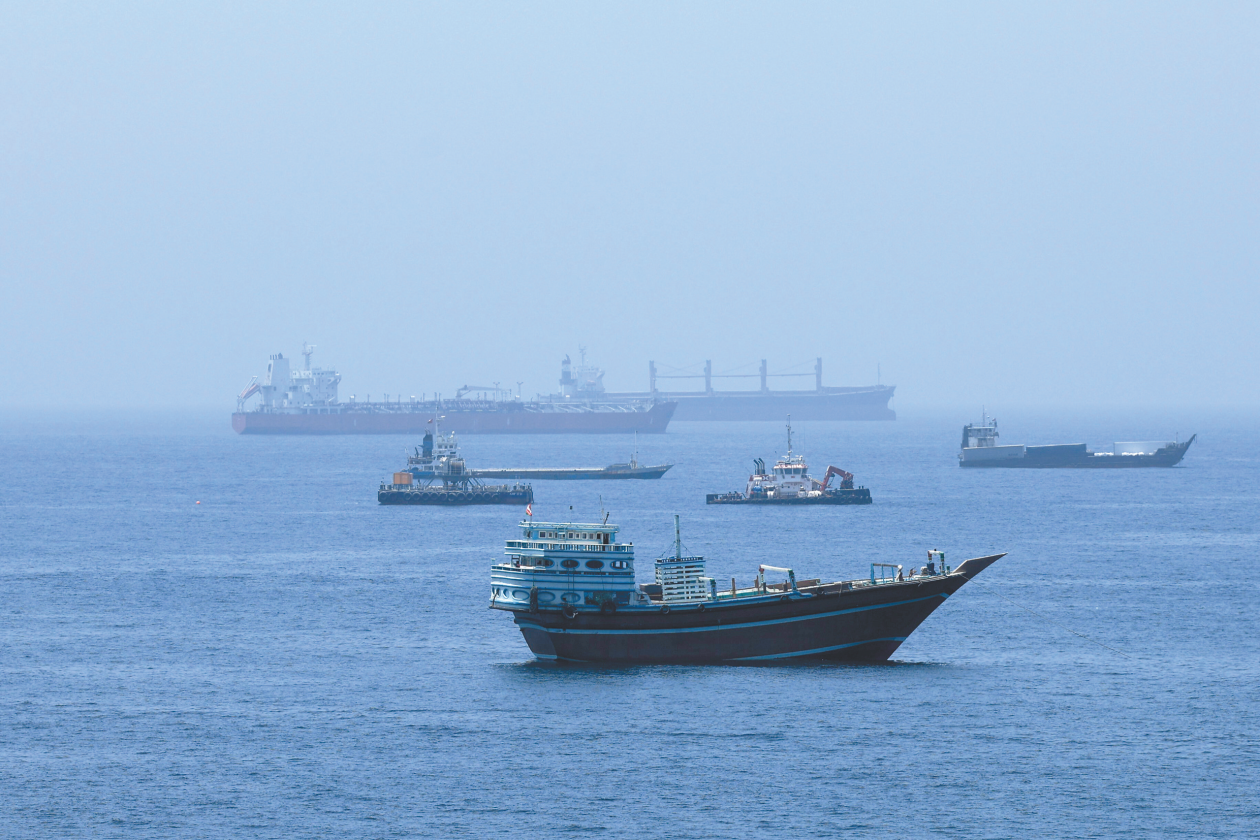
The Central Headquarters of the Iranian Armed Forces, Khatam al-Anbiya, issued a statement on the 20th stating that due to the violations of the memorandum of understanding by both the U.S. and Israel, Iran has closed the Strait of Hormuz. The statement said that this move is the first step in response to the enemy's treachery. If aggression continues, Iran will formulate and take further measures to force the enemy to fulfill its commitments. However, the U.S. Central Command stated on the 20th that the Strait of Hormuz remains open. The command issued a statement saying, "Today, 55 commercial vessels successfully passed through this international waterway, transporting a large amount of goods and over 17 million barrels of crude oil to global markets."
Professor Zhu Yongbiao from the Central Asia Research Institute of Lanzhou University told Global Times reporters on the 21st that the current complex situation reflects that both the U.S. and Iran want to reach an agreement through negotiations to end this conflict. Under this premise, in the face of Israeli military actions, Iran's continued advancement of the diplomatic process is largely due to the belief that the U.S. cannot fully restrain Israel. Nevertheless, Iran still needs to show a certain degree of toughness before the negotiations to pressure the U.S. to restrain Israel as much as possible.
U.S. media: There remains significant uncertainty
Israeli Channel 12 reported on the 21st that from the evening of the 20th to the morning of the 21st, southern Lebanon experienced a rare period of calm. The U.S. is preparing for the fifth round of negotiations between Israel and Lebanon on the 23rd, focusing on the proposal to establish a demilitarized zone in southern Lebanon, which requires the Israeli military and Hezbollah to gradually withdraw from the area, to be taken over by the Lebanese army.
Israel's Haaretz commented that, regardless, Iran will use the achievements already made in the memorandum of understanding to pressure Israel. Netanyahu may face a painful choice: either continue to insist on the presence of the Israel Defense Forces in southern Lebanon, endangering more Israeli soldiers' lives and jeopardizing his relationship with Trump; or agree to withdraw, acknowledging failure—this failure not only refers to the current war but also to the broader struggle that determines his political career.
The U.S. Washington Post stated that U.S. and Iranian negotiators have set a 60-day sprint timeline for themselves, hoping to reach a comprehensive peace agreement based on the memorandum of understanding. However, the ongoing chaos under the countdown indicates that there remains significant uncertainty before a comprehensive end to hostilities and the resolution of a series of complex issues regarding Iran's nuclear program.
Mediators and analysts have stated that both the U.S. and Iran are unwilling to see the peace process completely collapse. The U.S. hopes to quickly restore shipping in the Strait of Hormuz and restart oil transport; while Iran is also unlikely to easily give up an agreement that could lift sanctions, maintain the stability of the current leadership, and release frozen assets. However, there is deep mistrust between the U.S. and Iran, and even if an execution plan is ultimately finalized, it is difficult for the outside world to believe that the agreement can be adhered to in the long term.
Zhu Yongbiao told Global Times reporters that there are still significant differences in the memorandum of understanding reached between the U.S. and Iran. To reach a final peace agreement, both sides will undoubtedly go through complex confrontations, and there may even be renewed clashes. Of course, it is also possible that as the U.S. government faces increasing costs in terms of time, patience, politics, and economics, combined with domestic factors such as the midterm elections, both sides may relatively quickly reach an agreement based on the existing memorandum of understanding.
[Global Times correspondents in the U.S., Israel, and Germany: Feng Yaren, Zhang Hao, Zhao Dong; Global Times reporters: Li Yu, Jing Kuan]
U.S. and Iranian delegations engaged in negotiations in Switzerland on October 21, 2023, focusing on the Lebanon ceasefire and nuclear issues. U.S. Vice President Pence characterized the meeting as historic, while Iran emphasized the need for a ceasefire in Lebanon as a prerequisite for further discussions. Israeli airstrikes in Lebanon have led to casualties, prompting Iran to close the Strait of Hormuz in response to perceived threats from the U.S. and Israel.
- U.S. and Iranian delegations met in Switzerland for negotiations on Lebanon and nuclear issues.
- U.S. Vice President Pence described the meeting as historic.
- Iran demands a ceasefire in Lebanon as a precondition for further negotiations.
- Israeli airstrikes in Lebanon resulted in casualties, including civilians.
- Iran has closed the Strait of Hormuz in response to U.S. and Israeli actions.