
Lebanon-Israel Agreement 2026 After 4200 Deaths Reveals the Dilemma of Disarming Hezbollah
 Ahmed Al-Rashid
Lebanon and Israel Agreement 2026 After 4,200 Dead Reveals the Dilemma of Disarming Hezbollah
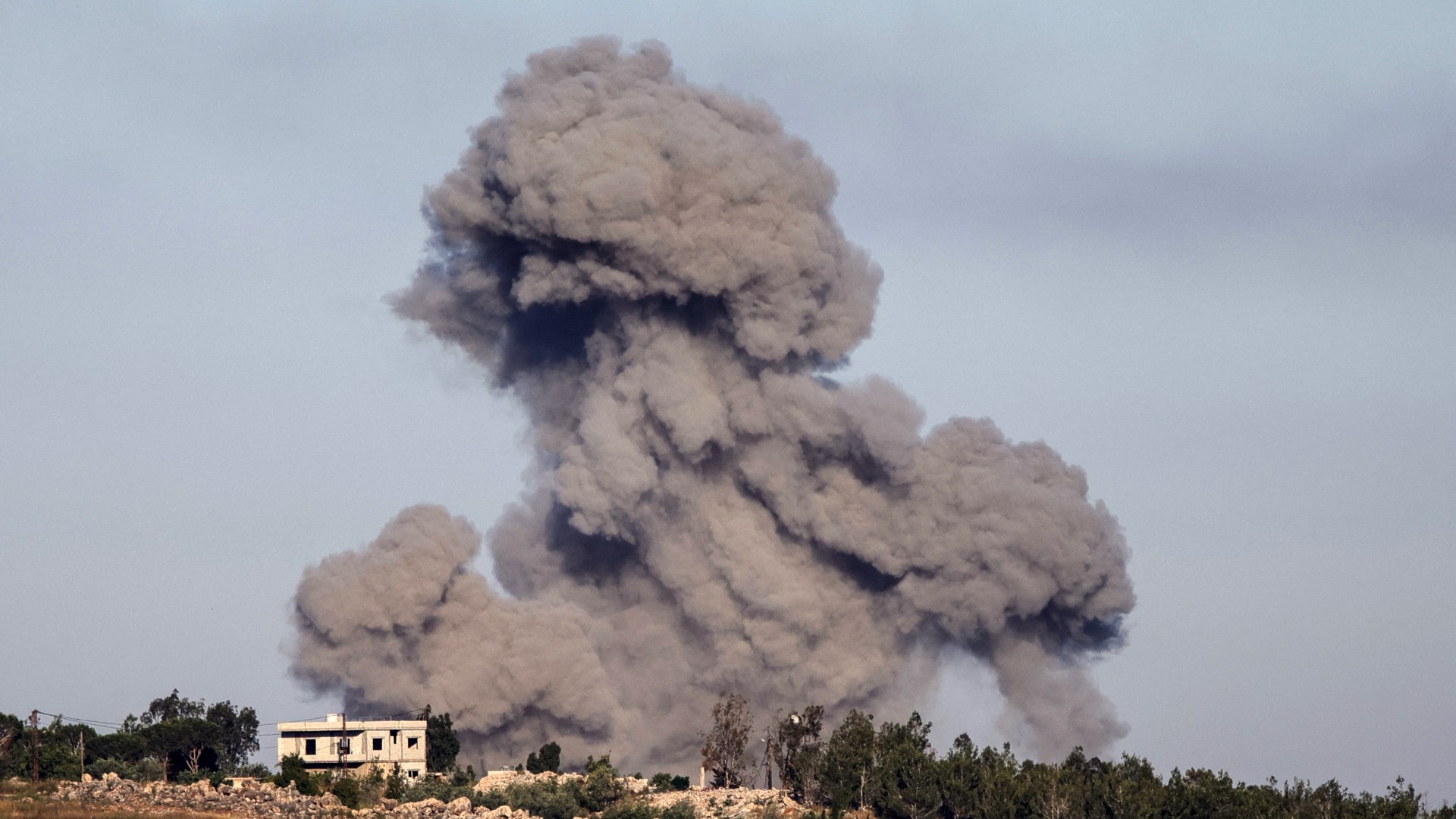
On June 28, 2026, Israeli aircraft returned to strike southern Lebanon just two days after signing a framework mediated by the United States in Washington. The number we should focus on is not just two days, but more than 4,200 dead in Lebanon since the outbreak of war in March, followed by a political document stating that the Israeli withdrawal is practically linked to the disarmament of Hezbollah. Militarily, this is not the end of the war. This is a transformation of the war into an armed monitoring system.
Al Jazeera's report indicated that the Israeli army continued its operations in the south, and the Lebanese Ministry of Health announced the first casualty after the signing of the agreement, while Israel stated that its forces were targeting Hezbollah elements near the buffer zone it occupies. At the same time, the Israeli army announced the death of Captain David Hazout, a commander in the Golani Brigade, and the injury of another soldier. These small details are more important than grand diplomatic phrases, as they indicate that the lines of contact have not turned into calm political lines, but have remained combat friction lines.
The Agreement Does Not Withdraw from the Land but Redefines Survival
The fundamental problem with the agreement is that the text, as presented in reports, does not impose an unconditional Israeli withdrawal from Lebanese territory. It links the withdrawal to the issue of disarming Hezbollah. This may seem logical on paper in Washington, but in southern Lebanon, it means something else: Israel retains the right to military action, Hezbollah refuses to lay down its arms, and the Lebanese state is tasked with carrying out a mission that exceeds its military capabilities before its political ones.
Any military personnel who has served in the area knows that the buffer zone is not just a line on the map. It is a system of observation points, supply routes, patrols, artillery fire, drones, and ambiguous rules of engagement. When Israeli Defense Minister Israel Katz says that the forces are preparing to stay for an extended period, he is not talking about an administrative detail. He is announcing that Israel wants to retain the key to the rhythm on the ground even after signing the document.
Hezbollah Does Not Reject the Agreement Politically Only
Hezbollah described the agreement as humiliation and a concession of sovereignty, which is expected rhetoric. But what is more important militarily is that the party cannot accept the logic of the agreement without weakening its image as an armed resistance force. If it surrenders its weapons under the pressure of an American-Israeli-Lebanese document, it loses the basis of its internal and regional legitimacy. If it refuses, it gives Israel a permanent justification to claim that its presence in the southern belt is necessary.
Here, the old Lebanese knot appears in a new guise. The state wants to regain decision-making, but it does not have enough surplus power to impose it. Hezbollah has the weapons, experience, and a wide social network, but it does not have the sole right to drag the country into an open war. Israel has air and intelligence superiority, but it cannot produce political stability from the air. Each party has the ability to disrupt more than it has the ability to resolve.
The Triad Capability Reveals Everyone's Weakness
I like to read such files from the perspective of triad capability: equipment, training, and institution. Israel is superior in equipment and training, especially in aerial reconnaissance, precision strikes, and defense systems like Iron Dome. However, it faces an institutional problem in translating military action into an acceptable political outcome. Every successful strike may reduce an immediate threat, but at the same time increases the cost of occupation or long-term presence.
Hezbollah, on the other hand, does not have equipment that compares to Israel, but it has a combat institution that is still capable of absorbing strikes and benefiting from geography and the social environment. Its strength is not in a single platform, but in a mix of short-range missiles, drones, tunnels, reconnaissance teams, and a command network accustomed to operating under pressure. The Lebanese army has discipline and internal experience, but it lacks the political mandate, resources, and sufficient sectarian cover to become a coercive disarmament tool.
- Israel wants a safe area without acknowledging that it has returned to the logic of partial occupation.
- Hezbollah wants to retain its weapons without bearing the full national cost of this decision.
- The Lebanese state wants sovereignty without having all the tools of sovereignty.
- Washington wants a quick agreement that eases the Lebanese front while it is preoccupied with the Iran and Gulf crisis.
What This Means for the Gulf and Iran
The file may seem Lebanese-Israeli, but it is part of a broader equation. Iran views southern Lebanon as one of its cards in confronting the United States and Israel, especially at a moment when navigation in Hormuz is tense and Gulf bases are under threat. For this reason, Iranian Foreign Minister Abbas Araghchi stated that Washington must force Israel to stop its strikes and withdraw. Tehran is not only defending Lebanon here but also the value of its Lebanese card in any regional negotiation.
As for the Gulf, it observes with a different eye. If Washington fails to turn the Lebanon agreement into a stable ceasefire, how will it convince Gulf capitals that it can manage escalation with Iran in Hormuz? Practically, this is what makes Saudi Arabia, the UAE, and Qatar more inclined to build direct and multiple channels, not because they trust Iran, but because they no longer trust that American guarantees alone are sufficient.
The Real Test in the Coming Weeks, Not in the Signing Image
The coming weeks will reveal whether the agreement is the beginning of a path or just a paper truce. The indicators to watch are clear: Will the number of Israeli strikes decrease? Will the Lebanese army begin an actual deployment in sensitive points? Will Hezbollah commit to controlling missiles and drones? Will the buffer zone turn into a transitional area or a long-lasting security belt?
In my estimation, the most dangerous aspect of the 2026 agreement is that it gives each party a phrase it can call a victory, but it does not provide any party with a practical way out of the war.
As the old military saying goes, the map does not fight alone. The paper signed in Washington may be useful if followed by local enforcement power and regional understanding. However, if Israel continues to strike, Hezbollah continues to refuse, and the Lebanese army remains trapped between the two sides, we will face a new version of the old problem: a peace written in the language of diplomats, and a war ongoing in the language of the field.
Main Sources
- Al Jazeera, Israel strikes Lebanon, testing days-old peace deal, June 28, 2026.
- Reuters via news summaries, Hezbollah rejects US-brokered Israel-Lebanon security deal as surrender, June 27, 2026.
- The Jerusalem Post via news summaries, IDF demolishes 200-meter-long tunnel in southern Lebanon, June 28, 2026.
- Al Arabiya English via news summaries, Israel will use force against Iran if it prevents Lebanon deal implementation, June 27, 2026.
Israeli airstrikes targeted Hezbollah positions in southern Lebanon on June 28, 2026, shortly after a US-brokered peace agreement was signed. Over 4200 casualties have been reported since the conflict began in March 2026. Hezbollah rejected the agreement, asserting it undermines their armed resistance. The Lebanese army faces challenges in enforcing disarmament due to insufficient resources, while Israel maintains military operations in the region.
- Israeli airstrikes resumed in southern Lebanon after a peace agreement was signed.
- Over 4200 casualties have been reported in Lebanon since the war began in March 2026.
- Hezbollah rejects the US-brokered agreement, calling it a humiliation.
- The Israeli military continues operations against Hezbollah near the buffer zone.
- The Lebanese army is unable to enforce disarmament of Hezbollah due to lack of resources.